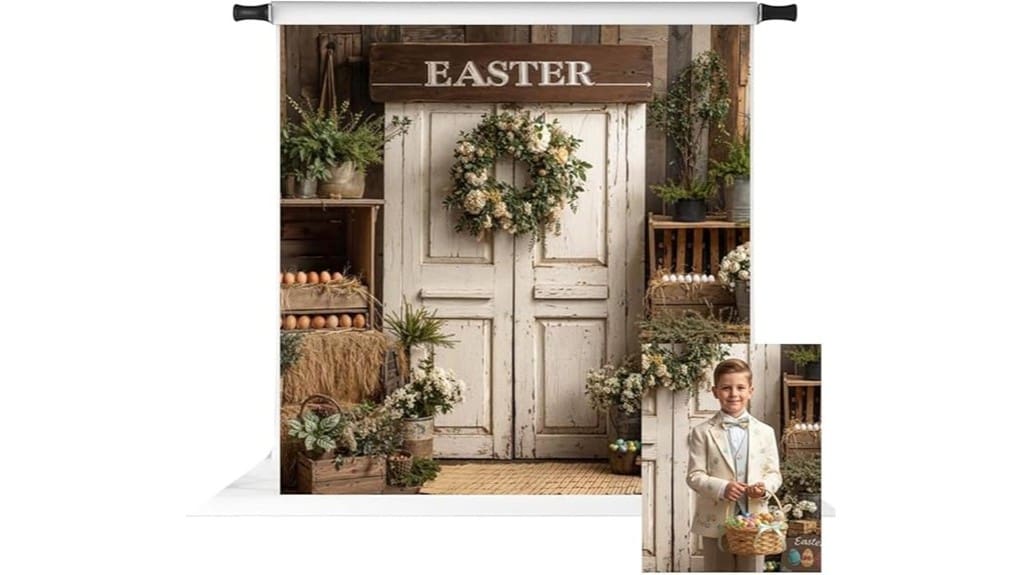
You’ll find the KateEaster 10×10 ft spring backdrop is a dense microfiber fabric with a non‑glare, high‑fidelity thermal print of a rustic white wood door and eggs, weighing about 1.72 kg and built with a reinforced top pocket for tube hanging. It resists hotspots and handles gentle tension well, though it may arrive creased and needs a stand or wall mounts. Care is machine‑washable or steamer‑safe, and more setup and troubleshooting tips follow.
Some Key Takeaways
- 10×10 ft microfiber backdrop offers a realistic rustic white wood door and Easter egg print, suitable for one to two subjects.
- Thick, non‑glare fabric with thermal‑transfer print yields clear wood grain and minimized hotspots under directional lighting.
- Reinforced top pocket accepts standard tubes for secure hanging; mounts and clamps are sold separately.
- Portable, washable, wrinkle‑resistant material recovers quickly with gentle tension or steaming, but may arrive with fold creases.
- Weighs about 1.72 kg; good portable alternative to vinyl or paper when reusable realism and easy care are prioritized.
What the KateEaster 10x10ft Spring Backdrop Is and Who It’s For
As a 10 ft by 10 ft microfiber photo backdrop, the KateEaster Spring design presents a thick, non-glare, light‑blocking fabric printed via digital thermal transfer to deliver a clear, realistic wood‑door and egg motif suitable for close‑framing two subjects; you’ll find it useful when you need a portable, washable, wrinkle‑resistant background for professional portraits, family sessions, or seasonal party setups, provided you supply a stand or wall attachment since mounts and clips aren’t included. You’ll deploy it for seasonal styling and kid portraits where controlled texture, accurate scale, and minimal reflective loss matter. It supports two subjects, folds for transport, and tolerates repeated laundering. Perfect Backdrops offers a range of related backdrop products and accessories for photographers, including studio backdrops and support systems like stands and clamps, to complete your setup for shoots with consistent results; see their selection of photo backdrops.
First Impressions: Material, Print Quality, and Build (Microfiber, Non-Glare, Top Pocket)
Having established its size and intended use, you’ll first notice the KateEaster backdrop’s microfiber construction feels densely woven yet soft to the touch, offering a thicker hand than typical budget fabrics. You’ll observe a controlled fabric drape: it falls with moderate body, reducing flutter and aiding predictable mounting. The non-glare finish minimizes hotspots under directional lighting. Print fidelity is high; edges and wood grain render cleanly with convincing depth from digital thermal transfer. A reinforced top pocket accepts standard tubes for secure suspension. Construction seams and hems are straight, stitching consistent, and weight distribution supports even hanging. This product is ideal for photographers seeking collapsible backdrop options with reliable size and portability.
How It Performs in Real Shoots: Wrinkle Behavior, Lighting, and Size for One–Two Subjects
Expect the microfiber backdrop to resist wrinkles better than thin vinyl or lightweight polyester, but plan to iron or steam any fold lines from shipping for perfectly flat results. You’ll observe fast wrinkle recovery in-session; gentle tension across the top pocket and side clips minimizes residual creases. The non-glare, light-proof finish reduces specular reflections, but position lights to avoid lighting hotspots on raised threads or seams. At 10×10 ft you can frame one to two subjects comfortably at typical portrait distances; keep subject-to-backdrop spacing to control depth of field and shadow falloff for consistent, realistic wood-door perspective. Consider using seamless paper backdrops techniques for composing shots and managing background distance.
Care, Setup, and Troubleshooting: Washing, Ironing, Storing, and Stand/Wall Tips
When you receive the KateEaster microfiber backdrop, inspect it for packing creases and treat them promptly: machine-wash on a gentle cycle with cold water and mild detergent, or hand-wash, then air-dry flat or tumble-dry on low to prevent heat damage; if you need quicker flattening, iron on the lowest safe setting with a pressing cloth or use a garment steamer held several inches away to avoid shine. Follow printed laundry symbols for agitation, temperature, and bleaching limits. Store rolled or on a wide hanger for hanging storage to avoid permanent folds. Mount with a backdrop stand using clamps or insert a tube through the top pocket; tape to wall cautiously. For dedicated photographers who also maintain camera gear, consider adding an essential cleaning gear checklist to your camera cleaning station kit to keep both your backdrop and equipment pristine.
Should You Buy It? Pros, Cons, Alternatives, and Final Recommendation
After you’ve handled washing, ironing, and mounting, weigh the KateEaster microfiber backdrop’s practical trade-offs for your workflow. You’ll get a true-to-pattern 10x10ft, lightweight (1.72kg) fabric with non-glare, light-proof finish, tube pocket, and reusable durability—strong for event shoots and easter marketing campaigns. Cons: requires stand/clips (not included), may arrive wrinkled, and color variance from screens. Consider vinyl for absolute flatness or seamless paper for single-use studio control; custom-sized prints mitigate edge issues. Factor seasonal pricing and storage logistics. Recommendation: buy if you need portable, washable realism; choose alternatives for strict studio flatness. Perfect Backdrop Stands sells a range of compatible backdrop stands and accessories to help you mount and support this backdrop.
Some Questions Answered
Is the Backdrop Flame-Retardant or Fire-Resistant?
No, it isn’t specified as flame-retardant or fire-resistant. You shouldn’t assume inherent fire safety without flame testing data or a recognized safety certification. You’ll need to request manufacturer confirmation or a test report to verify compliance with flame-retardant standards. In the meantime, treat the microfiber backdrop as combustible, keep it away from open flames and heat sources, and follow venue fire-safety rules until you obtain documented certification.
Can It Be Used Outdoors in Mild Wind or Light Rain?
You can use it outdoors in mild wind or light rain with precautions: the microfiber offers reasonable outdoor durability but isn’t waterproof or flame-retardant. Anchor it firmly to a stand and use heavy clips or weights; avoid direct spray and prolonged exposure. For light rain, shield the printed side and dry immediately to prevent color shift. Follow weather precautions, monitor conditions, and bring it indoors at the first sign of stronger wind or moisture.
Does the Fabric Emit Any Chemical or Plastic Odor Initially?
Yes — new fabric may have a faint chemical scent initially. You’ll detect it during scent testing after unboxing; it’s common with digitally printed microfiber. Ventilate and launder or air the backdrop; storage effects (tight folding or plastic packaging) can concentrate odors, while aired, dry storage reduces them long term. After washing and occasional airing over weeks, you shouldn’t notice residual smell during shoots or extended use.
Are Matching Floor/Ground Extensions Available From the Seller?
Yes — the seller offers matching floors and extension options. You can request coordinated floor prints or larger seamless panels through customization; they’ll confirm availability for the 10x10ft fabric and advise on material, seam placement, and top-pocket compatibility. Contact the seller for measurements, extra-yardage pricing, and shipping. They’ll specify whether the floor piece is a separate panel, an attached extension, or requires stitching, and provide lead times and proofing details.
Is There a Daylight-Balanced Color Chart for Print Accuracy?
No — the seller doesn’t provide a daylight-balanced color chart for print accuracy. You should perform your own color calibration using standardized target charts and ICC print profiles; verify white balance on-scene with a grey card or color checker. Create or request custom print profiles from the printer, and test proofs under daylight conditions. Keep documentation of color calibration steps to reproduce accurate results for future print batches.