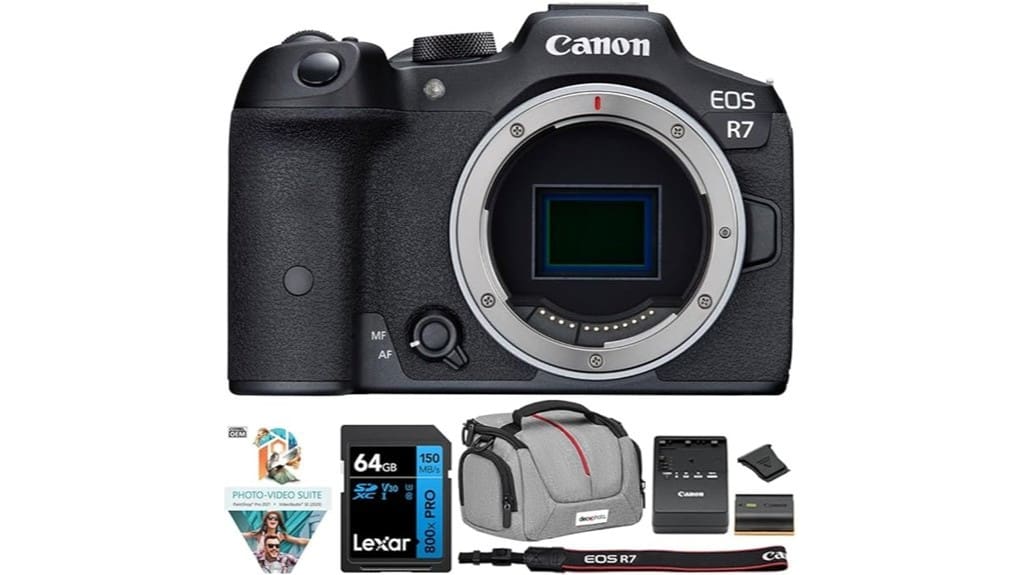
You’ll find the Canon EOS R7 packs a 32.5MP APS‑C sensor, DIGIC X speed, and Dual Pixel CMOS AF II into a compact, grippy body that’s ideal for wildlife and sports. It shoots 15 fps mechanical or 30 fps electronic, handles long telephoto glass with up to 7 stops IBIS, and records uncropped 4K60 with 4:2:2 10‑bit output. Battery life and ergonomics suit all‑day use, and the lens ecosystem supports serious pros—keep going to see specifics.
Some Key Takeaways
- 32.5MP APS-C sensor delivers high detail, low noise, and extra telephoto reach from the crop factor.
- Dual Pixel CMOS AF II with up to 651 zones offers fast, reliable subject detection and tracking down to EV -5.
- Burst performance: 15 fps mechanical or 30 fps electronic, plus RAW Burst pre-shooting for higher keeper rates.
- Up to 7 stops IBIS (works with lens IS), solid ergonomics, and LP‑E6NH battery life for full-day handheld shooting.
- Uncropped 4K60p, 4:2:2 10-bit output via HDMI, and V-Log upgrade enable robust hybrid photo/video workflows.
Real-World Performance Highlights: Image Quality, AF, and Shooting Speed
While the EOS R7’s 32.5MP APS-C sensor and DIGIC X processor give you detailed, low-noise files—especially when you exploit the crop sensor’s telephoto reach—they really shine in fast-action scenarios: Dual Pixel CMOS AF II with up to 651 zones locks and tracks subjects across nearly the entire frame down to EV -5, and the body delivers 15 fps mechanical or 30 fps electronic bursts (plus RAW Burst pre-shooting) so you’ll capture decisive moments with high keeper rates. You’ll appreciate its High ISO resilience for tight light, yielding usable detail at elevated ISOs. Silent shooting lets you stay discreet during shoots, too. For serious photographers shooting action or tethered in the field, pairing the R7 with high-performance storage like CFexpress memory cards ensures your large RAW bursts are written quickly and reliably.
Handling, Ergonomics, IBIS, and Battery Life for Day-to-Day Use
Because Canon balanced a compact APS‑C body with a deep, sculpted grip, you get confident one‑handed control and quick access to key functions during long shoots. The layout favors Compact controls: well-placed dials, a responsive multicontroller and customizable buttons reduce menu dives. Grip comfort remains excellent with longer lenses, minimizing fatigue. IBIS delivers up to 7 stops of stabilization and works smoothly with lens IS for tack‑sharp telephoto and low‑light handheld frames; auto‑level adds practical framing help. Battery life with the LP‑E6NH is solid for full‑day use if you carry a spare; chargers and swaps are straightforward. Our store carries a curated selection of accessories ideal for mirrorless users, including grips, chargers, and protective cases for mirrorless cameras.
Video Capabilities, Recording Limits, and Vlogging/Filmmaker Features
Although geared primarily as a stills-focused APS‑C body, the EOS R7 packs serious video chops that will appeal to vloggers and hybrid shooters alike: you get uncropped 4K60p from the sensor, usable 4:2:2 10‑bit output via HDMI with the right setup, and a high‑speed electronic shutter option for 4K120p‑style slow‑motion through pixel‑binning or crop modes. You’ll appreciate reliable autofocus, effective 4K60 stabilization from IBIS plus lens IS, and pragmatic recording limits that favor short-form creators. Add the paid V Log upgrade for greater grading latitude. Heat and file size management require monitoring, but the R7 is a nimble, capable hybrid video tool. If you want to monitor footage more precisely during shoots, consider adding an external monitor for improved framing and exposure feedback like those sold on our site, which specialize in external camera monitors.
Lens Ecosystem and Recommended Kits for Wildlife, Sports, Portrait, and Travel
Video performance naturally leads you to take into account lenses that match the R7’s speed and crop advantage. For wildlife and sports, prioritize sharp, fast telephotos: RF-S 70-200mm f/2.8 or RF 100-500mm deliver reach, AF speed, and stabilization—top telephoto recommendations. For portraits, pair a sharp 85mm-equivalent prime (RF 85mm f/1.2 or RF 50mm f/1.2 with crop) for subject separation and skin tones. For travel, choose compact walkabouts like the RF-S 18-150mm or RF 24-105mm for versatility and size. Build kits around weight, stabilization, and AF performance to exploit the R7’s sensor and burst strengths. Consider pairing these lenses with a sturdy tripod designed for outdoor use and heavier telephoto setups to ensure stability and sharpness while shooting wildlife and sports, especially when using long focal lengths and fast burst rates with the R7—heavy-duty tripods.
Value and Verdict: Who Should Buy the R7 vs Alternatives, Plus Bundle Note
When you weigh the R7’s 32.5MP APS-C sensor, fast burst rates, advanced AF and up to 7 stops of IBIS against its price and lens choices, it becomes clear who’ll get the most from it: enthusiast and pro shooters who need telephoto reach, high-speed capture, and compact agility without stepping up to a full-frame body. You’ll get class-leading subject tracking, strong low-light AF, and coordinated IS that make wildlife and sports work feel effortless. If you want cheaper setups or mirrorless full-frame benefits, consider budget alternatives or wait for sales. Bundles with memory card, bag and software improve value and long term resale. Gear Guide for Enthusiast Photographers and Camera Fans offers a range of related accessories and camera products to complement the R7.
Some Questions Answered
Does the R7 Support Vertical Battery Grips or Extended Power Solutions?
Yes — you can use a battery grip and external power bank with the R7. You’ll attach Canon’s compatible vertical battery grip for dual LP‑E6NH cells to extend runtime and enable vertical controls. For longer shoots, you can power the camera via USB‑C with a power bank that supplies stable 5V/3A (or USB PD) while shooting; verify firmware and cable compatibility to guarantee continuous charging and avoid shutdowns during high‑power modes like 4K60.
Can I Use UHS-II V90 Cards for Faster Continuous Shooting?
Yes — you can use UHS-II V90 cards to improve UHS II performance and reduce write bottlenecks. You’ll see faster buffer clearing and better Buffer longevity during long RAW or high-frame-rate bursts, especially with electronic shutter and RAW Burst. The R7’s card slot supports UHS-II speeds, but actual gains depend on file size, card sustained write rates, and camera firmware. Choose a reliable V90 card for consistent results.
Is the USB-C Port Compatible With Video Capture Over Webcam Utility?
Yes — you can use the USB-C port for video capture via Canon’s Webcam Utility. You’ll get clean USB streaming, but it depends on driver support for your OS and app. Install the latest Webcam Utility and system drivers, choose the R7 as the video source, and use supported frame sizes/framerates. For best results, update firmware, use a quality USB-C cable, and verify your conferencing or capture software recognizes the camera.
Does the Camera Offer In-Camera RAW Editing or Tethered Capture Options?
Yes — you get limited in camera editing and basic tethered shooting. You can perform in camera editing for RAW/JPEG adjustments (crop, resize, picture styles, RAW processing) on the R7, useful for quick selects. Tethered shooting is supported via Canon EOS Utility over USB-C for direct transfer and remote control, though studio workflows often prefer dedicated tethering apps or plugins for advanced capture, live view, and metadata handling.
Are Third-Party Lens IS and AF Fully Supported With Coordinated IS?
Yes — you’ll get third party compatibility, but results vary. Native RF lenses and Canon EF via adapter retain full coordinated IS and the most reliable autofocus reliability. Some third-party lenses (Metabones, Sigma, Tamron via RF or adapted EF) support AF and coordinated IS, but you’ll see occasional lag, slower subject detection, or reduced feature support. Test specific lens/adapter combos for firmware updates and real-world performance before relying on them.