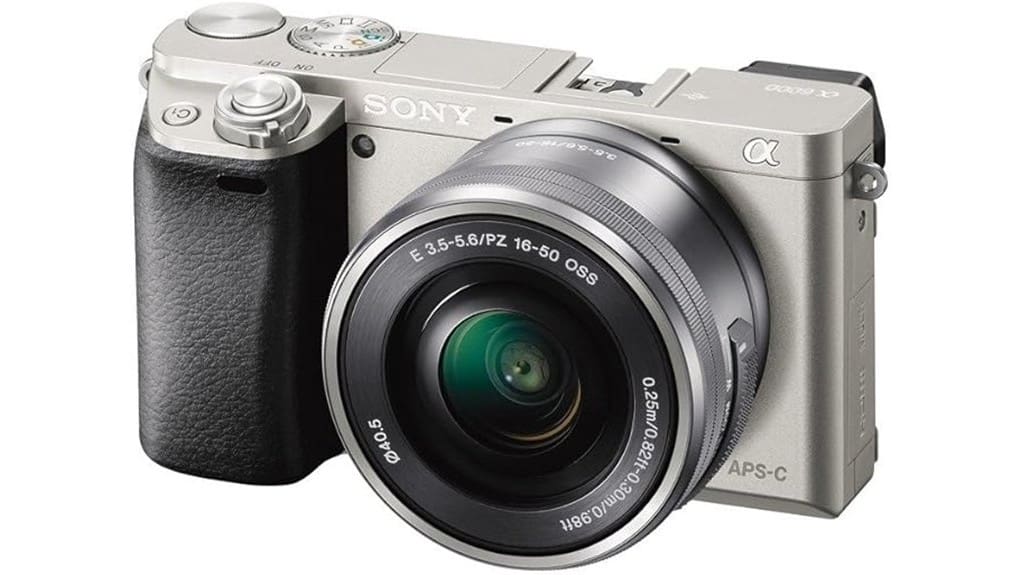
You’ll get a compact, capable mirrorless kit with a 24.3MP APS‑C sensor, RAW/JPEG capture and BIONZ X processing, plus a 16–50mm power‑zoom that’s fine for everyday shooting. The 179‑point hybrid AF and up to 11 fps give snappy tracking, Full HD 1080p covers basic video, and ISO 1600–3200 is usable with manageable noise. Check battery health, lens mechanics and sensor cleanliness on renewed units — keep going to see detailed checks, tests and buying tips.
Some Key Takeaways
- Renewed a6000 with 16–50mm is a compact, capable APS‑C mirrorless kit ideal for travel and everyday photography.
- 24.3MP sensor and BIONZ X deliver detailed RAW files, good dynamic range, and usable JPEGs.
- Fast Hybrid AF (179 phase‑detect points) with up to 11 fps enables reliable subject acquisition and tracking.
- Full HD 1080p video and tilting LCD/EVF offer flexible shooting, though battery life is modest (≈360 CIPA).
- When buying renewed, inspect lens mechanics, sensor cleanliness, battery health, shutter count, and warranty terms.
Sony A6000 16–50mm (Renewed): Quick Verdict and Who It’s Best For
Cut through the noise: the renewed Sony a6000 with the 16–50mm kit lens delivers a compact, technically capable mirrorless package that’s ideal if you want high-resolution APS‑C stills, fast autofocus, and versatile everyday shooting without upgrading lenses. You’ll get 24.3MP RAW/JPEG capture, Fast Hybrid AF with 179 phase-detect points, up to 11 fps tracking, and Full HD 1080p video. Its compact portability and beginner friendly controls (two top dials, Fn, customizable buttons, tilting LCD) make setup and use straightforward. Choose this kit if you need a lightweight, capable entry-level system with reliable performance. It’s a great match for enthusiasts looking for essential mirrorless gear that balances image quality and portability.
What’s Included and Verified Condition in a Renewed Kit
When you buy a renewed Sony a6000 16–50mm kit, the package should include the camera body with attached power-zoom 16–50mm lens, a charged NP-FW50 battery, a compatible charger, a USB cable, the body cap, and any supplied hot‑shoe accessories such as the pop‑up flash or remote. You should verify accessory authenticity via manufacturer markings and functional tests. Inspect the lens for scratches, confirm mount alignment, and test all controls and ports. Check battery condition (voltage, charge retention) and request cycle count if available. Renewed grading should note cosmetic grade, sensor cleanliness, firmware level, and warranty coverage. Also consider protective storage options like a hard case designed for photographers to keep your renewed kit safe during transport and storage, especially when traveling with gear stored in Pelican cases.
Real-World Image Quality and Performance: Photos, Autofocus, and Video
Although compact and affordable, the a6000 delivers image quality that outperforms many entry-level competitors: its 24.3 MP APS-C sensor and BIONZ X processor produce detailed RAW files with good dynamic range and manageable noise through ISO 1600–3200, while JPEGs benefit from effective in-camera correction for chromatic aberration and vignetting. You’ll get reliable autofocus from the 179-point phase-detect array—snappy subject acquisition and usable continuous AF at 11 fps. Video records solid 1080p motion with clear detail. Low light performance is competent for its class, and color accuracy validation shows neutral tones with modest processing warmth. The camera is a solid choice for enthusiast photographers looking for capable gear without moving to a full-frame system.
Ergonomics, Battery Life, and Day-to-Day Usability
Beyond image quality and autofocus, how the a6000 feels and performs day to day matters just as much for real shooting. You’ll notice compact dimensions with a modest handgrip: grip comfort is adequate for short shoots but can fatigue during extended telephoto use with the 16–50mm attached. Button placement is logical—top dials, rear wheel, Fn and seven customizable buttons give quick access to exposure, AF modes, and ISO. Battery (NP-FW50) delivers roughly 360 shots CIPA with LCD use; expect fewer with Wi‑Fi or continuous 11 fps bursts. Single card slot and included spare battery help practical workflow. The camera pairs well with compact supports like tripods for improved stability and composition.
Value Assessment: Price Ranges, Alternatives, and Buying Checklist for Renewed Units
If you’re weighing a renewed Sony a6000, consider current price bands, comparable options, and a targeted inspection checklist to guarantee value for money. You’ll typically see renewed kits priced between low-to-mid three figures depending on condition and included accessories. Compare against budget alternatives like older APS-C bodies or refurbished newer models with warranty considerations. Inspect sensor for spots, check AF points, test continuous 11 fps, verify tilt LCD and EVF functionality, confirm Wi‑Fi/NFC, and run shutter count. Make certain battery health, lens mechanics (zoom, aperture), accessory completeness, and clear return policy to protect your purchase. Also check battery compatibility with spare options and replacement sources to ensure battery longevity and easy replacements.
Some Questions Answered
Does the Renewed Kit Include the Original Charger and Battery Model?
Yes, the renewed kit typically includes the original NP-FW50 battery and Sony AC‑UB10 or equivalent charger, but availability can vary by seller. You should confirm battery compatibility with NP-FW50 specification and ask the seller to verify charger model. If original charger’s missing, you can use reputable charger alternatives that support NP-FW50 voltage/chemistry and safety features; avoid cheap unknown brands to prevent damage or reduced battery life.
Is There Any Warranty Transfer Process for Renewed Sony Cameras?
Generally no — warranty eligibility for renewed Sony cameras depends on the seller; Sony’s manufacturer warranty usually isn’t transferable for renewed/resold units. You’ll need to check transfer procedures with the reseller: they may provide a limited warranty, registration steps, or proof-of-purchase requirement. If the seller offers a transferable warranty, follow their registration and documentation process promptly. Keep serial numbers, receipts, and any refurbishment certificates to support claims.
Can I Use Third-Party Lenses With the E-Mount Without Compatibility Issues?
Yes — you can use third-party lenses with the E-mount, but third party compatibility varies by maker and firmware. You’ll get mechanical fit and electronic communication for aperture and EXIF on many Sigma, Tamron, Samyang, and Meike optics. Expect occasional autofocus performance differences: slower AF, less reliable continuous tracking, or hunting compared with native Sony lenses. Check lens reviews and camera firmware updates to maximize compatibility and AF performance.
Are Firmware Updates Already Applied to Renewed Units?
Usually not — renewed units may or may not have the latest firmware status applied. You should check the camera’s firmware version in the menu and compare it to Sony’s latest release. If it’s outdated, follow Sony’s update procedure: download the official firmware for ILCE‑6000 from Sony, connect via USB to a computer, run the updater, and complete the install. Verify success and reset settings if needed.
What Return Policy Applies if the Camera Has Hidden Defects?
If you discover hidden defects, you can request remedy within the seller’s refund window; you’ll need to document issues and contact seller returnability options promptly. You’ll typically qualify for full refund, replacement, or repair if defects weren’t disclosed and fall inside the stated period. Retain original packaging, photos, and communications. If seller won’t cooperate, escalate to platform/customer protection with your evidence to enforce returnability or chargeback within the refund window.