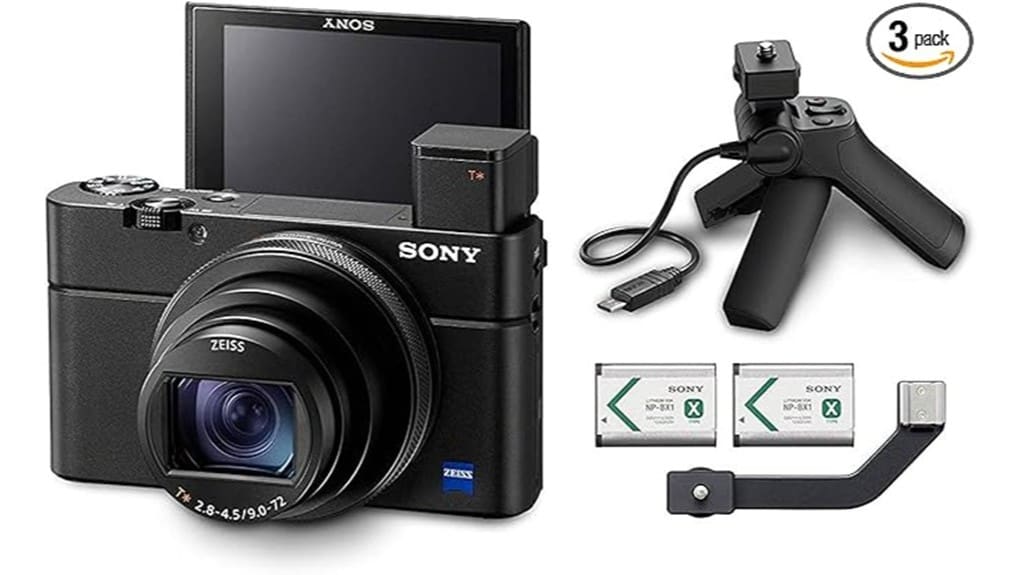
You’ll get RX100 VII image quality with compact-system handling thanks to a chunky shooting grip that repositions controls for right-hand use, adds steadiness, and doubles as a mini-tripod base. Controls are more logical and tactile, with a positive shutter, zoom rocker and large record button—ideal for run-and-gun 4K work and telephoto stills. Autofocus, including real-time Eye AF, stays fast and reliable; low-light and heat still limit long 4K takes. Keep going to see full pros, cons and alternatives.
Some Key Takeaways
- Grip transforms RX100 VII handling from pocket fidgeting to compact system camera ergonomics, reducing yaw and wrist fatigue on long shoots.
- Large tactile record button, responsive zoom rocker, and improved shutter make video framing and quick capture more reliable and comfortable.
- Zeiss 24–200mm zoom with full-pixel 4K readout yields detailed footage, reduced moiré, and confident telephoto stills.
- Real-time Eye AF remains fast and consistent, with grip controls enabling quick AF-mode changes without breaking shooting flow.
- Kit includes mic-friendly accessory mount and tripod-grip versatility, but adds no weather sealing and requires battery/heat management for long 4K sessions.
How the Shooting Grip Kit Changes RX100 VII Handling
Attach the shooting grip and the RX100 VII immediately feels more like a compact system camera than a pocket point-and-shoot. You gain noticeably improved handheld stability—its added mass and ergonomic contour reduce yaw and wrist fatigue during longer shoots. The grip repositions primary controls so your right hand reaches capture, zoom, and record without shifting stance, making operation steadier than finger stretches on the bare body. Compared to the camera alone, button layout becomes more logical and tactile, speeding response and minimizing accidental inputs. You’ll still travel light, but handling shifts from fidgety to purposeful, closer to an interchangeable-lens experience. This change in handling reflects the broader goal of mastering comfort for photographers who value improved ergonomics and prolonged shooting sessions.
Performance: Grip Controls, Mini‑Tripod, and Mounting for Video and Audio
Building on the improved ergonomics, the shooting grip’s controls give you direct, camera-like command for video work: a large tactile record button, a responsive zoom rocker wired to the 24–200mm lens, and a shutter that feels more positive than the camera’s tiny top control. You get steadier pans and faster framing versus handheld alone; the mini-tripod lockout gives stable low-angle setups and quick shifts to tabletop rigs. The accessory mount fits small microphones cleanly, improving on-camera audio without bulky adapters. Note battery life isn’t impacted much by controls, and the kit doesn’t add weather sealing to the RX100 VII. The kit is a useful addition for enthusiasts looking to pair compact cameras with stable support and accessories like tripods for better photography.
Image and Video Use Cases: 4K Recording, Time‑Lapse, and Telephoto Shooting
When you need high-res video, the RX100 VII delivers 4K UHD internally with full-pixel readout and no binning, producing cleaner, more detailed footage than typical compact 4K cams. You’ll record sharp 2160p files with reduced moiré and better color fidelity; paired with the Zeiss 24–200mm zoom you can confidently telephoto for distant subjects. Interval shooting lets you capture time-lapses as high-res still sequences for flexible post-processing. Be mindful of low‑light telephoto limits and heat during long 4K takes, and plan battery management — spare batteries or the grip’s power options keep extended shoots practical without compromising image quality. This kit is essential for mirrorless camera enthusiasts who want compact, versatile tools for both stills and video with reliable ergonomics and power options for extended use, especially when paired with a dedicated shooting grip.
Real‑World Autofocus and Ergonomics With Real‑Time Eye AF
Although compact, the RX100 VII’s Real‑time Eye AF locks onto and tracks eyes with surprising consistency, so you can concentrate on composition instead of chasing focus. You’ll notice eye tracking performs best with good contrast and predictable movement; it rivals larger mirrorless bodies in speed and retention. The shooting grip improves handling for telephoto reach and steady pans, making one‑handed framing easier. Low light AF still lags slightly compared with bright conditions, but it remains usable thanks to dense phase-detection coverage and fast processing. Controls on the grip give quick access to AF modes, letting you switch strategies without breaking your flow. The kit is a practical addition for enthusiast photographers looking to improve smooth focus and handling without the bulk of larger rigs.
Who Should Buy the Kit? (Value, Alternatives, and Final Verdict)
If you want a truly pocketable camera that behaves like a high-end compact and doesn’t force you to lug extra gear, the RX100 VII Shooting Grip Kit is a strong value—especially if you shoot travel, run-and-gun video, or telephoto stills where handling and reliable autofocus matter. You’ll get stellar 24–200mm reach, Real-time Eye AF, a grip that doubles as tripod, and mic support without bulky rigs. Choose it if you prioritize portability and instant readiness. Consider budget alternatives like older RX100 models or compact mirrorless for less cost; opt for professional upgrades—full-frame bodies and lenses—if ultimate image quality matters. Check our selection of camera shoulder bags for carry comfort when using compact kits.
Some Questions Answered
Is the Shooting Grip Waterproof or Weather-Sealed?
No — the shooting grip isn’t waterproof or fully weather-sealed. You shouldn’t expect protection against rain or immersion; water resistance testing would show vulnerability at joints, battery and USB ports. Compare it to dedicated weather-sealed grips and you’ll see less robustness. For safer use, follow seal maintenance tips: keep contacts dry, wipe down after exposure, store with silica gel, and avoid operating in heavy rain or dusty conditions to prolong life.
Does the Grip Add Significant Weight for Travel Use?
No — the grip doesn’t add significant weight for travel use. You’ll notice a modest increase, but compact portability stays intact compared with carrying a larger camera and separate tripod. The integrated grip/tripod improves travel balance when handheld or on flat surfaces, and the control buttons reduce the need for extra accessories. If you prioritize minimalism, it’s a sensible compromise offering better handling without becoming cumbersome.
Is the Grip Compatible With Earlier RX100 Models?
No, it isn’t universally compatible with earlier RX100 models. You’ll need firmware compatibility and matching electrical pins for full functionality; without them you’ll lose remote control and charging features. Physically the grip fits most bodies, but older RX100 versions often lack the required pin layout or firmware support. Compare your camera’s connector and firmware revision to RX100 VII specs before buying to guarantee capture, zoom, and record controls work.
Can the Bracket Support Larger External Microphones?
No — the bracket won’t reliably support larger external microphones. You’ll find mount stability is optimized for compact mics like the ECM-XYST1M; bigger, heavier units can stress the bracket and alter balance. Compared to dedicated shoe mounts or cage rigs, this bracket risks microphone interference from vibration and poor shock isolation. If you need larger mics, use an external shock mount or a more robust accessory with better stability to avoid interference.
Are Spare Batteries or Extra Storage Included in the Kit?
No, battery inclusion and storage options aren’t bundled beyond the camera’s standard battery and your own card. You’ll get the RX100 VII’s single NP-BX1 battery in the box, but the shooting-grip kit doesn’t add spare batteries or extra memory. Compare that to some kits that include a second battery or SD card; here you’ll need to buy spares and higher-capacity SD cards separately to extend shooting time and storage capacity.