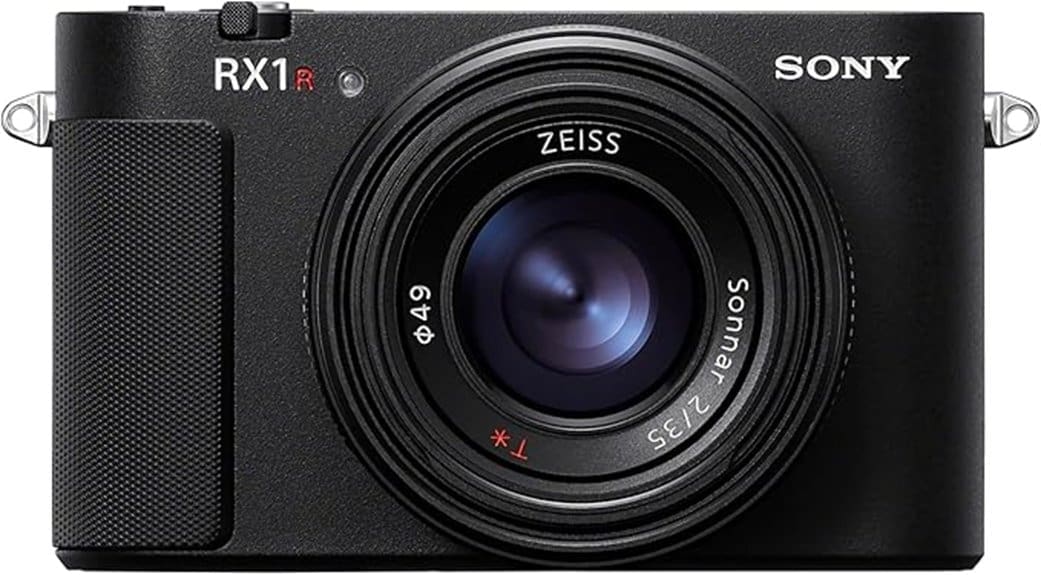
You’ll get a pocketable, studio‑grade 61‑MP full‑frame compact that’s built for demanding photographers and pros, not casual shooters. It pairs a fixed ZEISS Sonnar T* 35mm F2 optic with a back‑illuminated Exmor R sensor, 14‑bit RAW, and a BIONZ XR/AI unit driving 693‑point phase‑detect AF and real‑time tracking for pin‑sharp portraits and textured large prints. Handling is compact yet deliberate, with conservative battery life and a single card slot, and the rest of the review explains performance trade‑offs and workflow tips.
Some Key Takeaways
- 61MP full-frame Exmor R sensor delivers exceptional resolution, dynamic range, and shadow recovery for large prints and detailed textures.
- ZEISS Sonnar T* 35mm F2 fixed lens produces sharp, high micro-contrast images with classic 35mm rendering.
- 693-point phase-detect AF with AI subject recognition and real-time tracking offers reliable focus for portraits and moving subjects.
- Compact 16‑ounce body balances portability with pro-level controls, though battery life is short and only one card slot is provided.
- Limited video (1080p) and 5 FPS burst speed emphasize high-quality stills; strict RAW workflow and monitor calibration recommended.
Who This Review Is For and Quick Verdict on the Sony RX1R III
If you demand uncompromising image quality from a truly pocketable body, the Sony RX1R III is for you: it’s a full-frame, 61‑MP premium compact built for advanced photographers and pros who prioritize resolution, low‑light performance, and a classic 35mm field of view without interchangeable lenses. You’ll appreciate clinical detail reproduction, 14‑bit RAW headroom, and deterministic color for portrait lighting control. The fixed 35mm ZEISS optic and 693‑point PDAF give reliable framing and tracking. You’ll value travel portability at 16 ounces while retaining studio-grade output. This isn’t for casual users; it’s engineered for demanding, technical use. It’s an ideal choice for mirrorless camera enthusiasts who want a high-performance, compact system with essential accessories and support for mirrorless accessories.
What’s New: RX1R III Core Specs and Standout Features
You’ll notice the RX1R III sharpens the RX1 line’s focus on resolution and responsiveness while staying true to its pocketable, fixed‑lens philosophy. You get a 61MP full‑frame Exmor R sensor, ZEISS Sonnar T* 35mm F2 optics, and BIONZ XR with an AI Processing Unit for AI subject recognition and more accurate exposure/AF decisions. Phase‑detect 693‑point AF with real‑time tracking AF boosts acquisition speed; continuous shooting runs at 5 FPS. Compact portability remains: 16 ounces, fixed‑lens body that fits a jacket pocket. Video is 1080p; connectivity includes Wi‑Fi and Bluetooth for tethered workflows. The site also offers a wide selection of accessories and related gear for digital camera enthusiasts, making it easy to find compatible items like straps, cases, and filters camera accessories.
Image Quality Deep Dive: 61 MP Sensor, Lens, and RAW Performance
With a 61 MP back-illuminated full-frame Exmor R sensor paired to a fixed ZEISS Sonnar T* 35mm F2 lens, the RX1R III delivers resolution and micro-contrast that let you resolve fine detail and textures at large print sizes while keeping highlight and shadow tonality remarkably clean. You’ll appreciate the sensor’s 14-bit RAW files: they retain exceptional dynamic range, letting you recover shadows without introducing banding. The Sonnar’s lens micro contrast produces three-dimensional rendering and sharp edge delineation. Maintain strict raw workflow for maximum color fidelity and tonal gradation; careful demosaic and sharpening preserve detail without artifacts. For photographers serious about printing and color-critical work, calibrating your monitor ensures the images you see on-screen match the prints you make and the files you deliver, improving confidence in exposure and color decisions with a calibrated display.
Autofocus, Shooting Speed, and Stabilization in Real-World Use
Although compact in size, the RX1R III’s autofocus system punches well above its weight: its 693-point phase-detection array and AI-based subject recognition lock quickly and maintain consistent focus on faces, eyes, and moving subjects in real-world conditions. You’ll find phase detect coverage extensive across the frame, enabling confident composition without focus hunting. Motion tracking stays robust for pedestrian and bicycle speeds; the algorithm predicts trajectories and holds focus through brief occlusions. Burst performance is limited to 5 FPS, but buffer management and BIONZ XR processing deliver sustained RAW sequences. Digital stabilization helps handheld stills and video, though it can crop minimally. The camera pairs well with essential accessories for DSLR enthusiasts, including protective cases and quality straps, to support regular use and transport essential gear.
Handling, Ergonomics, and Display/Connectivity on a Compact Body
Because Sony packed a full-frame 61 MP sensor and a fast ZEISS 35mm F2 into a compact chassis, handling becomes a study in balance between portability and control: the RX1R III feels surprisingly firm in hand for its size, with a textured grip that lets you maintain stable support despite the camera’s 16-ounce weight, and logically placed dials and buttons that give immediate access to exposure, focus mode, and drive settings. You’ll appreciate precise grip comfort under extended shoots, an efficient button layout for one-handed adjustments, responsive screen responsiveness for menus and touch AF, and reliable connectivity range via Wi‑Fi and Bluetooth. Perfect tripods can further stabilize handheld shooting when you want pin-sharp images from this camera-focused setup.
Video, Battery Life, and Workflow (Ports, Codecs, and File Management)
Moving from handling into operational endurance and media workflows, the RX1R III pairs its compact ergonomics with practical video and file-management tools designed for advanced shooters. You’ll find 4K recording absent; video tops at 1080p XAVC with clean HDMI output for external recorders. Battery optimization matters: expect conservative run times from the single included cell—plan spare batteries for extended sessions and enable power-saving menus. Ports are minimal—USB for power/data and HDMI for monitoring/recording—so you’ll rely on tethering or external recorders for heavy codecs. File management uses a single card slot; implement disciplined offload and backup routines. Consider using an AC adapter for longer studio shoots to maintain continuous power and avoid swapping batteries, especially when recording video or tethering to a computer AC adapter.
Final Buying Considerations: Use Cases, Alternatives, and Value
When you weigh the RX1R III’s strengths against your shooting priorities, its 61 MP sensor, fixed 35mm ZEISS optic, and compact full-frame body make it an unmatched tool for high-resolution street, travel, and product work where image quality and discretion matter most. You’ll choose it if you prioritize resolution, low-light performance, and compactness for portrait applications, street photography, travel landscapes, or product marketing. Alternatives include medium-format mirrorless for ultimate detail, or zoom-equipped full-frame bodies for versatility. Consider file sizes, workflow demands, and the fixed focal length: invest if optical quality and portability outweigh focal-range flexibility. For photographers focused on distant subjects, pairing with telephoto lenses and learning their strengths can expand your shooting options.
Some Questions Answered
Does the RX1R III Weather-Seal Against Rain and Dust?
No, it isn’t fully weather-sealed; the RX1R III offers limited weather resistance but lacks exhaustive sealing details or formal ingress protection rating. You should treat it as vulnerable to heavy rain and dust ingress. For maintenance tips, avoid prolonged exposure, use a rain cover, dry and clean contacts and lens mount promptly, and store with silica packs. Service any suspected internal contamination immediately to prevent sensor or electronics damage.
Can the Lens Be Replaced or Upgraded?
No — the lens is permanent; you can’t swap or upgrade it. The RX1R III uses a fixed ZEISS Sonnar T* 35mm F2 assembly integrated with the full-frame body, so lens permanence is deliberate for optical alignment and compactness. Upgrade options are limited to firmware, digital processing (in-camera step crop modes, post-processing RAW edits) or using conversion accessories (filters, digital zoom). Mechanical lens replacement or mount conversion isn’t supported.
Is There Built-In GPS or Geotagging Support?
No — there’s no built in geotagging GPS module. You’ll need to rely on external GPS solutions: pair the camera via Bluetooth or Wi‑Fi to a compatible smartphone running Sony’s Imaging Edge Mobile to embed location data, or use an external GPS logger and match timestamps in post. This approach maintains precise coordinates, though it adds workflow steps. You’ll get accurate geotags, but they’re not native from an internal GPS unit.
What Accessories Are Compatible With Its 49MM Filter Thread?
You can mount any 49mm threaded accessory: polarizing filters (circular CPL), UV/clear protective filters, neutral density filters, and step-up rings to use larger filters. You’ll also attach screw-in lens caps and 49mm thread-compatible lens hoods or compact clip-on hoods. Choose high-quality, multi-coated glass and low-profile filter rings to avoid vignetting and preserve AF/real-time tracking performance; metal mounts improve durability and alignment.
Does the Camera Support Tethered Shooting Over USB?
Yes — you can use USB tethering with the camera for direct capture, but implementation depends on Sony’s desktop software and drivers; you’ll need the appropriate USB connection and compatible tethering app for full RAW transfer and remote control. Wireless tethering via Wi‑Fi/Bluetooth is also supported for image transfer and basic remote operation, though it’s typically slower and offers fewer controls than wired USB tethering for professional workflows.