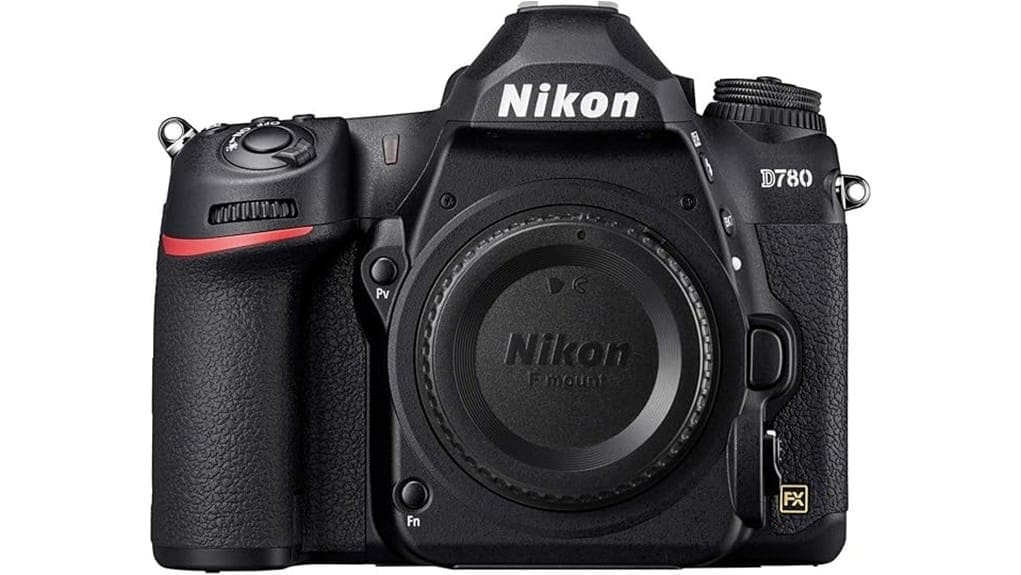
You get a rugged, DSLR‑style full‑frame body with a 24.5MP sensor and EXPEED 6, delivering high detail, controlled noise, and strong dynamic range. Phase‑detect AF in the viewfinder and hybrid AF in live view give reliable subject lock and tracking, while 4K UHD up to 30p (with some cropped modes) and 1080p120 offer solid video options. Long battery life, USB‑C charging, dual cards and weather sealing suit hybrid shooters — continue for a full breakdown.
Some Key Takeaways
- 24.5MP full-frame sensor with EXPEED 6 delivers detailed images and strong dynamic range up to mid-high ISOs.
- Hybrid AF: phase-detect in viewfinder and contrast-plus-Phase in live view for reliable subject locking and tracking.
- 4K UHD up to 30p (sometimes 1.5x crop) and 1080p at 120p for short slow-motion clips.
- Rugged magnesium-alloy body with weather sealing, USB-C charging, and long EN-EL15b battery life.
- Dual-card slots, SnapBridge connectivity, and DSLR ergonomics suit hybrid enthusiasts and field shooters.
What the Nikon D780 Offers at a Glance
Meet the D780: a 24.5 MP full-frame DSLR-style body powered by Nikon’s EXPEED 6 engine that delivers high-resolution stills and 4K UHD video capture. You’ll get robust image processing for responsive operation, support for remoteless long exposures, and wireless connectivity via SnapBridge for remote control and file transfer. The body-only configuration preserves compact ergonomics while fitting into existing lens ecosystems. Physical controls and a hybrid live-view system give direct, predictable operation. Expect longevity and professional workflow compatibility. Note included bundled accessories focus on basic operation; additional peripherals may be required for specific shooting or studio needs. For enthusiasts building a kit, consider essential extras like mirrorless camera gear to enhance shooting versatility and performance.
Image Quality and Autofocus Performance for Stills
Although the D780’s 24.5 MP full‑frame sensor and EXPEED 6 processor work together to prioritize detail and low‑noise performance, image quality ultimately hinges on lens choice and exposure technique. You’ll capture high resolution detail with controlled noise up to mid-high ISOs; Dynamic range performance is strong, preserving highlight and shadow information for conservative grading. Autofocus for stills uses phase-detect in the viewfinder and a contrast-plus-Phase Hybrid AF in live view, so subjects lock quickly and track reliably. Low light sensitivity is impressive for its class, though usable limits depend on lens speed and shooting discipline rather than sensor specs alone. The site also offers a curated selection of compatible lenses and accessories to help you get the most from your camera, including guides on choosing the right lenses for different shooting styles.
Video Features: 4K UHD, Workflow, and Low‑Light Handling
Shifting from stills to motion, the D780 leverages its 24.5 MP sensor and EXPEED 6 engine to record 4K UHD at up to 30p (with a 1.5x crop in some modes) and full‑frame 4K in select settings, delivering detailed footage with controlled noise. You’ll capture usable slow motion at 120p in 1080p for short clips. The camera outputs clean files suited to 4K grading, with broad latitude and conservative sharpening. Low light performance is strong for its class, maintaining color and detail to higher ISOs. File management is straightforward: dual-card options and logical menu organization streamline recording and offload. External camera monitors can further improve exposure accuracy and focus confirmation with real-time monitoring.
Battery, Durability, Connectivity, and Remote Capture
Typically, the D780 delivers reliable power and rugged handling for field work: its EN‑EL15b battery gives long run times for stills and video, and you can optionally use the USB-C port for on-camera charging or tethered power during extended shoots. You’ll appreciate the long lasting battery performance for day-long assignments. The magnesium-alloy shell and sealed controls contribute to rugged durability against dust and moisture, though it’s not fully weatherproofed like pro-tier bodies. Connectivity includes SnapBridge Wi‑Fi/Bluetooth for remote shooting and transfer; USB-C tethering supports live capture. Remote capture workflows are stable but depend on app and cable reliability. For photographers who shoot on location, choosing the right camera battery accessories can make multi-day shoots much easier.
Who Should Buy the D780? (Use Cases and Alternatives)
If you prioritize a versatile, full‑frame DSLR that balances high‑resolution stills and robust 4K video without moving to mirrorless, the D780 is a strong fit for hybrid shooters and experienced enthusiasts. You’ll appreciate 24.5 MP detail, EXPEED 6 speed, and reliable autofocus for Portrait shooters who need skin-tone fidelity and controlled depth of field. Wildlife enthusiasts benefit from responsive processing and remote capture for distant subjects. Travel photographers get durable body-only flexibility and SnapBridge connectivity for quick transfers. Street shooters will like discreet handling and fast operation. Consider mirrorless alternatives if you need lighter systems or faster burst rates. Perfect Tripods recommends choosing a tripod that matches your D780’s stability needs to get the sharpest shots possible.
Some Questions Answered
Does the D780 Include In-Body Image Stabilization (IBIS)?
No IBIS — the D780 doesn’t have in-body image stabilization. You’ll rely on lens stabilization for shake reduction, so choose VR-equipped optics for handheld low-light or telephoto work. That reliance means stabilization performance varies by lens, and you won’t get sensor-shift benefits like multi-axis correction or stabilization with non-VR glass. For long exposures or remote setups, use tripods or remote controls; implications include careful lens selection and workflow adjustments.
What Memory Cards Are Compatible and Recommended?
The D780 accepts SD cards (UHS I/II compatible) and XQD cards; you’ll use UHS II SDcards for faster burst write/read and High Speed CFexpress via XQD-to-CFexpress workflow if you adapt—though native CFexpress isn’t supported. For reliability, choose UHS II SDcards with V60/V90 ratings for 4K and continuous shooting, and high-end XQD cards for sustained throughput. Format in-camera and use reputable brands to minimize errors and maximize performance.
Is There a Touchscreen With Full Menu Navigation?
Yes — you get a rear touchscreen, but it’s limited. You can use touch to set focus points, navigate playback, and control some settings, yet full menu control via touch isn’t available. You’ll still operate most menus with buttons and dials. For live view and video shooting touch is more effective, but expect menu navigation to rely on physical controls for thorough adjustments and deeper system settings.
Can the Camera Record External Clean HDMI Output for Streaming?
Yes — you can output a clean HDMI feed for external recording and streaming. You’ll get uncompressed 8-bit 4:2:2 HDMI video without on-screen overlays, so external recording devices or streaming encoders can capture a clean signal. You’ll need an HDMI capture device or recorder and appropriate cables; guarantee camera settings (movie mode, HDMI resolution/frame rate) match your external recorder’s requirements for stable output and compatibility.
Is the D780 Weather-Sealed for Heavy Rain and Sand Exposure?
Yes — the D780 has weather sealing, but it’s not invulnerable. You’ll get strong dust and moisture resistance from its sealed body and lens mounts, so light rain and dusty conditions are manageable. Don’t assume full sand resistance; fine abrasive particles and prolonged heavy rain can breach seals over time. You should use protective covers, avoid changing lenses in harsh conditions, and perform regular maintenance to prolong reliability.