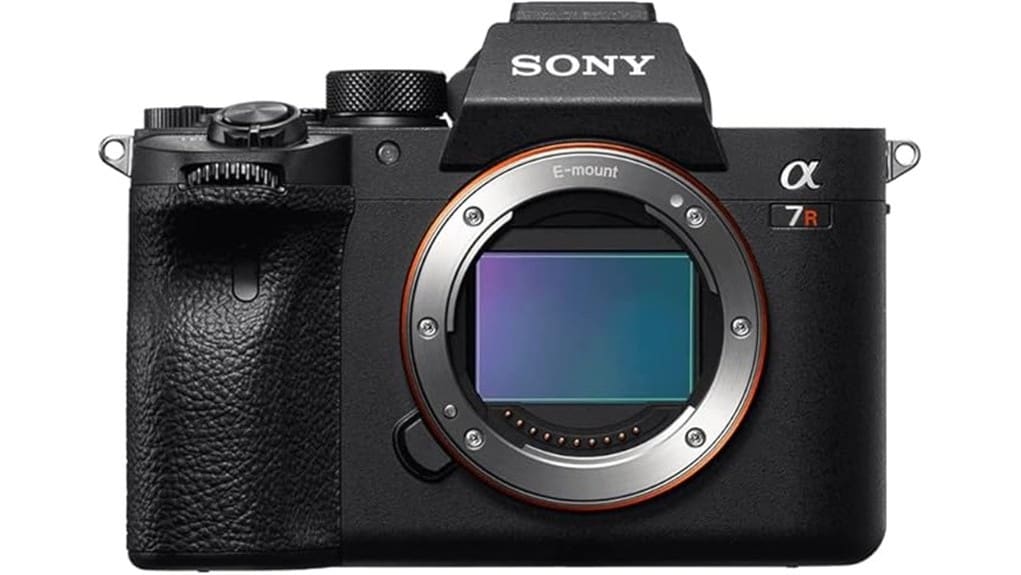
You’ll get a 61MP full-frame sensor that delivers exceptional microdetail and a 15-stop dynamic range for predictable 14-bit RAW grading; noise is controlled at base ISO but high-ISO grain emerges sooner than on lower-resolution bodies. Autofocus uses 567 phase/contrast points with reliable Eye AF and 10 fps bursts for tracking, while oversampled 4K up to 30p serves most video needs though heat can limit long takes. Keep reading to learn specific workflow and lens choices.
Some Key Takeaways
- 61 MP full-frame sensor delivers outstanding microdetail and 14-bit RAW for demanding stills and precise color grading.
- Excellent 15-stop dynamic range with strong highlight retention and wide shadow latitude for high-contrast scenes.
- Advanced AF: 567 phase/contrast points, real-time Eye AF, and reliable AF-C tracking with 10 fps bursts on UHS-II cards.
- Oversampled internal 4K up to 30p (XAVC S/HS) but watch thermal limits for extended takes and consider a field monitor.
- In-body stabilization and ergonomic body suit handheld work, but use top-tier lenses, fast shutter speeds, or tripod for peak microsharpness.
Who Should Buy the Sony Alpha 7R IV a and Why
If you need ultra-high resolution for large prints, commercial work, or detailed landscape and studio photography, the Sony Alpha 7R IV is a strong choice because its 61 MP full-frame sensor delivers exceptional detail and a 15‑stop dynamic range while maintaining a wide ISO range up to 102,400. You’ll prefer it if you’re a portrait photographer needing superior resolving power for tight crops and high-quality retouching, or a landscape shooter demanding micro-detail and extended tonality. Its 10 fps burst, advanced AF with 567 points, and IBIS outperform many rivals, though file sizes and processing demands are appreciably higher. It’s also well supported by a broad selection of essential DSLR gear useful for photographers building out a complete kit.
61MP Image Quality, Dynamic Range, and Real-World RAW Results
Having established why the 61 MP sensor suits print-focused and detail-critical work, let’s examine how that resolution, the 15-stop dynamic range, and 14-bit RAW capture perform in real-world files. You’ll notice exceptional raw sharpness when using quality glass and careful technique; microdetail exceeds most 42–45 MP rivals. Dynamic range delivers robust highlight retention and shadow latitude, letting you recover exposure without heavy artifacting. Noise performance at base and moderate ISOs is excellent for 61 MP files, though high-ISO grain and detail loss appear earlier than lower-resolution bodies. Color fidelity is accurate and consistent across profiles, making grading predictable and efficient. For photographers who clean and maintain their gear, using proper sensor care and sensor cleaning kits helps preserve that image quality over time.
Autofocus, Burst Speed, and Tracking Performance in Practice
While the 61 MP sensor grabs attention, the a7R IV’s autofocus system and burst capabilities determine whether you can reliably capture fleeting moments, and in practice they’re impressively capable. You’ll find Real-time Eye AF delivers consistent eye tracking for humans and animals, reducing reliance on manual placement. Continuous focus (AF-C) maintains subject lock across frame shifts, aided by 567 phase/contrast points. Burst testing at 10 fps with AE/AF sustains performance for many frames on fast UHS-II cards, outperforming previous R-series models in tracking continuity. In challenging scenes you still need practiced framing and lens selection for peak results. Gear Guide readers will also appreciate the site’s selection of camera accessories to pair with the a7R IV.
Video Capabilities: 4K Recording, Codecs, and Heat/Record Limits
Moving from stills performance to moving-image capabilities, the a7R IV offers robust 4K capture that leverages its high-resolution sensor and advanced AF to keep subjects sharp during recording. You’ll record oversampled 4K (up to 30p) with flexible picture profiles; internal XAVC S and XAVC HS 4K codecs provide efficient H.264/H.265 compression and higher bitrate options for grading. Dual UHS-II slots support high sustained write speeds, but note practical Heat limits: extended 4K filming raises sensor and body temperature, triggering time/thermal cutoffs sooner than lower-res shooting. Compare to competitors for runtime and sustained bitrate performance. For on-set monitoring and assessment, pairing the camera with a field monitor can significantly improve focus accuracy and exposure evaluation.
Handling, Viewfinder, and Articulating Touchscreen Workflow
Because Sony balances a compact mirrorless body with a deep grip and a logically placed control set, you’ll find the a7R IV feels secure for extended handheld use and precise when composing high-resolution frames. You get excellent ergonomic balance compared with rivals: the heft stabilizes the 61MP sensor without fatigue. The Tru-Finder OLED viewfinder provides high-resolution preview and accurate framing, while button customization lets you map frequent controls for quicker operation. The articulating 3.0-inch touchscreen adds useful Screen articulation for low/high angles; Touch responsiveness is good for focus-point selection and menu navigation, though some workflows still favor physical dials. External monitors for photography can further improve composition and focus confirmation with larger, brighter displays and waveform tools for exposure evaluation, making them a valuable accessory for external camera monitors.
Stabilization, Lenses, and Memory Card Requirements for High-Res Shoots
As you push the 61MP sensor to its limits, stabilization, lens quality, and card performance become mission-critical: the a7R IV’s in-body sensor-shift stabilization mitigates shake for many handheld exposures, but for pixel-level sharpness you’ll often need tack-sharp glass, fast shutter speeds, or a tripod and head that eliminate micromovement. Choose high-resolution primes or top-tier zooms—compare MTF charts and corner performance; avoid inexpensive optics that soften microcontrast. For burst shooting and high-bitrate RAW sequences, prioritize UHS-II cards with sustained card write speeds matching your workflow; undervalued cards create buffer bottlenecks and longer write/clear cycles. Consider investing in high-end cfexpress memory cards to handle the sustained speeds demanded by prolonged high-resolution shooting.
Value as a Certified Refurbished Body: Warranty, Accessories, and Alternatives
After you’ve locked down lenses, stabilization, and card speed for pixel-level work, the decision to buy a certified refurbished Sony Alpha 7R IV body hinges on warranty scope, accessory inclusion, and cost-to-performance trade-offs. You’ll evaluate manufacturer-refurbished units offering limited 90-day hardware warranties; check warranty transferability since that affects resale and service options. Confirm accessory completeness—battery, charger, body cap, and original paperwork—to avoid added expense. Compare refurbished pricing against used and new models: saved cost vs. potential shorter warranty and unknown service history. For critical professional use, weigh extended-service plans or buy new for maximum coverage. Also consider protective transport and storage when assessing overall value, including Pelican cases for photographers.
Some Questions Answered
Does the Camera Support Tethered Shooting With Capture One or Lightroom Classic?
Yes — you can tether the camera: Tethered compatibility exists via USB and HDMI for Remote capture workflows. You’ll get reliable Remote capture with Capture One using Sony’s tethering support or Capture One’s native drivers; Lightroom Classic supports tethering natively but may be more limited. Compare: Capture One offers fuller control, faster RAW transfer and better session tools, while Lightroom Classic gives basic tethered import and live view options.
Can the IBIS Be Locked or Turned off for Astro Tracking?
Yes — you can disable IBIS lock on the Sony Alpha 7R IV A for astro tracking. You’ll turn off the sensor-shift stabilization in the menu, which prevents the IBIS lock from compensating and inducing star trails. Compared to leaving IBIS active, disabling sensor shift yields steadier point stars when using a tracking mount. For best results, also calibrate mount alignment and use appropriate exposure and guiding settings.
Is There a Vertical Grip Accessory Compatible With This Model?
Yes — you can fit a compatible battery grip/portrait grip. You’ll want Sony’s VG‑C4EM (designed for the a7R IV series) or reliable third‑party grips that mate to the E‑mount body, provide vertical controls, and accept extra batteries. Compare specs: official grips offer full button parity, weather sealing, and seamless battery management; third‑party options often cost less but may lack sealing or firmware integration. Verify mount fit and battery type before buying.
What Is Battery Life in Cold Weather Shooting Conditions?
Expect noticeably shorter battery life in cold weather: battery drain increases and reduced performance appears below 0°C (32°F). You’ll get roughly 30–60% of normal runtime depending on temperature, usage (EVF, LCD, Wi‑Fi, video) and whether image stabilization runs. Compare to room temperature figures: continuous shooting and video suffer most. Carry spares, keep batteries warm in an inner pocket, and swap frequently to mitigate drain and reduced performance.
Are There Firmware Updates That Improve Autofocus or Video Features?
Yes — Sony releases firmware improvements that include autofocus tweaks and video enhancements. You’ll see incremental gains in tracking stability, eye AF responsiveness, and AF-C behavior, plus added codecs or frame-rate optimizations for 4K recording. Compared to earlier builds, updated firmware often lowers latency and improves subject recognition under challenging light. You should check Sony’s support site for version notes and apply updates via USB or SD-card installer to benefit.