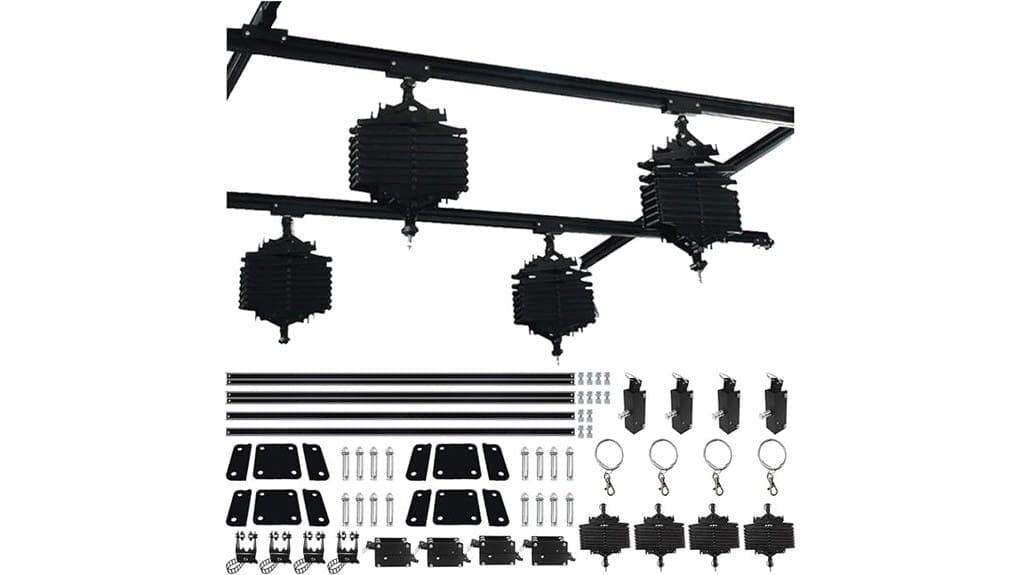
You’ll free floor space and get repeatable, precise lighting with the 78.7″×78.7″ pantograph ceiling rail system, a 2.0×2.0 m grid using four 100×100 mm fix plates and two single/two double rails. Each arm drops 43–200 cm and holds up to 15 kg, but confirm ceiling anchors and load distribution. Cable pulleys and security ropes control sway and trip hazards. It suits studios needing consistent multi‑directional placement; continue for installation, testing, and alternative options.
Some Key Takeaways
- 2.0M×2.0M (78.7″×78.7″) ceiling rail grid frees floor space and enables precise, repeatable overhead light placement.
- Four pantographs adjust 43–200 cm vertically, each supporting up to 15 kg; check total weight distribution.
- Installation requires four 100×100 mm fix plates and structurally rated ceiling anchors or reinforced beams.
- Cable pulleys and security ropes provide tidy power/sync routing and prevent sway for stable exposures.
- Best for small-to-medium studios needing repeatable positioning; alternatives include wall mounts, C-stands, or motorized rails.
How the 78.7″×78.7″ Pantograph Ceiling Rail System Works in a Studio
Mount the 78.7″×78.7″ pantograph ceiling rail system to free up floor space and give you precise, repeatable light placement across the studio. You’ll mount four 100×100 mm fix plates and rail segments to create a 2.0M×2.0M grid supporting four pantographs. Adjust each pantograph 43–200 cm to set height; use single/double pulleys for lateral positioning. This integrates into your ceiling workflow, letting you shift lights front/back and left/right without stands. Cable management uses cable pulleys and security ropes to route cords along tracks, reducing trip hazards and maintaining consistent emitter orientation for repeatable setups. This setup is ideal for photographers seeking versatile light stand solutions and a cleaner studio environment.
Key Specs That Matter: Size, Load, Reach, and Mounting Details
Now that you’ve seen how the grid and pantographs fit into studio workflow, let’s look at the specifications that determine compatibility and performance. You’ll get a 2.0M×2.0M rail footprint (two single, two double tracks) that defines coverage and rail alignment tolerances. Pantographs adjust 43–200 cm for reach; maximum load is 15 kg per arm, so verify weight distribution across four pantographs. Fix plates (100×100 mm) and included mounting hardware require evaluating ceiling reinforcements and anchor type; inadequate structure risks failure. Use precise measurements and load calculations to confirm the system meets our studio’s mounting and safety requirements. Pelican cases offer rugged transport and equipment protection for photographers moving heavy lighting gear between shoots.
Real-World Setup and Adjustment: Installation, Pantograph Use, and Space Savings
Get the rail grid secured to a structurally rated ceiling before you add pantographs or gear: verify anchorage points align with the four 100×100 mm fix plates and use appropriate anchors or reinforced beams for the expected loads. You’ll mount two single and two double 2.0M tracks, align pantograph positions, and tension cables per manual. Adjust pantograph drops (43–200 cm) for scene specific routing and maintain ceiling cable management by grouping power and sync lines along tracks and pulleys. Use security ropes and fix plates to prevent sway. This setup reclaims floor space and reduces tripod and cable clutter. Ceiling-mounted systems like these are ideal for passionate photographers looking to maximize studio workflow and organization.
Performance Check: Stability, Flexibility, and Light Positioning Results
While you test the system, focus on three measurable areas: mechanical stability under load, range and smoothness of pantograph adjustment, and achievable light positioning accuracy. You’ll load to near 15 kg and note deflection, play, and any long‑term drift. The pantograph moves between 43–200 cm with repeatable stops; adjustments are smooth with minimal stiction. Rail runs allow precise lateral/front‑back placement; locking points hold position. Vibration damping is satisfactory for flash sync use, reducing micro‑shake. Shadow control is effective when combining vertical and horizontal offsets, enabling crisp edge definition and predictable falloff for consistent shots. For rigging safety and optimal performance, consider compatibility with heavy‑duty light stands and proper ceiling mounting.
Who Should Buy It and Alternatives to Consider
If you run a small-to-medium studio or frequently shoot product and portrait work and need a reliable, space-saving overhead mounting solution, this pantograph ceiling rail system offers a compact, repeatable way to position flashes with minimal floor clutter. You should buy it if you require precise multi-directional light placement, predictable pantograph drops (43–200 cm), and up to 15 kg load capacity per arm. It’s suitable for rentals, education, and studios prioritizing safety and workflow. Budget buyers may compare cheaper wall-mounted or C-stand setups, while pros might prefer motorized ceiling rails or other alternative mounts with higher loads and remote control. Many photographers who value organization also integrate dedicated equipment carts to keep lights and modifiers nearby for faster changeovers.
Some Questions Answered
Can the System Accommodate LED Panels With Non-Standard Mounts?
Yes. You can mount LED panels with non-standard mounts by using mounting adapters or custom brackets that interface with the pantograph plate and pulleys. You’ll attach adapters or brackets to the panel, secure them to the 100×100 mm fix plates or the pantograph, and verify load stays under 15 kg. Follow torque and safety-rope guidelines, and request installation videos or support if you need bespoke bracket designs or fitment checks.
Is Electrical Wiring Included for Motorized Upgrades?
No — electrical wiring for motorized upgrades isn’t included. You’ll need to plan electrical compatibility and follow wiring guidelines when integrating motors or powered slides. Consult the manufacturer’s specs for voltage, current, grounding, and conduit requirements. Use a licensed electrician to install motor controllers, wiring runs, and safety interlocks. Keep load limits, cable routing, and fastener ratings in mind to maintain structural and electrical safety.
Can Multiple Pantographs Be Synchronized for Simultaneous Movement?
Yes — you can synchronize multiple pantographs for simultaneous movement, but you’ll need a coordinated control method. You’ll integrate motorized drives or a linked mechanical system and make certain proper load balancing across all pantographs so no single unit exceeds the 15 kg capacity. You’ll also match travel ranges and mounting heights, use a common controller or synchronized motors, and verify wiring, safety ropes, and structural fix plates for reliable, repeatable synchronized movement.
Are Replacement Cables or Pulleys Sold Separately?
Yes — replacement parts like cables and pulleys are available separately; contact the seller or manufacturer for sourcing. For maintenance tips, regularly inspect cables for fraying, lubricate pulley axles lightly, and tighten fix plates to maintain alignment. Keep spare pulleys and security ropes on hand to minimize downtime. Document part numbers from the original package list to guarantee correct replacements and verify load ratings before reinstallation to preserve safety.
Does the Warranty Cover Accidental Damage During Installation?
No, the warranty typically won’t cover accidental damage during installation; warranty exclusions usually list user-caused damage and improper installation as installation liability exceptions. You should document conditions and follow provided PDF/video instructions precisely. If you need coverage, contact seller support before installing to confirm terms or request extended protection. Keep photos and timestamps of installation; they’ll help dispute liability or request paid repair/replacement under warranty or service options.