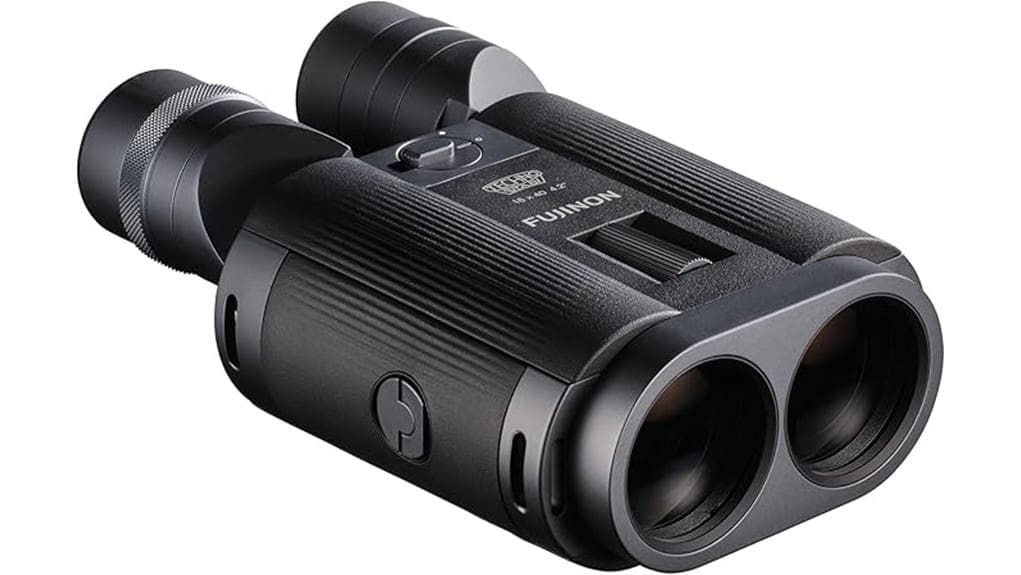
You’ll get a stabilized 16x/40mm spotting scope that’s optimized for birding, marine use, and events, delivering crisp, high‑contrast views with ED glass, EBC coatings, and phase‑corrected prisms. The ±3° electronic stabilization makes handheld use practical in low light, while manual focus and a metal roof‑prism chassis guarantee durability. It runs on two AAA cells for long runtime but adds recurring battery logistics. Keep going and you’ll find detailed performance, ergonomics, and alternatives.
Some Key Takeaways
- 16x magnification with a 40mm objective delivers high-detail viewing for birding, marine use, and events.
- ED glass, EBC multicoatings, and phase-corrected prisms produce crisp, high-contrast images with minimal chromatic aberration.
- ±3° electronic stabilization enables steady handheld viewing in low light, with responsive start/stop behavior.
- Powered by two AAA cells for roughly 30 hours typical runtime, balancing longevity with recurring battery logistics.
- Robust metal roof-prism body (850 g) suits marine and field use but is bulky for lightweight hiking or travel.
Quick Verdict: Should You Buy the FUJINON Techno‑STABI TS‑L1640?
If you need high-magnification, stabilized optics for birding, marine work, or events, the FUJINON Techno‑STABI TS‑L1640 delivers: its 16x/40mm ED optics, FUJINON EBC coatings and ±3° electronic stabilization produce steady, high-contrast images in low‑light conditions while remaining handheld. You’ll get precise, usable views for field ID and distance observation. Consider battery economics: two AAA cells give long runtime but recurring cost and logistics matter for extended trips. Assess resale value: Fujinon gear typically holds value, so upgrade paths stay viable. Buy if you prioritize stabilized, high-magnification optics with proven optics and durability. Many photographers protect and transport optics like this in rugged cases such as Pelican cases to ensure gear safety during fieldwork.
What the TS‑L1640 Offers: Key Specs and Stabilization Features
Because Fujinon balanced high magnification with stabilization, the TS‑L1640 gives you 16x power with a 40 mm objective and ±3° electronic image stabilization to deliver steady, high‑contrast views even when handheld. You get ED glass, EBC multicoatings, phase‑corrected prisms and a 5° field of view for accurate, contrasty imaging. Manual focus with ±3 diopter adjustment and a metal roof‑prism chassis support durability and precise control. Powered by 2×AAA cells, stabilization emphasizes battery efficiency with up to 30 hours runtime. The compact dimensions, 850 g weight and rubberized surfaces reflect an ergonomic design for prolonged handheld use. Fujinon’s design makes this optic particularly useful for photographers who manage and shape light with accessories like silver reflectors to improve contrast and lighting in field use.
Real‑World Performance: Clarity, Low‑Light Use, and Stabilization Test Results
When you put the TS‑L1640 to use in the field it delivers crisp, high‑contrast images with minimal chromatic aberration thanks to ED glass and EBC multicoatings, and its phase‑corrected prisms preserve resolution across the 5° field. You’ll see fine detail at 16x with low distortion; contrast artifacts are rare except near extreme field edges. In low‑light you retain usable image brightness owing to efficient coatings and a 2.5 mm exit pupil, though performance trails larger objectives. Stabilization provides steady framing with ±3° electronic correction; start/stop is responsive and battery longevity meets the specified ~30 hours under typical use. For users who shoot outdoors, pairing the optic with a polarizing filter can further reduce glare and boost color saturation.
Who It’s Best For: Use‑Case Breakdown (Birding, Marine, Concerts, Hiking)
Although compact enough for day hikes, the TS‑L1640 really shines where steadiness and detail at distance matter: its 16x magnification, ED glass and electronic ±3° stabilization let you resolve fine features without a tripod. You’ll find it excellent for birding: high magnification and ED glass reveal plumage and distant perches, stabilization reduces shake during handholding. On marine outings it steadies horizon and marker viewing; the metal body resists deck conditions. For concerts and sports it isolates subjects across venues. For hiking and compact travel it’s borderline—useful if weight isn’t critical. Low‑light capability supports dusk use and basic night photography. Its compactness and steady output pair well with LED panel illumination for improving subject detail in low light.
Alternatives and Value: Comparable Stabilized and Non‑Stabilized Binoculars to Consider
If you want stabilization and high magnification but need different price points or features, consider both stabilized peers and high‑quality non‑stabilized alternatives that trade weight and electronics for optics and simplicity. You’ll compare models by stabilization method, optical glass, and ergonomics. Stabilized peers offer electronic or gyroscopic systems with similar ED glass and ±3° correction but factor in battery alternatives and runtime. Non‑stabilized options—lighter, fewer moving parts—deliver superior optical throughput per dollar and suit tripod use. For value, weigh warranty, service, and budget competitors that match field of view and magnification before choosing. Consider also how portable power banks can extend runtime for stabilized binoculars in the field.
Some Questions Answered
Are Replacement AAA Batteries Included With the Binoculars?
No, replacement AAA batteries aren’t included; the binoculars require 2 × AAA for stabilization. You’ll install your own cells, so check battery inclusion before purchase if you need spares. The unit’s power source longevity is specified up to about 30 hours per full charge with quality alkaline or rechargeable AAA cells. For reliable operation bring fresh batteries and spares; runtime varies with cell type, temperature, and usage intensity.
Can These Binoculars Be Mounted on a Tripod?
Yes — you can mount them on a tripod. You’ll need tripod compatibility via the binocular’s built-in tripod socket and suitable mounting adapters for stabilization and weight support. Use a robust adapter or dedicated tripod adapter plate rated for ~850 g plus any adapter weight, and a steady tripod head to handle the electronic stabilization. Make sure adapter alignment preserves the eyepiece position and doesn’t obstruct battery access or focus operation.
Is the Stabilization Waterproof or Weather‑Resistant Rated?
No — the stabilization isn’t given an IP waterproof or specific weather‑resistance rating. You can use the binoculars outdoors in typical conditions, but Fujinon doesn’t certify the electronic stabilization as fully waterproof. Expect battery life and image clarity to remain good in light rain or drizzle if you avoid immersion, but you shouldn’t submerge or expose the unit to heavy downpours. For marine or severe weather use, seek rated alternatives or protective housing.
Do They Come With a Carrying Case and Neck Strap?
Yes — they include a carrying case and neck strap. You’ll get a padded carrying case sized for the TS-L1640 and a neck strap that attaches to the binocular housing for handheld use. The case protects optics and accessories; the strap secures the unit during fieldwork. Both items are basic, functional, and aimed at portability rather than heavy-duty protection. Check retailer listings for exact accessory contents before purchase.
Are Service Repairs Available Outside the U.S.?
Yes. You can obtain international service through Fujifilm’s authorized repair network; contact local Fujifilm service centers for availability and procedures. Warranty coverage varies by country—regional terms may differ from the U.S. one‑year warranty. You’ll need your proof of purchase and serial/model number (TS‑L1640, 16900903) for authorization. Expect localized repair times, potential service fees, and shipping requirements if parts aren’t stocked regionally. Contact Fujifilm support to start.