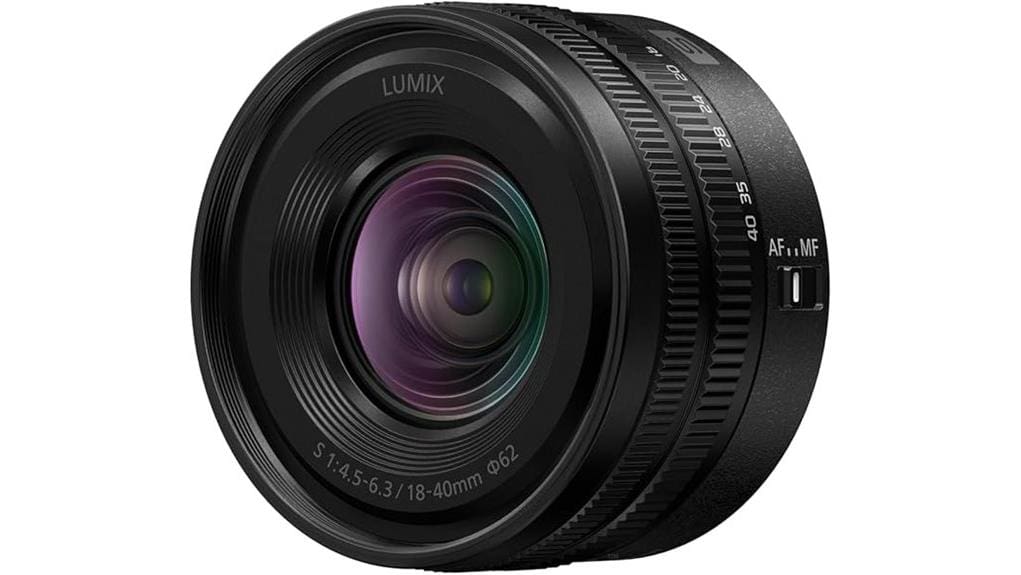

You’ll get an exceptionally compact L‑mount zoom that favors portability over low‑light speed, delivering very strong center sharpness from 18–35mm and respectable edge performance stopped down. Autofocus is swift with reliable tracking and minimal focus breathing for video; microcontrast and fine‑detail lag premium S‑series primes and corners stay soft wide open. No optical stabilization means you’ll rely on in‑body IS or a gimbal. Keep going for specifics on handling, use cases, and alternatives.
Some Key Takeaways
- Lightweight, ultra‑compact zoom ideal for travel and vloggers seeking portability on L‑mount full‑frame bodies.
- Strong center sharpness from 18–35mm, with corner softness at 18mm that improves when stopped down toward f/8–f/11.
- Microcontrast and fine‑detail rendering fall short of premium S‑series primes, affecting ultimate resolution and texture.
- Swift, quiet autofocus with good subject tracking and minimal focus breathing, though lens noise can transmit to sensitive mics.
- No optical stabilization or weather sealing; rely on IBIS, gimbals, or tripods and protect the lens in damp conditions.
What the Panasonic LUMIX S 18–40mm Is and Who It’s For
While it looks like a simple travel zoom, the Panasonic LUMIX S 18–40mm F4.5–6.3 is a deliberately engineered, ultra-wide-to-standard full-frame zoom that prioritizes portability without sacrificing image quality, making it ideal for travel, street, and run-and-gun video work. You get a 18–40mm range in the world’s smallest, lightest AF-compatible full-frame zoom package, so you’ll compare weight and size benefits against slightly faster but bulkier alternatives. It’s aimed at travel photographers and vloggers on the go who need compact versatility, reliable autofocus, and minimized focus breathing for efficient hybrid photo/video capture. Perfect Tripods offers gear recommendations for photographers looking to maximize portability with lightweight tripods.
How the 18–40mm Performs: Sharpness, Autofocus, and Bokeh
Expect the 18–40mm to deliver very usable sharpness across its range with a few caveats: center resolution is strong from 18mm through 35mm at typical working apertures, but corner performance softens noticeably at the widest end and improves as you stop down toward f/8–f/11. You’ll see respectable edge sharpness once stopped down, though microcontrast and fine detail lag behind premium S-series primes. Autofocus is swift with minimal focus lag on compatible L-mount bodies, tracking reliably for stills. Background rendering produces smooth, restrained bokeh with controlled contrast gradation, useful for environmental portraits and travel work. It’s a compact option that complements mirrorless camera systems aimed at enthusiasts.
Video Usability: Focus Breathing, Stabilization, and Real-World Clips
Having covered sharpness, autofocus, and bokeh for stills, let’s look at how the 18–40mm behaves for video work—especially its focus breathing, lack of stabilization, and how it handles in real-world clips. You’ll appreciate Panasonic’s focus breathing suppression during pulls: frame size shifts are minimal compared with older wide zooms, aiding clean focus ramping. There’s no optical stabilization, so you’ll rely on in-body stabilization or gimbals for smooth handheld shots. In-field clips show crisp edges and minimal breathing, but you must monitor camera handling and audio pickup—lens noise is low, yet bodily handling can transmit sound to sensitive mics. When shooting video, consider adding a field monitor to better judge framing, focus, and exposure in real-world conditions.
Size, Handling, and Build: Portability, Controls, and Mounting Notes
Because Panasonic trimmed both diameter and length, the S 18–40mm feels noticeably lighter and less front-heavy on compact L‑mount bodies—you’ll notice the reduced torque when panning or switching shoulders. You get compact ergonomics that suit travel rigs and small gimbals; balance is superior to typical 18–35/24–70 alternatives. Controls are minimal but effective: a smooth zoom ring and responsive AF with predictable throw for manual override. Mounting is straightforward on Leica L/Mount systems, though the lens lacks weather sealing, so plan for cover in damp conditions. Overall build is precise, with durable finishes and tight tolerances for daily carry. This makes it an excellent candidate for use with top handles to improve grip and comfort on run-and-gun setups.
Buy or Skip? Verdict, Ideal Use Cases, and Alternatives to Consider
While it won’t replace faster, weather-sealed zooms for demanding pro work, the Panasonic LUMIX S 18–40mm delivers a compelling balance of weight, reach, and image quality that makes it a strong buy for travel shooters, content creators, and run‑and‑gun videographers who prioritize portability over maximum aperture. You should buy it if you value compactness, low weight, and suppressed focus breathing for video; skip it if you need low‑light speed or weather sealing. Ideal use cases: travel, vlogging, landscape, and run‑and‑gun shoots. Consider budget alternatives or faster L‑mount zooms; check sample galleries to verify real‑world performance. The lens is particularly appealing for photographers who prioritize portability and versatility on mirrorless full‑frame systems, especially those using the L‑mount ecosystem.
Some Questions Answered
Is This Lens Weather-Sealed or Water Resistant?
No — it’s not weather-sealed and lacks moisture protection. You’ll get a compact, lightweight zoom, but it won’t match weather-resistant lenses for shooting in rain or dusty conditions. Comparatively, pro L-mount zooms often include seals at mounts and switches; this one omits them to save weight and size. If you need moisture protection and reliable all-weather performance, consider a weather-sealed alternative or use protective covers during adverse conditions.
Does It Include Image Stabilization In-Lens?
No — it doesn’t include in lens stabilization; there’s no optical stabilization. You’ll rely on camera body IBIS or faster shutter speeds for steady shots. Comparatively, lenses with optical stabilization give extra stop advantage for handheld work; this compact S-R1840 prioritizes size over built-in stabilization. Practically, pair it with a Lumix or L‑Mount body that has IBIS, or use gimbals/tripods for video to minimize shake and preserve sharpness.
What Is the Exact Filter Thread Diameter?
The filter thread diameter is 52 mm. You’ll compare 52 mm filters across brands for optical coatings quality and edge performance; pick multi-coated options to minimize flare and ghosting. You’ll appreciate the practical compactness when matching filter step-up rings or caps. Technically, 52 mm matches many standard accessories, keeping weight and vignetting low on wide settings. Don’t forget to verify coating specs for best contrast and color fidelity.
Is This Lens Compatible With APS-C L-Mount Bodies?
Yes — you can use the full-frame L-mount lens on APS-C L-mount bodies, but you’ll experience crop adaptation (1.5x) that narrows field of view to about 27–60mm equivalent. You won’t need mount adapters for native L-mount APS-C cameras, though adapters exist for other mounts. Practically, expect improved reach, preserved autofocus and exposure, and minor vignetting possible; compare framing and depth-of-field to decide if this suits your shooting needs.
Does It Come With a Manufacturer Warranty Card In-Box?
Yes — the lens ships with standard manufacturer warranty coverage, but you won’t always get a separate printed warranty card in-box. You should register the product online via warranty registration to activate coverage; retain your proof requirements like the purchase receipt and original packaging photos. Practically, online registration is comparable to physical card activation, and it’s the reliable method to guarantee service eligibility and fast claim processing.