
If you’re after a straightforward, budget DSLR that’s friendly for beginners, the Canon EOS 2000D (Rebel T7) delivers detailed 24MP stills, simple controls, and Full HD 30p video with HDMI out. Its 9‑point AF and DIGIC 4+ are basic, low‑light performance trails newer models, but battery life and EF/EF‑S lens compatibility are solid. Renewed kits with starter accessories make it a practical learning package — keep going to see real‑world strengths, limits, and buying tips.
Some Key Takeaways
- 24.1MP APS-C sensor delivers detailed JPEGs/14-bit RAW with beginner-friendly color and decent dynamic range for entry-level use.
- Autofocus is a basic 9-point system (phase-detect in viewfinder, contrast-detect in Live View), sufficient for portraits but not fast action.
- Video caps at Full HD 1080p30 with HDMI output, suitable for vlogs and family clips but limited dynamic range.
- Ergonomic, easy-to-use controls, on-board Feature Guide, Wi‑Fi/NFC and Camera Connect for remote capture and image transfer.
- Renewed kits offer great value with extensive accessories, but check shutter count, sensor condition, battery life, and warranty.
Who the Canon EOS 2000D (Rebel T7) Is Best For
Although it’s an entry-level DSLR, the Canon EOS 2000D (Rebel T7) suits beginners and casual photographers who want a straightforward, capable camera without a steep learning curve. You’ll find it ideal if you’re learning exposure, framing, and composition thanks to clear auto modes and an on-board guide. Beginner videographers will appreciate simple Full HD recording and HDMI output for basic projects, though pros will want more. Travel photographers benefit from the included starter kit—versatile zoom, wide-angle, and telephoto options plus extra storage and protection—so you can shoot varied scenes without immediately upgrading equipment or accessories. The kit is especially helpful for those building out their essential gear for DSLR photography.
Key Specs at a Glance: Sensor, AF, Video, and Kit Lenses
Now that you know who the 2000D suits, let’s look at the hardware that determines how it performs. You get a 24.1MP APS-C CMOS sensor and DIGIC 4+ processor delivering 14-bit RAW and JPEG files with respectable dynamic range for an entry DSLR. Autofocus is a straightforward 9-point system with AI Servo; phase detection in the viewfinder and contrast detection on Live View mean competent subject tracking but limited low light AF performance. Video is Full HD 1080p at 30 fps with HDMI output. Kit includes the 18–55mm f/3.5–5.6 lens plus tele and wide converters. Mirrorless photographers may still find value in the 2000D as an affordable entry DSLR that pairs well with essential mirrorless gear for hybrid workflows.
Real-World Image and Video Performance You Can Expect
How will the 2000D handle your everyday shooting? You’ll get detailed 24.1MP stills with straightforward color rendition that’s friendly to basic color grading in post. Daylight and controlled interiors look clean; low light performance is limited by DIGIC 4+ and ISO ceiling, so expect more noise above ISO 1600. Video delivers usable 1080p/30 for vlogs and family clips, though dynamic range is modest. Autofocus tracking is basic—9-point AF won’t chase fast action reliably, but it’s adequate for portraits and static subjects. Battery life is respectable for a DSLR; pack a spare for extended shoots. This site focuses on gear for enthusiast photographers and camera fans, so you can find accessories and lenses to complement the 2000D.
Usability: Controls, Menu, Wi‑Fi/NFC, and App Workflow
When you pick up the 2000D, its controls and menu layout make basic operation straightforward: dedicated mode dial and quick control buttons let you switch exposure modes and access key settings without digging through menus, while the on‑board Feature Guide explains settings in plain terms. You’ll appreciate clear button placement and tactile controls, though there’s no touchscreen — don’t buy into touchscreen myths here. Menu depth is modest, aimed at beginners, and you can assign a few custom shortcuts for frequently used items. Wireless pairing via Wi‑Fi/NFC is simple; the Camera Connect app supports basic remote capture and image transfer. If you use wireless camera remotes, pairing and remote triggering are a helpful complement to wireless camera remotes for studio and travel photography.
What’s in the Kit and Which Accessories Matter Most
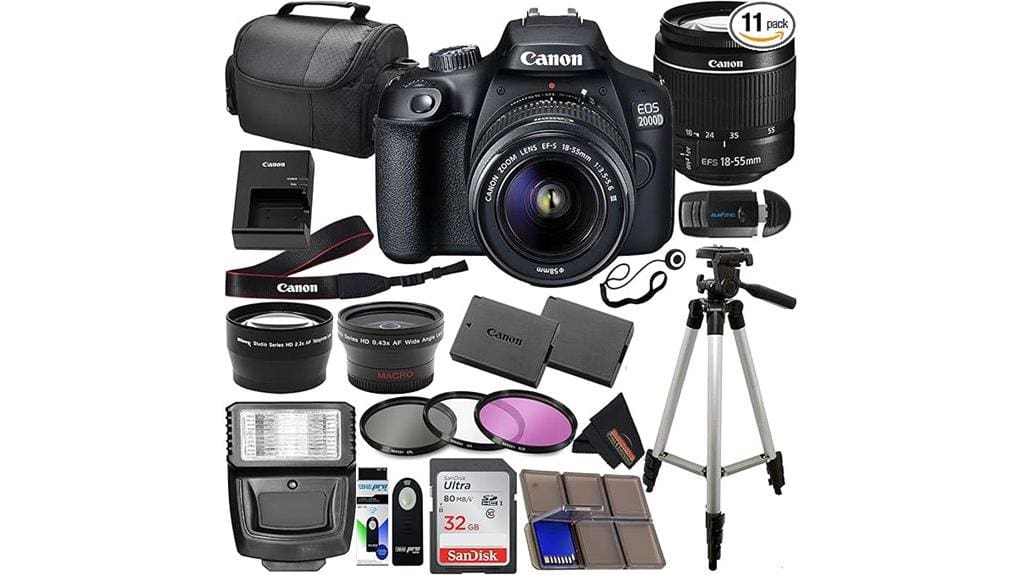
The kit bundles everything a new DSLR owner needs to get shooting immediately: the renewed Canon EOS 2000D body, the Canon EF‑S 18–55mm f/3.5–5.6 III kit lens, a 2× teleconverter-style telephoto, a 0.45× wide‑angle adapter, a 128GB UHS‑I card, two tripods (a 50‑inch and a flexible mini), a slave flash, padded SLR bag, lens hood and cap keeper, multi‑coated filter set, extra UV filter, card reader, screen protectors, and assorted cases — a all-inclusive package that emphasizes convenience and value for beginners. You’ll appreciate the filter kit and extra UV for protection and creativity; the tele and wide adapters broaden focal options. Prioritize the quality tripod, slave flash, and keeping spare batteries; battery grips aren’t included but can extend shooting time and ergonomics later. Choosing the right camera bag insert helps organize and protect this full kit when you travel.
Strengths and Limitations Compared to Newer Entry DSLRs
Now that you know what’s in the kit and which accessories will matter most, it’s worth weighing how the renewed Canon EOS 2000D stacks up against newer entry-level DSLRs. You’ll appreciate its 24MP sensor, EF/EF-S lens compatibility, solid battery life and included accessories that boost budget performance. However, you’ll notice feature gaps: slow 3 fps burst, basic 9-point AF, limited video (1080p30), older DIGIC 4+ processor and fewer low‑light capabilities compared with newer rivals. If you prioritize image quality on a tight budget, it’s competent; if you need modern AF, faster shooting or advanced video, expect compromises. For photographers who shoot a lot and need reliable storage for high-resolution files, pairing the camera with larger capacity memory cards can make a big practical difference.
Should You Buy a Renewed 2000D Today? Buying Tips and Verdict
If you’re shopping on a strict budget and need a straightforward DSLR that covers stills and casual video, a renewed Canon EOS 2000D is a practical choice. You’ll get a capable 24MP sensor, useful kit lenses, and basic Full HD video for learning. Check shutter count, inspect for sensor dust, and verify battery longevity since replacements may be needed sooner on renewed units. Confirm return policy and any seller warranty to protect resale value. If you want modern AF, higher frame rates, or 4K, look elsewhere; for budget learning, the 2000D remains a sensible, economical option. Consider also keeping a spare battery from a trusted battery supplier to avoid missed shots.
Some Questions Answered
Does This Renewed Kit Include Original Canon Packaging and Manuals?
No, the renewed kit typically doesn’t include original Canon packaging or full manufacturer manuals. You’ll get the boxed contents listed (camera, lenses, accessories, 128GB card, bag, tripods, filters, flash, etc.) but items may be in generic or reseller packaging. For authenticity verification, check seller photos, serial numbers, and ask for original manuals or Canon warranty papers before buying; reputable refurbishers will provide clear documentation.
Is the Battery and Charger Included and Are They Genuine Canon Parts?
Yes — a battery and charger are included in the renewed kit, but battery authenticity can vary; sellers often provide third-party replacements rather than genuine Canon LP‑E10 cells. You should verify with the seller if they confirm original Canon parts. Charger compatibility is generally broad — supplied chargers work with the camera’s battery form factor, though non‑Canon chargers may lack official safety certifications. Ask for photos and part numbers to confirm.
Can I Use Newer EF-M or RF Lenses With Adapters on This Body?
Yes — you can use EF-M or RF lenses with adapters, but be aware of mount limitations. The camera natively accepts EF/EF‑S; EF M compatibility requires a specific adapter that adapts mount and flange distance, while RF adapters may work but are less common and can introduce issues. You might face Autofocus issues, slower AF, or limited functionality (no full electronic control) depending on adapter quality, lens, and firmware.
What’s the Expected Remaining Shutter Count or Condition Report?
You can’t know exact remaining shutter count without testing, but for a renewed Canon EOS 2000D expect moderate shutter lifespan — typically 50,000–150,000 actuations for entry DSLRs. Have the seller provide the current count or run a shutter test tool. Inspect sensor health visually for hot pixels, dust, or oil on long exposures and check image samples at various ISOs. Request return terms if counts or sensor issues aren’t disclosed.
Are There Any Cosmetic Blemishes or Functional Defects Disclosed?
Yes — you’ll find only minor scuffs on the body and kit accessories consistent with renewed condition; no major dents or cracks are disclosed. Functionally, they report no issues, and autofocus, exposure, and video operate as expected. Sensor spots aren’t noted in the listing, but you should request close-up sensor and sample images to confirm absence of dust or marks. Ask for a shutter count and return policy before buying.