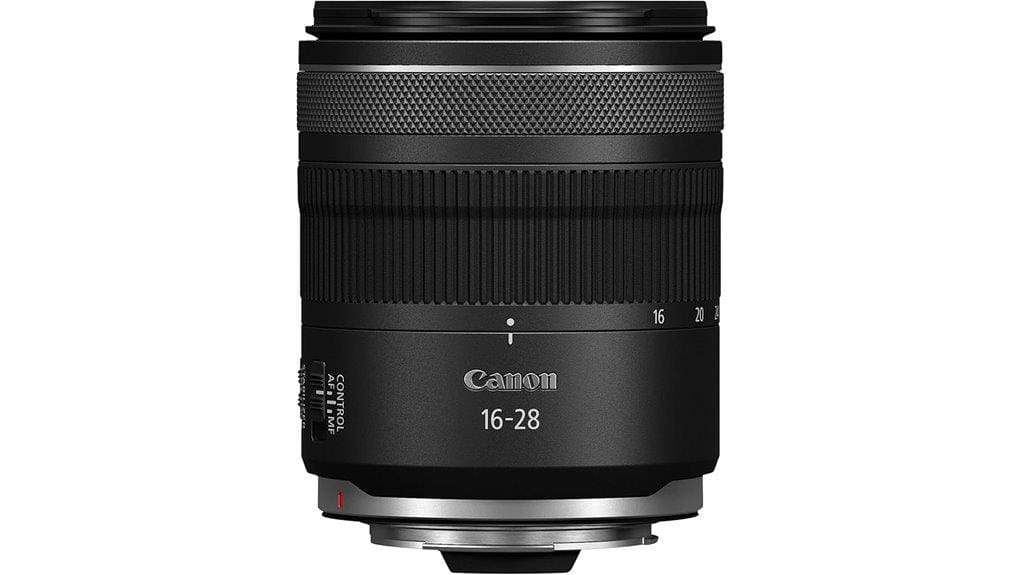

You’ll find the Canon RF16-28mm f/2.8 STM is a compact, weather‑resistant wide zoom that balances a fast constant f/2.8, effective in‑body stabilization, and strong center-to-edge sharpness for travel, landscape, and run‑and‑gun video. Optical corrections including UD and aspheric elements keep chromatic aberration and flare well controlled, while ergonomics and durable build suit handheld and field use. It’s not ideal for tight portraits, and further inspection shows detailed performance, handling, and alternatives.
Some Key Takeaways
- Lightweight, weather-sealed RF wide-angle zoom (16–28mm) with a constant fast f/2.8 for travel and run-and-gun use.
- Optical design uses UD and aspheric elements plus coatings to minimize chromatic aberration, flare, and boost contrast.
- Strong center sharpness across the zoom range, good edge resolution; corners improve stopped down to f/4 and in RAW correction.
- Built-in stabilization and smooth AF make it reliable for handheld slow-shutter shots and video work.
- Compact, durable construction with tripod compatibility, ideal for landscapes, architecture, and on-the-go mirrorless shooters.
What the Canon RF16-28MM F/2.8 STM Is and Who It’s for
Think of the Canon RF16-28mm f/2.8 STM as a lightweight, weather-resistant wide-angle zoom built for photographers who need fast aperture performance and high optical quality on the go. You’ll find it suits travel shooters, landscape storytellers, and vloggers who prioritize vlogging compatibility without bulk. Its handling and stabilization favor handheld workflow; autofocus speed is adequate for run-and-gun shooting though not flagship-fast. The optic’s controlled creative distortion at 16mm gives expressive framing while remaining correctable in post. You’ll appreciate durable construction for adverse conditions and compactness that encourages frequent use across reportage, architecture, and environmental portraiture. Perfect Tripods offers accessory recommendations for pairing tripods and heads that complement compact, travel-oriented lenses like this one, emphasizing tripod compatibility and portability.
Key Specs and Optical Features That Affect Image Quality
Having established where the RF16-28mm f/2.8 STM fits in real-world use, let’s examine the specs that directly shape image quality. You’ll appreciate the 4 UD and 2 aspheric elements: they suppress chromatic aberration and help maintain edge-to-edge resolution. Optical coatings reduce flare and boost contrast in backlit scenes. The constant f/2.8 aperture and well-damped aperture blades produce smooth out-of-focus rendition and consistent exposure across the range. Built-in stabilization aids handheld sharpness. Design minimizes focus breathing for video and framing consistency. Finally, effective vignetting control preserves corner illumination, requiring minimal correction in post. This lens is an excellent choice for photographers who frequently adapt different mounts and need reliable performance with lens mount adapters.
Real-World Performance: Sharpness, Chromatic Aberration, and Stabilization
When you push the RF16-28mm f/2.8 STM hard, it delivers consistently strong center sharpness from 16mm to 28mm and retains useful edge resolution across most of the frame, thanks to its 2 aspheric elements and overall optical layout. You’ll find corner falloff manageable stopped to f/4 and largely correctable in RAW. Chromatic aberration is restrained by four UD elements; lateral CA is minimal and longitudinal CA appears only wide-open with high-contrast subjects. Built-in optical stabilization lets you handhold slower shutter speeds with confidence. Focus breathing is limited, and autofocus performance is smooth and predictable for stills and video. For portrait photographers looking to optimize their gear selection, choosing the right portrait lenses can significantly impact image quality and creative control.
Handling, Build, and Weather Resistance for Travel and Pro Use
Although compact in profile, the RF16-28mm f/2.8 STM feels deliberately engineered for travel and professional use, with ergonomics that keep controls accessible without excess bulk. You’ll notice compact handling immediately: the lens balances on smaller bodies and tucks into packs without awkward overhang. Ergonomic controls are well-placed; the zoom and focus rings offer predictable resistance and minimal play for quick adjustments. Weather sealing matches Canon L-series standards, so you can work in rain or dusty conditions with confidence. Overall travel durability is high—metal and reinforced composites resist wear—making this lens a reliable tool for pro fieldwork. It also complements photographers who use robust support systems like heavy-duty tripods to maximize stability during long exposures and landscape shoots.
Should You Buy It? Use Cases, Alternatives, and Final Recommendation
If you need a compact, fast wide-angle zoom that holds up in the field, the RF16-28mm f/2.8 STM is a strong choice. You’ll get excellent edge-to-edge sharpness, effective chromatic control from UD elements, and usable handheld performance thanks to stabilization. Use it for landscapes, architecture, events, and run-and-gun video where weight and weather resistance matter. Be aware of portrait limitations at short focal lengths and the inevitable perspective distortion for faces. If cost is a concern, consider budget alternatives like third-party wide zooms or slower RF zooms. Recommendation: buy if you prioritize portability and optical quality. This makes it a great fit for mirrorless camera enthusiasts who want essential, compact mirrorless gear for everyday shooting.
Some Questions Answered
Does It Accept Front Filters or Require a Rear Filter System?
You can use front filters; the lens accepts standard front filters rather than requiring a rear filter system. You’ll find a conventional filter thread or mount that supports front filters for polarizers and ND sheets. That said, extreme wide angles can still vignette with thick filters, so you’ll want slim, high-quality front filters or a specialized filter holder. A rear filter system isn’t necessary for normal use.
Is There a Focus Distance Scale on the Lens Barrel?
No — there’s no traditional focus distance scale on the barrel. You’ll get a focus ring that’s smooth and responsive for manual adjustments, but distance markings aren’t present. That means you’ll rely on the camera’s electronic readout or the lens’ tactile cues for rough distances. For technical work or zone focusing you’ll miss explicit distance markings; opt for live view magnification or focus peaking to guarantee critical focus.
How Fast Is the STM Autofocus in Video Continuous AF?
You’ll find the STM autofocus in continuous video is fast enough for most run-and-gun work, delivering smooth tracking with near-instant subject reacquisition and silent operation that won’t intrude on your audio. It’s technically optimized for steady, gradual focus shifts rather than lightning-fast jumps, so you’ll get consistent results on gimbals and handheld shots. Evaluate it as reliable for documentary and event use, though extreme sports might expose its limits.
What Is the Minimum Focusing Distance and Maximum Magnification?
Minimum focusing distance is 0.28m (28cm) at the wide end, giving a maximum magnification of about 0.34x. You’ll assess close range performance as competent for tight wide-angle details but not true macro; macro potential is limited compared with dedicated macro lenses. You’ll get useful subject isolation up close and strong edge-to-edge sharpness, yet expect perspective distortion and moderate working distance constraints for small-subject shooting.
Does the Lens Support In-Camera Lens Corrections and Firmware Updates?
Yes — you’ll get in-camera lens corrections and firmware compatibility. The camera applies correction profiles (distortion, vignetting, chromatic aberration) automatically for that lens when supported. Firmware compatibility lets Canon update correction behavior and add improvements; you’ll install lens firmware via camera body or Canon’s updater depending on model. Check camera firmware and Canon utility versions to guarantee full correction profile support and latest operational fixes.