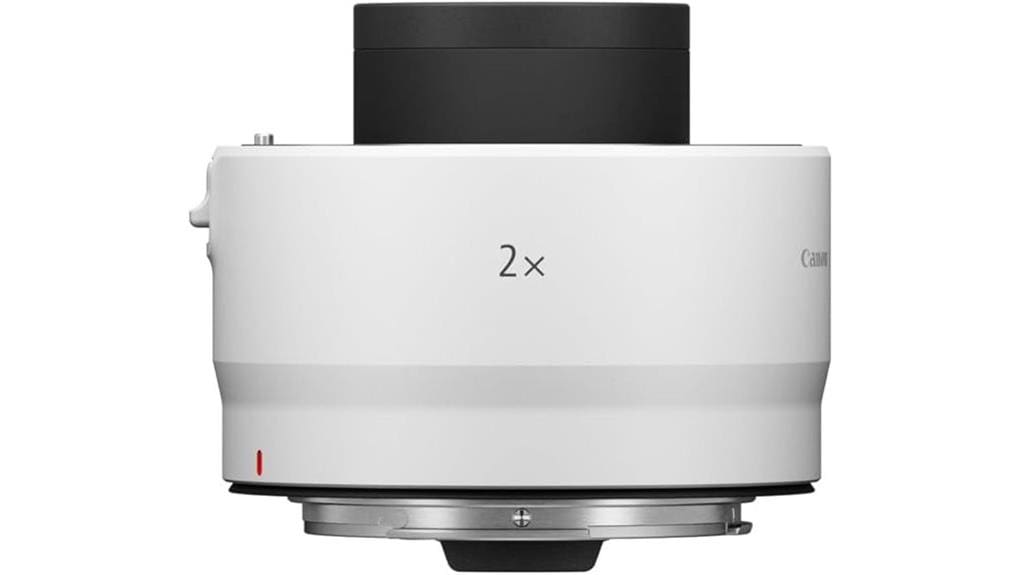

If you shoot sports, wildlife, or press and need reliable extra reach, the Canon Extender RF2x doubles focal length while keeping AF, stabilization, and weather sealing on supported RF super-telephotos. You’ll lose about two stops of light and some edge fine detail, but center sharpness and usable AF remain strong on compatible lenses and bodies like the R5/R3. It’s built for pros and serious enthusiasts; keep alternatives and cost in mind, and continue for details on performance, pairings, and trade-offs.
Some Key Takeaways
- Doubles compatible RF lens focal length with good center sharpness but some edge/detail softening, especially wide open.
- Reduces effective aperture by two stops, increasing noise and dynamic-range demands at high ISO.
- Preserves autofocus and image stabilization on supported bodies, though AF may lag in low-contrast or fast-action scenes.
- Best paired with RF 100-500mm, RF 600mm, and RF 800mm lenses on R5/R3-class bodies for optimal integration.
- Recommended for pros/enthusiasts needing extra reach; compare cost to renting or buying longer primes first.
What the Canon Extender RF2x Is and Who Should Consider It
Think of the Canon Extender RF2x as a precision teleconverter that doubles the focal length of compatible RF lenses, giving you twice the reach without changing lenses. You’ll get teleconverter basics: a 2x optical converter that mounts between camera and lens, extending focal length while altering effective aperture and relying on the host lens for focusing. Target users include press, nature, and sports photographers or advanced enthusiasts who need extra magnification without carrying giant primes. You’ll appreciate mechanical robustness, seamless optical integration with select RF lenses, and automatic exposure control on compatible bodies — a specialist tool for reach-focused shooting. It’s a useful accessory for photographers who already use teleconverter-compatible lenses and want more reach without swapping glass.
How the RF2x Affects Image Quality and Autofocus Performance
Now that you know what the RF2x is and who it’s for, let’s look at how it alters image quality and autofocus behavior. You’ll gain doubled reach but face measurable resolution tradeoffs: center sharpness remains strong with compatible RF optics, while edges and fine detail can soften, especially at close ranges and wide apertures. Light loss reduces effective aperture by two stops, impacting noise and dynamic range at higher ISOs. Autofocus remains usable, but you may notice slight autofocus lag versus native lenses, particularly in low contrast or fast-action scenarios. Expect reliable performance with careful technique and appropriate camera bodies. Speed-sensitive photographers should pair it with high-speed memory to maximize shooting workflow and buffer clearing.
Which RF Lenses and Camera Bodies Work Best With the Extender RF2X
Pair the RF2x with long, high-resolution RF telephotos and you’ll get the most reliable results: Canon’s RF 100-500mm F4.5-7.1L IS USM is the clear best match because it was designed to integrate with the extender, maintaining AF functionality and delivering the most consistent central sharpness after the 2x multiplication. You’ll also find excellent results with Canon’s RF 600mm and 800mm primes on bodies like the R5 and R3, which retain AF and stabilization. For crop-sensor R7/R10 use you’ll gain reach but should check tested combinations for AF consistency. These best pairings prioritize optical design and camera processing. Consider pairing these lenses with a sturdy camera cage when shooting handheld or on gimbals to protect the rig and improve handling.
Real-World Use Cases: Sports, Wildlife, and Press Shooting With the RF2x
When you need to reach subjects that are distant, fast, or fleeting, the Canon Extender RF2x gives you a straightforward way to double your effective focal length while keeping autofocus and stabilization intact on supported RF glass and bodies. You’ll find Telephoto reach invaluable for wildlife hides, sideline sports, and press perimeters where you can’t approach subjects. Combined with fast AF and compatible bodies, Action freezing becomes practical even at extended distances. Field compression helps isolate subjects and produce impactful frames. Expect some Low light performance trade-offs due to aperture loss, but stabilization and high-ISO capability keep most shoots viable. For photographers who also work with aerial perspectives, FPV drones can complement long-reach glass by offering unique angles and motion that pair well with traditional telephoto compositions, especially in FPV drone camera gear setups.
Buy or Skip? Pricing, Alternatives, and Final Recommendation
While the Extender RF2x adds a clear, practical boost to reach, you’ll want to weigh its cost against the specific lenses and shooting scenarios you use most; it’s priced as a specialist accessory aimed at pros and serious enthusiasts who already own compatible RF super-telephoto glass (notably the RF 100–500mm L), and it preserves AF and stabilization so you don’t lose critical functionality. For a buy-or-skip call, compare price comparison data against buying a longer prime or renting for occasional needs. Alternatives include third-party teleconverters or adapting lenses via alternative mounts, but you’ll trade integration, AF reliability, and weather sealing—so buy if you need dependable reach now. Consider using a color checker when evaluating how teleconverters affect color rendering and exposure consistency.
Some Questions Answered
Does Using the RF2X Affect Lens Weather Sealing?
Yes — adding the RF2x can affect weather sealing. You’ll increase mounting torque and introduce an extra junction that relies on seal maintenance to remain effective. Treat the extender and lens mounts like another vulnerable interface: keep contacts and mounts clean, check rubber gaskets, avoid forcing mounts, and replace worn caps. Proper care preserves resistance, but the extender adds a potential leak point compared with a direct lens-body connection.
Can I Mount Filters or Teleconverters in Front of the RF2X?
No — you can’t mount filters or front converters in front of the RF2x. You’ll mount the RF2x between your RF lens and camera body, so filter adapters and front converters belong on the lens front, not the extender. Adding accessories to the rear of the lens or the extender’s front isn’t supported and can interfere with flange spacing and autofocus. Use compatible lens-mounted filter adapters and avoid stacking front converters with the RF2x.
Will the RF2X Work With Third-Party RF Lenses?
Not generally — you’ll get best results with Canon RF lenses that passed Canon’s compatibility testing. The RF2x can physically mount on some third-party RF lenses, but manufacturers don’t guarantee full electronic communication, AF performance, or stabilization. Expect variable optical performance and possible loss of autofocus, metering or image quality with unsupported lenses. If you rely on critical performance, test your specific lens in real shooting conditions before regular use.
Does the RF2X Support In-Camera Lens Aberration Correction?
Yes — when used with compatible Canon RF bodies and lenses, the RF2x supports in camera correction and uses aberration profiling to help maintain image quality. You’ll get automatic aberration corrections (vignetting, chromatic aberration, distortion) passed to the camera’s processing pipeline, provided the camera firmware recognizes the extender–lens combination. Third‑party lenses may not receive full profiling, so corrections can be limited or unavailable in some pairings.
Is Firmware Needed for Camera-Extender Compatibility?
Yes — you’ll often need firmware updates for proper compatibility. Check Canon’s compatibility matrix to confirm which cameras support the Extender RF2x and whether a camera body firmware update is required. Manufacturers release updates to enable communication, AF performance, and aberration correction with specific RF lenses. You should install the latest camera and extender firmware per Canon’s instructions to guarantee reliable operation and full-featured integration.