
You’ll get reliable, credit-card–sized prints with punchy, warm-toned color and an ISO 800 sensitivity that’s forgiving in daylight. Each 15-pack supplies 300 glossy, white‑bordered sheets that develop quickly and show film‑like grain without losing detail. Exposure is generally consistent, though backlit scenes can underexpose; colors favor peachy skin tones and yellowish greens. It’s a cost-effective choice for parties, travel, and scrapbooks, and the rest of the review covers compatibility, value tips, and alternatives.
Some Key Takeaways
- Reliable credit-card–sized Instax Mini film produces vivid, warm-toned prints with classic white borders and glossy finish.
- ISO 800 sensitivity yields forgiving exposure and quick development, stabilizing minutes after printing.
- Colors are punchy with a warm bias (peachier skin tones, yellow-leaning greens) and visible film-like grain.
- Best for casual use: parties, travel, scrapbooks, and instant keepsakes; compatible with Instax Mini cameras and Mini printers.
- 15-pack (300 sheets) offers strong per-print value, though film lacks water resistance and manufacturer warranty.
Quick Verdict: Is Fujifilm Instax Mini Instant Camera Film Worth Buying?
If you want reliable, pocket-sized instant prints with vivid colors and a classic white border, the Fujifilm Instax Mini Instant Camera Film is worth buying—especially in the 15-pack value option that supplies 300 credit-card–sized sheets at ISO 800. You’ll get consistent exposure, natural-looking grain, and rapid development suitable for daylight shooting. It pairs with Instax Mini cameras and compatible printers, delivering tangible shots that evoke instant nostalgia and support tactile gifting. It’s not water resistant and lacks extras like audio or warranties, but for straightforward, affordable analog prints in bulk, it’s a practical, cost-effective choice. This film is an ideal addition for fans of instant cameras who enjoy analog photography gear.
What’s in the Box and Exact Specs You Should Care About
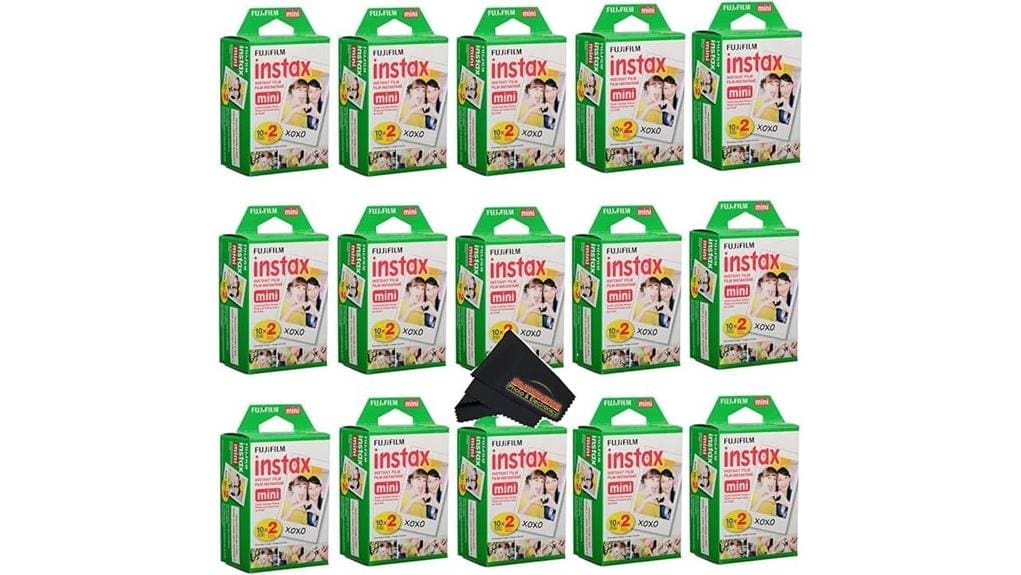
Although the box looks simple, you get a substantial supply: fifteen individual Instax Mini packs totaling 300 credit-card–sized sheets (5.4 x 8.6 cm) with a 2.4 x 1.8-inch glossy image area, each sheet single-exposure and framed by the classic white border. The box contents list is straightforward: 15 twin packs (MINI1PAK), UPC 603563704295, ASIN B0DHYGS52F. Film specs you should note: Instax Mini format, ISO 800, colored film, automatic exposure, daylight-balanced, glossy finish. It’s compatible with Instax Mini cameras and Mini smartphone printers. No water resistance, no audio, no manufacturer warranty included. This film is ideal for hobbyists who often use on-camera LED lights to brighten their photography.
How the Images Actually Look: Color, Exposure, Grain, and Development Speed
When you shoot with Fujifilm Instax Mini film, colors come out punchy with a warm bias—skin tones lean slightly peachier and greens skew toward yellow—while contrast stays moderate so highlights rarely blow out. You’ll notice consistent color rendition across daylight shots; saturation is boosted but not oversaturated. Exposure tends to be forgiving thanks to automatic controls and ISO 800 sensitivity, though backlit scenes can underexpose. Grain character is visible and film-like, adding texture without obscuring detail. Development is relatively quick due to thin-film emulsions and accelerators—images appear within minutes and stabilize in tone after a short period. The film is popular among hobbyists who enjoy shooting with film cameras and other analog gear.
Best Use Cases and Camera Compatibility (Which Instax Cameras and Printers to Pair It With)
Because the Instax Mini format is compact and ISO 800, it’s best suited to casual everyday use, parties, travel snapshots, and instant keepsakes where quick, tangible prints matter more than fine detail. You’ll find it ideal for Instant parties and Travel mementos: group shots, candid moments, and scrapbooks benefit from the credit-card prints. Pair the film with Instax Mini cameras (Mini 12, 11, 9, 8, 7+, 40, 90, 70, Hello Kitty) for point-and-shoot simplicity, or use Mini smartphone printers (SP-2, Mini Link) for mobile printing. It also works in Polaroid PIC 300 and other Mini-format devices. Portable photo printers make it easy to capture moments anywhere with physical prints on the go.
Value Comparison and Buying Tips: Cost Per Shot, Alternatives, and When to Stock Up
Crunch the numbers and you’ll see the Instax Mini 15-pack (300 sheets) delivers clear per-shot savings versus smaller packs: at typical retail prices the bulk bundle reduces cost per print substantially, making it a smart buy if you regularly shoot parties, events, or travel. You’ll calculate cost per shot by dividing total price by 300; compare that to twin packs for true savings. Alternatives include third-party Instax-compatible film—often cheaper but with variable color fidelity and warranty. For stocking strategy, buy bulk before peak seasons, check seller return policies, and rotate stock to avoid long-term storage degradation. Consider keeping a small multi-tool kit handy for quick camera and accessory adjustments while shooting.
Some Questions Answered
Does This Film Expire or Lose Quality Over Time?
Yes — film expires and can lose quality over time. You’ll see color shift and reduced contrast as emulsion breakdown progresses, especially if packs are stored warm or humid. Unopened film usually stays stable until its printed expiry date if kept cool and dry; refrigerated storage extends life. Once exposed, development suffers if the emulsion’s degraded, producing muted colors, increased grain, and uneven development, so check dates before shooting.
Can I Cut Sheets to Fit Non-Mini Cameras or DIY Projects?
Yes — you can cut sheets for DIY projects, but you’ll void any handling safeguards and risk exposing unprotected film. Use a clean, dark area, sharp blade, and wear gloves; cut only after the image’s latent period or in complete darkness before exposure. Leave borders intact for stability or create custom masks to control framing. Test on expendable sheets first, and expect possible light leaks, uneven development, or damage.
Is the Packaging Eco-Friendly or Recyclable?
No — the packaging isn’t marketed as fully eco-friendly; it doesn’t specify recycled materials or compostable inserts. You’ll find standard cardboard boxes and plastic film, which are partly recyclable depending on local rules, but Fujifilm hasn’t labeled them as made from recycled materials or including compostable inserts. You should check local recycling guidelines before disposing, and consider contacting the seller for detailed packaging material disclosures.
Are There Temperature/Storage Guidelines for Best Results?
Yes — you should store packs at cool, stable temperatures; ideal storage temperature is around 10–25°C (50–77°F). Avoid high heat or humidity and keep films in their sealed packaging until use. For long term freezing you can freeze unopened packs to slow aging, but thaw them to room temperature in sealed packaging before opening to prevent condensation. Use opened packs promptly and avoid direct sunlight or hot cars.
Can I Use Expired Instax Mini Film Safely for Portraits?
Yes — you can use expired Instax Mini film for portraits, but expect risks. You’ll often see color shifts and increased image grain, plus reduced contrast or uneven development. For predictable skin tones and consistent results, use fresh film; if you embrace lo-fi aesthetics, expired packs can add character. Store exposed prints carefully; results vary by how the film was stored and how long it’s been expired, so test before important shoots.