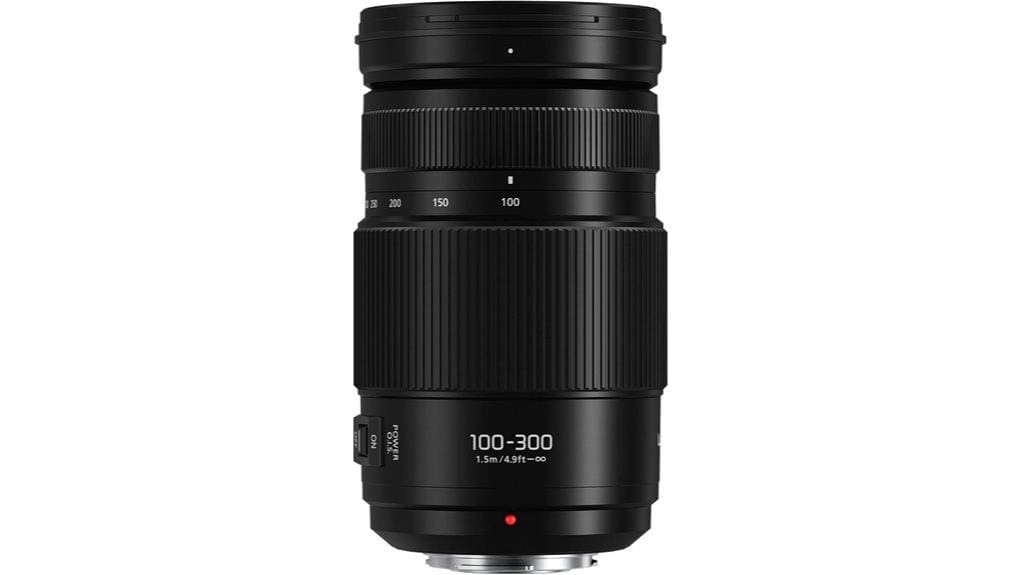

You’ll get a compact true super‑tele for Micro Four Thirds: 100–300mm (200–600mm equiv.) with an f/4–5.6 aperture that favors reach and portability over low‑light speed. The 240‑fps linear motor yields fast quiet AF, POWER O.I.S. plus Dual I.S. 2.0 gives strong stabilization, and Nano Surface Coating controls flare while weather sealing adds confidence. Sharpness is excellent center‑to‑midframe; edges tighten when stopped down. Keep going and you’ll find detailed performance notes and practical usage tips.
Some Key Takeaways
- Compact 100–300mm (200–600mm equiv.) zoom offers true super‑tele reach for Micro Four Thirds enthusiasts.
- f/4–5.6 aperture balances portability with modest low‑light limitations compared to faster primes.
- 240‑fps linear motor delivers fast, quiet AF with reliable continuous tracking for wildlife and sports.
- POWER O.I.S. and Dual I.S. 2.0 (with compatible bodies) provide strong handheld stabilization.
- Good center sharpness and contrast; slight edge falloff and occasional chromatic aberration at extremes.
Quick Verdict: Who Should Buy the Panasonic L‑FSA100300 and Why
If you need a compact, affordable super-tele for Micro Four Thirds, the Panasonic LUMIX G II Vario H‑FSA100300 delivers—its 100–300mm range (200–600mm equivalent), f/4–5.6 aperture, Nano Surface Coating and 240‑fps linear motor give you reach, decent low‑light transmission, and fast AF tracking in a lightweight package that also supports POWER O.I.S. and Dual I.S. 2.0 on compatible LUMIX bodies. You’ll want this lens if you’re an enthusiast photographer seeking a budget telephoto that balances weight, performance, and cost. It’s ideal for birding, sports sidelines, and travel where portability and reliable AF matter most. The lens is also well suited for photographers interested in mastering wide-angle gear principles when composing scenes with varied focal lengths and perspectives wide-angle techniques.
Optics & Build at a Glance: Focal Length, Aperture, Coatings, and Weather Sealing
While the H‑FSA100300’s 100–300mm range (200–600mm equivalent) gives you true super‑tele reach in a compact Micro Four Thirds package, its f/4–5.6 aperture balance prioritizes portability over extreme low‑light performance. You’ll find Nano Surface Coating helps suppress flare and improves contrast, while lens design and coatings assist vignetting control across the range. Optical formula minimizes chromatic aberration, especially at shorter tele settings, though extreme edges may show slight color fringing. Weather sealing delivers splashproof, dustproof confidence when paired with compatible LUMIX bodies. Overall build quality is solid and handling feels balanced for handheld use. This makes it a great choice for mirrorless camera enthusiasts seeking lightweight telephoto options.
Performance in the Field: Autofocus, Stabilization, Sharpness, and Low‑Light Handling
Expect reliable tracking and stabilization from the H‑FSA100300 in real‑world shooting: its 240 fps linear motor drives quick, quiet autofocus that keeps moving subjects locked at typical tele distances, and Panasonic’s POWER O.I.S.—plus Dual I.S. 2.0 on compatible bodies—meaningfully reduces shake when handholding at long focal lengths. You’ll notice strong autofocus consistency across focal range; latency is low, and focus hunting is rare. Center sharpness is excellent wide open, with slight edge falloff at 300mm corrected by stopping down. Low‑light performance is competent for its class—combined aperture and stabilization let you retain usable shutter speeds without excessive ISO. This makes the lens a practical choice for photographers exploring lens mount adapters to expand their creative options.
Use Cases and Sample Scenarios: Wildlife, Sports, Travel, and Video on Micro Four Thirds
When you’re shooting wildlife, sports, travel, or video on a Micro Four Thirds body, the H‑FSA100300’s 200–600mm equivalent reach and quick 240 fps linear AF make it a practical, lightweight telephoto that keeps distant subjects usable without swapping to a heavier setup. You’ll frame tight bird portraits from moderate distances, rely on action tracking for erratic flight or field sports, and compress backgrounds for dramatic isolation. Travel storytelling benefits from compact carry and 100–300mm flexibility, letting you capture candid moments from afar. For handheld video, POWER O.I.S. plus body IS compatibility smooths footage, while AF responsiveness supports continuous subject lock. It’s a great match for photographers seeking gear tailored to tripod and support choices with tripod compatibility that complements lightweight travel kits.
Buyer’s Checklist: Compatibility, Accessories, Alternatives, and Final Recommendation
Having covered real-world uses, let’s look at what you need to know before buying the H‑FSA100300. Check sensor compatibility: it’s native Micro Four Thirds, optimized for Panasonic LUMIX G bodies and select Olympus cameras; expect effective 200–600mm reach. Verify in-body stabilization and POWER O.I.S. pairing for subject tracking; dual IS reduces blur and conserves battery life versus relying on higher IS settings. Included accessories—hood, caps, storage bag—cover basics; consider a 67mm UV or polarizer and a sturdy tripod collar for extended sessions. Alternatives include longer primes or lighter telezooms if weight, aperture, or reach priorities differ. Gear Guide caters to enthusiast photographers and camera fans with related digital camera products.
Some Questions Answered
Is This Lens Compatible With Full‑Frame Adapters?
No — you won’t use full-frame adapters to turn this Micro Four Thirds lens into a full‑frame lens. Adapters compatibility is limited by flange focal length: MFT lenses are designed for a short flange distance, so mounting to a longer‑flange full‑frame body introduces infinity focus and cropping issues. You can use MFT‑to‑other‑MFT mounts or electronic adapters for camera bodies with equal or shorter flange focal length, but not to true full‑frame adapters.
Can I Use a Teleconverter With the H‑Fsa100300?
You can, but expect trade‑offs: most teleconverters will worsen teleconverter performance on this Micro Four Thirds zoom, reducing autofocus speed and image quality. You’ll gain focal length impact (effective reach increases), but aperture drops further from f/4–5.6, hurting low‑light and stabilization effectiveness. Use only MFT‑compatible extenders and test AF tracking; avoid high‑magnification adapters if you need reliable sharpness and continuous AF for wildlife or sports.
How Long Is the Warranty Period and Where to Register?
The warranty duration is the manufacturer’s standard limited warranty (check your region for exact months/years); you’ll also have Amazon’s voluntary 30-day return window in many cases. For product registration, go to Panasonic’s official support/registration site, sign in or create an account, enter the model number H-FSA100300 and serial number, and upload proof of purchase. Doing product registration activates support and simplifies warranty service and repairs.
Does the Lens Include Weather Sealing Gaskets on the Mount?
No — it doesn’t have a rubber gasket at the mount. You’ll get weather resistance (splashproof, dustproof) when it’s mounted on compatible LUMIX bodies, but the lens itself lacks rubber gasketlessness protection at the rear. That means you should avoid heavy rain or dusty swaps without a sealed camera body. Use caution when changing lenses outdoors and rely on the camera’s mount sealing for full environmental protection.
What Tripod Collar Options Fit This Lens?
You can use third‑party Arca‑style collar solutions or a detachable foot made for the H‑FSA100300 profile. Many manufacturers offer Arca‑style collar clamps that match the lens barrel diameter and balance point; choose one with rubberized inner pads and M6 mounting holes. If you prefer a detachable foot, pick a model with a locking lever and anti‑twist pin that aligns to the lens’s tripod mount area for secure, repeatable mounting.