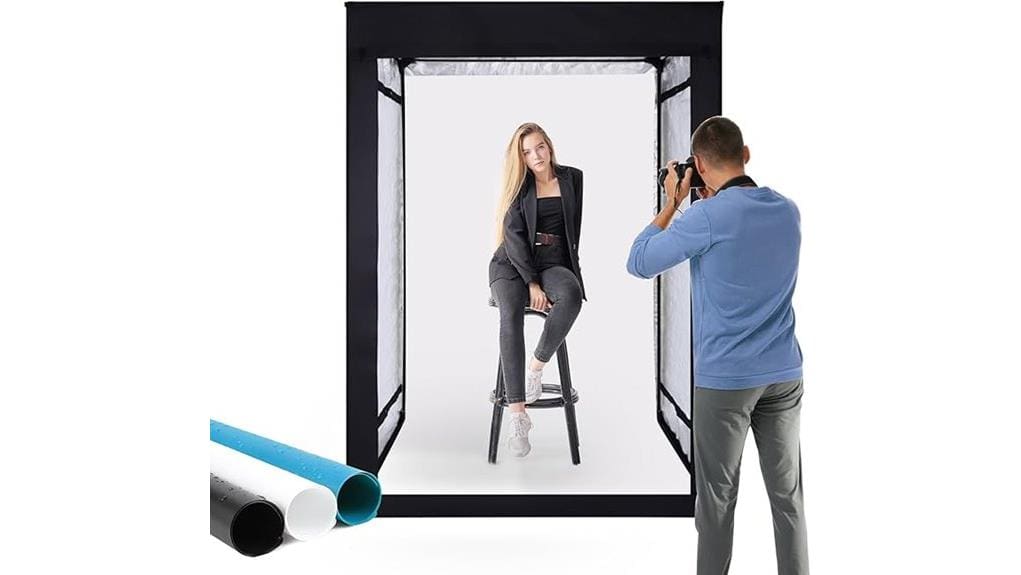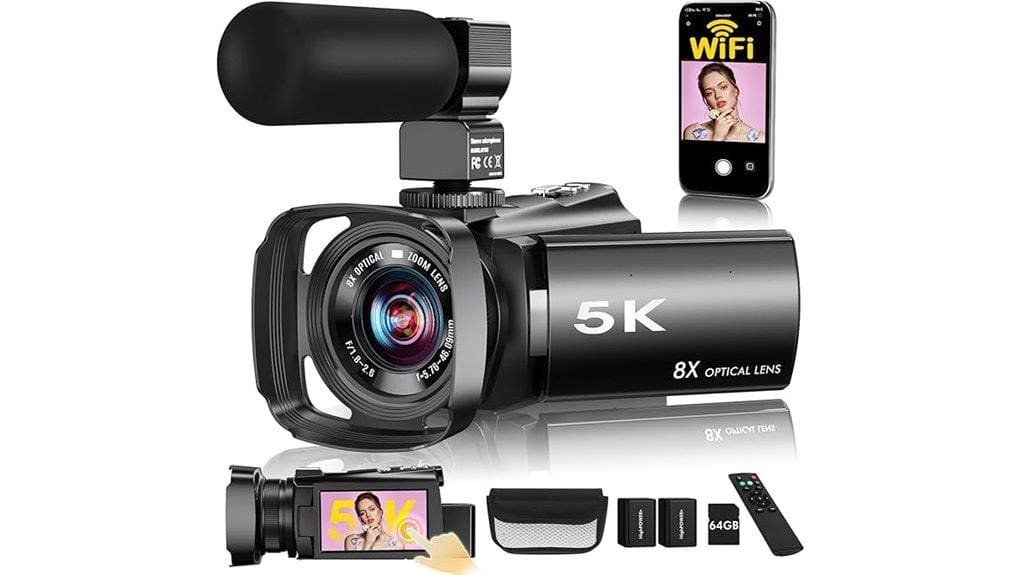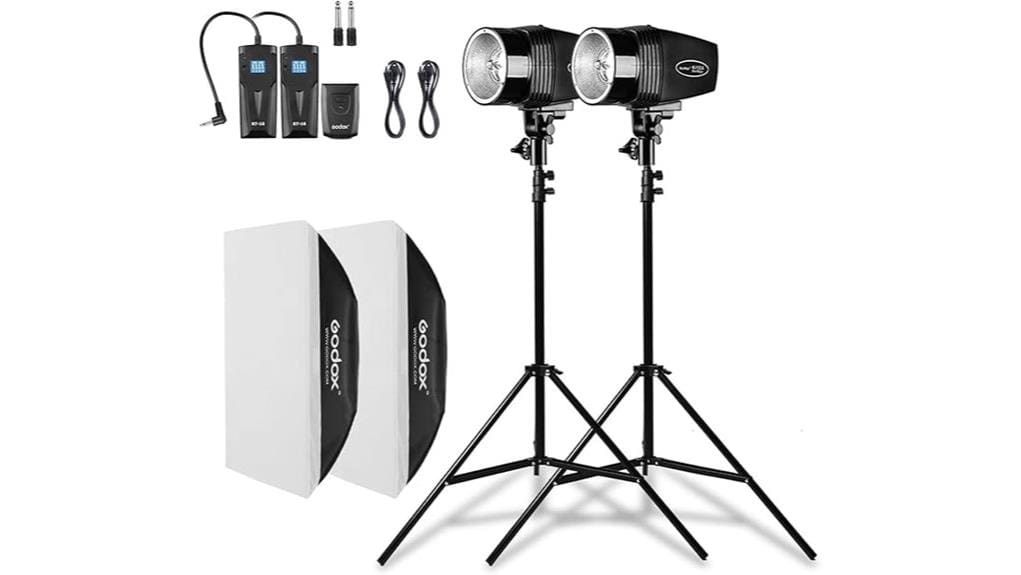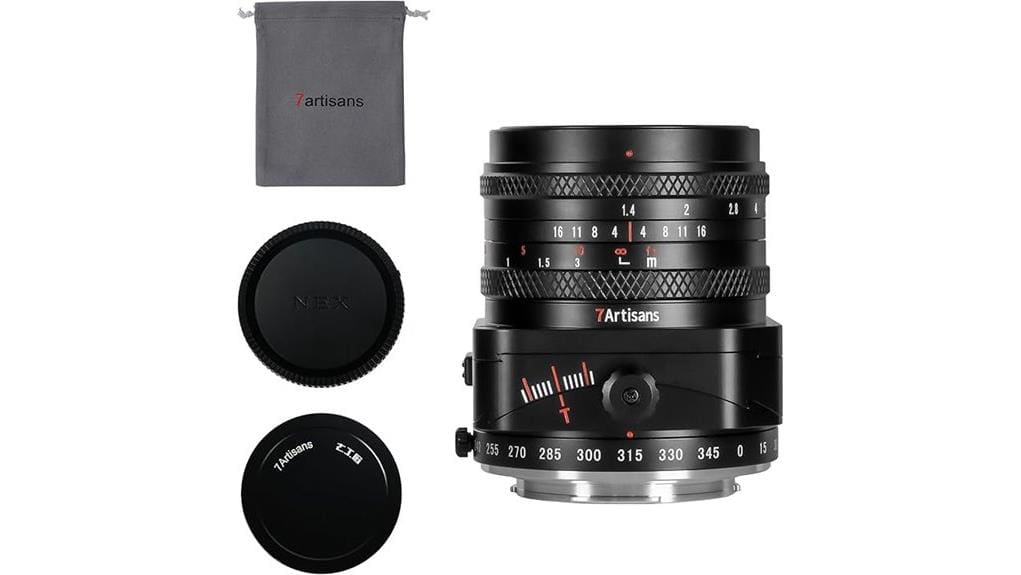

You’ll get a budget 50mm f/1.4 tilt‑shift that’s built like a tank and mates well to Fujifilm X bodies. It delivers strong low‑light performance, smooth rounded bokeh, modest edge microcontrast wide open and sharper centers stopped down. The combined tilt/shift rotates 360° with axis locks and repeatable marks, plus a 0.5 m close focus for miniature effects. Distortion is low and coma controlled. Keep going to see detailed handling, examples, and buying advice.
Some Key Takeaways
- Excellent low-light performance and smooth f/1.4 bokeh with slight rounded discs and minimal onion-ring texture.
- Combined tilt and shift with 360° rotation and axis locks enables precise focal-plane control and repeatable adjustments.
- Good center sharpness stopped down; edge microcontrast improves from f/2.8 to f/5.6, with manageable peripheral falloff.
- Solid all-metal build, tight detents, reliable Fujifilm X-mount fit, and usable 0.5 m close-focus for miniature effects.
- Ideal for portraits and architectural correction on a budget; consider maintenance, warranty, and tripod accessories before buying.
Optical Performance and Image Character: Bokeh, Sharpness, Distortion, and Low‑Light Behavior
While the 7artisans 50mm f/1.4 tilt‑shift delivers strong low‑light capability and pronounced background separation, you’ll notice its character is defined by a shallow depth of field, smooth but slightly rounded bokeh discs, and good center sharpness when stopped down. You’ll get smooth bokeh at wide apertures, with controlled rendering of highlights and minimal onion-ring texture. Edge microcontrast is modest wide open, improving noticeably by f/2.8–f/5.6; peripheral falloff and 1.9% geometric distortion remain manageable. Low light rendering is excellent for APS‑C sensors, and coma control is competent for off‑axis points, aiding night and astrophotography. Its tilt‑shift design also enables precise control over the plane of focus for creative portrait compositions and selective focus.
Tilt and Shift Mechanics: 360° Rotation, Adjustable Shift Axis, and 0.5 M Close Focus in Practice
Having covered how the optical design shapes bokeh and sharpness, let’s examine how the physical tilt and shift controls translate those characteristics into practical framing and focus decisions. You’ll rotate the combined tilt-shift unit a full 360° to align the plane of focus; alignment marks let you repeat settings. Axis locking secures rotation and shift; check for mechanical backlash when making fine adjustments. The 0.5 m close-focus lets you exploit shallow depth-of-field and miniature effects, though you’ll notice modest focus breathing when racking focus. In practice, precise axis selection and firm locking deliver predictable focal-plane control and perspective correction. Consider pairing the lens with a sturdy L-bracket for reliable support and repeatable mounting.
Build Quality, Handling, and Mount Compatibility With Fujifilm X Bodies
Feel the solid, all-metal chassis as you mount the 7artisans 50mm f/1.4 Tilt-Shift on your Fujifilm X body: the lens balances well on both compact X-A series bodies and larger X-T/X-Pro models, with precise mechanical controls for tilt, shift and 360° axis rotation. You’ll notice a crisp Metal finish and tight, repeatable detents for tilt and shift; control rings are firm without being stiff. The Mount fit to Fujifilm FX sockets is accurate, ensuring reliable flange distance and consistent focus behavior. At 0.5 m close focus the handling remains stable; ergonomics suit handheld and tripod workflows. Protect your gear with custom camera foam inserts to keep the lens safe during transport and storage.
Creative Uses and Real‑World Examples: Portraits, Architecture Correction, Miniature Effects, and Video
The lens’ precise mechanical controls and balanced handling make it straightforward to exploit tilt-shift functions in real shooting situations. You dial tilt to align the focal plane for group portraits, isolating subjects with pronounced background blur while keeping critical eyes sharp. Use shift to correct converging lines on facades without cropping, maintaining resolution across the frame. For miniature effects, combine tilt with shallow f/1.4 aperture and close focus to exaggerate scale, producing Lilliputian scenes and dramatic foregrounds. In video, you execute cinematic rackfocus and planar shifts for controlled focus pulls and perspective moves, all with repeatable, tactile adjustments. For buyers considering accessories, picking the right tripod head is essential for stable, precise control when using tilt-shift lenses, especially a geared or ball head designed for fine adjustments and precise positioning.
Buying Decision Checklist: Who Should Buy, Alternatives, Price‑Value, and Warranty Considerations
If you need precise tilt-shift control on a Fujifilm X-mount APS-C body and want a fast f/1.4 option for portraits, selective focus, and perspective correction, this 7artisans 50mm f/1.4 Tilt‑Shift lens is worth evaluating. You should buy if you require mechanical tilt/shift versatility, low-light f/1.4 performance, and robust full-metal build at a budget. Consider alternatives (manual Mitchell-style shift lenses or higher-cost native Fujifilm tilt/shift options) if you need autofocus or lower maintenance. Factor in maintenance costs, warranty length, firmware updates availability, user community support, and resale potential before committing. Many photographers also find that pairing tilt-shift lenses with the right lens adapters can expand compatibility and creative use.
Some Questions Answered
Does the Lens Support Autofocus or Is It Manual Focus Only?
It’s manual focus only. You’ll focus the lens mechanically, using the focus ring and tilt-shift controls; there’s no internal autofocus drive. You can rely on your camera’s focus peaking and magnification aids to achieve precise focus, especially at f/1.4 and with tilted focal planes. Expect deliberate, tactile operation for portraits, architecture, or miniature effects. The workflow suits photographers who prefer precise manual control over automated AF.
Is There Electronic Communication With Fujifilm Camera Bodies?
No — it doesn’t provide electronic contacts or electronic aperture transmission to Fujifilm bodies. You’ll operate the lens fully mechanically and set aperture on the lens itself; the camera won’t receive EXIF aperture data or enable in-body aperture control. Metering and exposure will still work on most X-series cameras in manual or aperture-priority modes, but you’ll confirm settings manually and won’t get lens-to-body communication for autofocus or aperture telemetry.
Can I Use This Lens With Full‑Frame Adapters or Only Aps‑C?
No — it’s designed for APS‑C Fujifilm X mount and isn’t natively Full‑frame compatible. You can use Mount adapters to physically mount the lens on some full‑frame bodies, but expect heavy vignetting or a cropped image circle because the optic covers APS‑C format only. For full‑frame use you’d need a dedicated full‑frame lens or a camera that crops to APS‑C mode; adapters won’t restore full‑frame coverage or intended image quality.
Are Lens Caps and a Protective Case Included in the Box?
No — the standard box typically includes a basic lens pouch and front/rear caps, so you aren’t left unprotected, but a rigid protective case usually isn’t supplied. Check cap compatibility with 46 mm filter-thread accessories and confirm rear cap fit for your Fujifilm FX mount. You’ll want to add a dedicated hard case or padded bag for transport and heavy use; customer support can confirm exact box contents before purchase.
Is There Weather Sealing for Use in Light Rain or Dusty Conditions?
No — the lens doesn’t have weather sealing; you shouldn’t expect protection in light rain or dusty conditions. The full-metal build gives good build materials durability and tactile robustness, but seals and gaskets are absent. You should use a rain cover, plastic bag, or purge the environment and clean elements after dusty shoots. For reliable outdoor use in marginal conditions, plan for external protection rather than relying on built-in weather sealing.