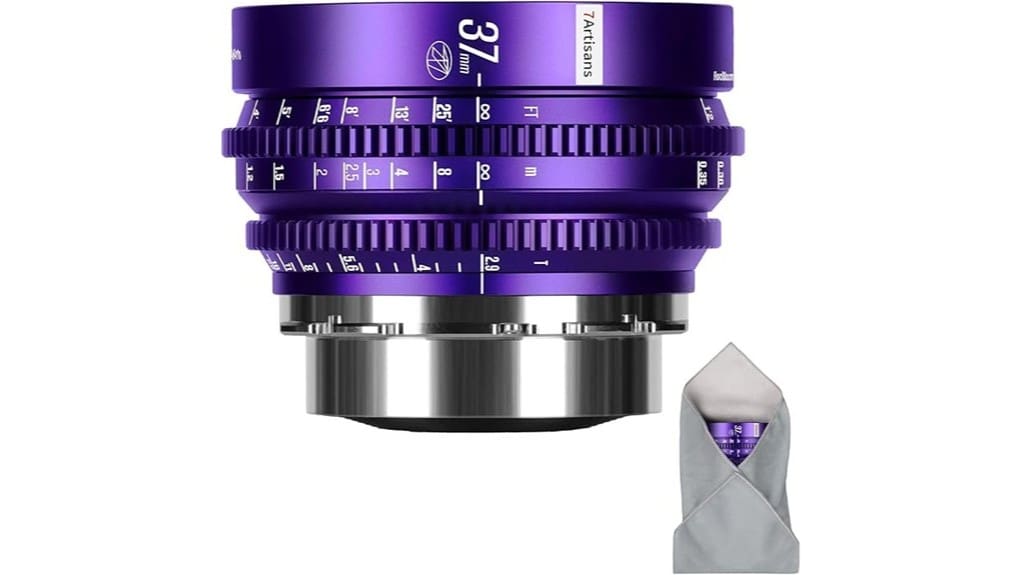
You get a purpose-built cine optic that favors surreal, floral bloom and narrative mood over clinical neutrality. It delivers sharp center resolution from T2.9–T5.6 with strong subject separation and petal-like radial bokeh at wide apertures. Microcontrast is lowered at edges for a dreamy look, and stopping down tightens bloom while boosting edge detail. Metal cine build, ~300° focus throw and PL fit suit rigs and follow-focus. Keep reading to see tests, uses and buying advice.
Some Key Takeaways
- Cine-oriented 37mm T2.9 Art Series lens creates dramatic, surreal bloom and spoke-like peripheral bokeh ideal for stylized storytelling.
- Sharp center resolution from T2.9–T5.6 with strong subject separation, while reduced edge microcontrast produces a dreamy look.
- ~300° focus throw, metal cine construction, PL mount, and ~345 g make it follow-focus and gimbal-friendly for professional workflows.
- Aperture control adjusts effect intensity: stopping down reduces radial blur and increases microcontrast for cleaner images.
- Best for narrative, moody portraits, and experimental sequences; rent first because it’s unsuitable when clinical sharpness is required.
What the 7artisans 37mm T2.9 Floral Bloom Lens Actually Is
So what exactly is the 7artisans 37mm T2.9 Floral Bloom lens? You get a cine-oriented 37mm T2.9 optic engineered for dramatic, surreal imaging and narrative use. Its lens history traces rapid evolution from hobby optics to an Art Series specialty product. The marketing strategy emphasizes cinematic storytelling and distinctive bloom effects for filmmakers. User reviews cite strong character, compactness, and manual focus feel. Manufacturing details note cine-style construction, ~345 g weight, 300° focus throw, and PL mount compatibility. You’ll find a purpose-built tool prioritizing creative effect control over clinical neutrality, aimed at genre filmmakers and visual storytellers. The lens is sold by retailers who specialize in digital cameras and accessories.
How the Floral Bloom Effect Looks in Practice (Center Sharpness, Radial Bokeh, Aperture Tests)
When you frame a subject with the 7artisans 37mm T2.9 Floral Bloom, the center resolves crisply while the periphery unravels into radial, petal-like bokeh that stretches and softens highlights; this contrast between a sharp nucleus and explosive edge blur is the lens’s defining visual signature. You’ll see pronounced center clarity across T2.9–T5.6, useful for subject separation in narrative shots. At wide apertures the edge swirl intensifies, producing spoke-like highlights and distortion that reads as surreal. Stopping down reduces radial blur and raises microcontrast, trading dreamlike diffusion for increased detail. Use aperture control to dial effect strength precisely. This lens is part of a niche lineup of specialty optics favored by lens enthusiasts who enjoy creative, character-driven images.
Performance Breakdown: Optics, Build, Focus Throw, and Handling
Although compact, the 7artisans 37mm T2.9 delivers a distinct optical personality: a sharply resolving center paired with pronounced radial bokeh toward the edges, and optical transmission that holds contrast well in the nucleus while intentionally sacrificing edge microcontrast for the bloom effect. You’ll note optical coatings reduce flare and preserve color, though they don’t counter the intentional edge wash. Build is metal with balanced weight distribution around the mount, aiding gimbal use. The long ~300° focus throw gives precise manual control; ergonomics suit follow-focus gears. Don’t expect autofocus performance—this is a manual cine tool by design. For outdoor photographers looking to control reflections and enhance skies, pairing this lens with a polarizing filter can improve final images.
Who Should Buy It and Which Shooting Scenarios It Suits Best
Because its signature bloom and sharp central rendering prioritize mood over clinical neutrality, you should buy the 7artisans 37mm T2.9 if your work demands stylized, emotionally charged imagery rather than purely diagnostic sharpness. You’ll benefit if you’re a filmmaker, cine photographer, or short-video creator focused on narrative texture, hallucination, or psychological tension. Use it in controlled sets, experimental sequences, and filmmaker workshops to teach practical bloom control. It’s also effective for moody street portraits and cinematic environmental portraits where edge distortion adds atmosphere. Avoid it when you need flat clinical detail; instead, employ it as a deliberate creative-effect tool for storytelling. For practicing photographers and lens buyers, mastering macro and close-up techniques can help you exploit the lens’s bloom and rendering for compelling results macro techniques.
Price, Mounts, Compatibility, and Final Buying Recommendation
If you need a compact specialty cine lens that slots into professional workflows, the 7artisans 37mm T2.9 ships primarily in PL mount and targets filmmakers who require direct compatibility with cinema cameras and PL-equipped rigs. It’s priced as a niche specialty optic; expect mid-tier cost reflecting bespoke optical character. Check rental options first to validate stylistic fit before purchase. Mount adapters may exist but reduce mechanical/cine reliability; prefer native PL for full functionality. Review warranty terms for coverage of mechanical wear and optical defects. Final recommendation: rent to test, then buy if your projects demand its unique dreamy, narrative look. Consider also how such lenses integrate with lens adapters used by photographers and filmmakers.
Some Questions Answered
Does It Support Autofocus or Electronic Aperture Control?
No — it lacks autofocus and uses manual aperture. You’ll operate focus and aperture mechanically: autofocus absence means you’ll rely on the long ~300° focus throw for precise manual pulling, while the manual aperture gives tactile control over the explosive bokeh and distortion. There’s no electronic aperture control or communication with camera exposure systems; you’ll set exposure via camera settings or meter. It’s built for hands-on cinematic use, not automated workflows.
Can I Use It for Video With Follow-Focus Systems?
Yes — you can use it with follow-focus systems. You’ll work with manual focus and a long focus throw (~300°) that enables precise focus pullery. The lens includes a geared ring for attachment, supports cinematic use, and feels balanced for handheld or gimbal setups. Expect smooth, accurate pulls for narrative work; practice is recommended to calibrate marks because the optical effects change noticeably with aperture and focus position.
Is There a Weather-Sealed Version or Gasket Protection?
No — there isn’t a fully weather sealed? or gasketed protection? version available. You’ll find no documented moisture resistant coatings? on the mount or barrel, so you shouldn’t rely on it in heavy rain or dusty conditions. You can mitigate risk by using external rain covers, lens socks, or matte boxes with seals, and by avoiding direct exposure. For rigorous outdoor work, choose lenses specified with ingress protection or factory weather sealing.
Are There Recommended Lens Adapters for Non-Pl Cameras?
Yes — you can use common adapters: a PL-to-E mount adapter or PL-to-MFT adapter for mirrorless bodies, and PL-to-C mount options for micro cinema rigs. If you need faster effective aperture or wider field, use a PL-to-E speed booster or PL-to-MFT speed booster (check flange focal distance). Choose high-precision, cine-rated adapters with solid locking and optical alignment to preserve focus throw accuracy and minimize tilt or decentering.
What Accessories (Hoods, Caps, Cases) Are Included or Available Separately?
You get a metal lens hood and a rear and front cap included; a suede pouch often ships separately or is sold as an accessory. You’ll also find a basic foam-lined case or hard case offered by some retailers for protection. Mount-specific adapters, follow focus gears and lens collars are available separately. Check seller listings for bundled kits versus single-item sales to confirm what’s in-box before purchasing.