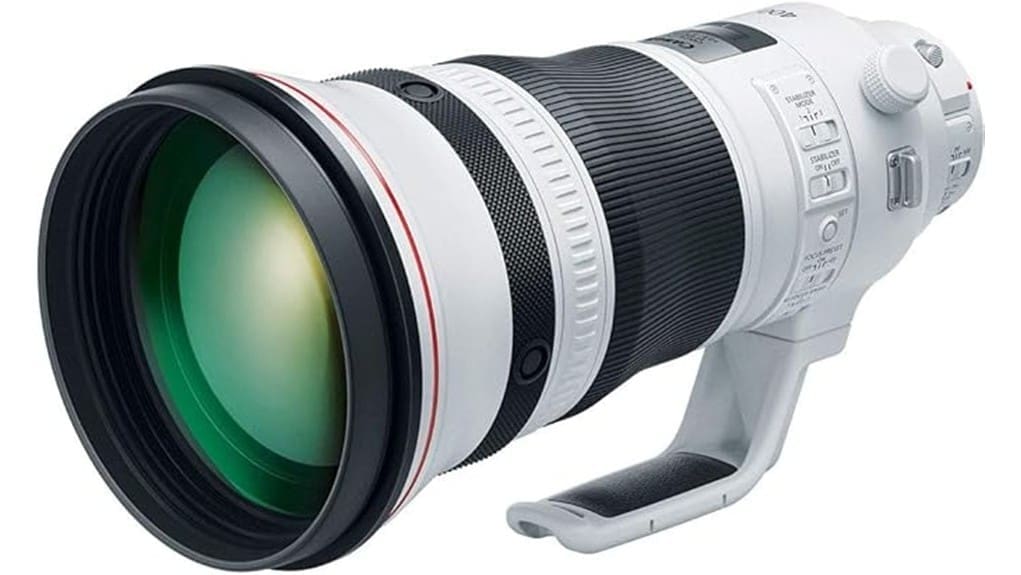
You’ll get a pro-grade 400mm f/2.8 that’s built for sports, wildlife, and action: it’s impressively sharp on-axis at f/2.8, with tight subject separation and smooth nine-blade bokeh. Optical IS gives about 3–4 stops of usable stabilization and refined USM delivers fast, reliable tracking. The lighter, weather-sealed body balances well handheld or on a gimbal, and chromatic aberration is minimal and RAW-correctable. Keep going and you’ll find detailed notes on handling, alternatives, and value.
Some Key Takeaways
- Exceptional center sharpness at f/2.8 with strong micro-contrast and smooth nine-blade bokeh for subject isolation.
- Optical IS delivers about 3–4 stops of stabilization with multiple modes for handheld and panning use.
- Refined USM autofocus is fast and reliable with good tracking and marginal, correctable lateral CA in RAW.
- Robust, lighter build (≈6.26 lb), weather-sealed, with tripod foot, drop-in 52mm filter holder, and fluorine front coating.
- Ideal for sports, wildlife, and low-light telephoto portraiture; consider rental or alternatives if used infrequently.
What the 400mm F/2.8L IS III Is and Who It’s For
Meet the Canon EF 400mm f/2.8L IS III USM: a professional-grade, super-telephoto prime designed for sports, wildlife and action photographers who need fast f/2.8 performance, reliable optics and effective image stabilization in the field. You’ll get a purpose-built 400mm prime that prioritizes reach, contrast and durability for professional sports coverage and disciplined telephoto portraiture. You’ll rely on robust weather sealing, fluorine front coatings and coatings that suppress flare. Operation is straightforward: quick AF, stable handheld frames and consistent rendering at wide apertures. It’s aimed at pros and serious enthusiasts who demand optical consistency in challenging outdoor conditions. The lens makes a strong companion for photographers who shop for mirrorless accessories and related gear, offering a bridge between professional optics and the wider mirrorless camera ecosystem.
Key Specs That Matter: Weight, Optics, Stabilization, and Autofocus
Although its 400mm f/2.8 design promises pro-level reach, the EF 400mm f/2.8L IS III USM really shows its value in the balance of weight, optical refinement, stabilization and autofocus performance; at 6.26 pounds Canon trimmed weight through revised optics and materials so you get a lens that’s more manageable on gimbals and during long shoots without sacrificing contrast or resolution. You’ll notice deliberate weight distribution for handheld stability. Optical layout, SSC and ASC coatings optimize resolution; aperture mechanics use a nine-blade diaphragm for smooth rendering. Optical stabilization provides multiple stabilization modes, while a refined USM enables reliable focus tracking. This balance makes it an excellent choice for photographers seeking to master prime lenses with pro-level reach.
Real-World Performance: Sharpness, Bokeh, IS, and Low-Light Handling
When you put the EF 400mm f/2.8L IS III on target, its center sharpness at f/2.8 is impressive—bank on tack-sharp rendering for subjects framed on-axis with excellent micro-contrast—and stopping down a stop or two tightens the corners without introducing noticeable diffraction. You’ll notice mild focus falloff toward the edges at maximum aperture, useful for subject separation rather than a defect. Bokeh is smooth, with nine rounded blades producing clean highlights and minimal nervousness. IS delivers 3–4 stops of usable stabilization for handholding or panning. Chromatic aberration is well controlled; lateral CA is marginal and easily corrected in RAW. For shooters using heavy telephoto gear, pairing the lens with a sturdy tripod head can greatly improve stability and tracking.
Handling, Build, and Weather Resistance in the Field
After confirming its optical prowess, you’ll appreciate how the EF 400mm f/2.8L IS III backs performance with professional-grade handling and rugged construction. You get balanced field ergonomics: a compact, lighter body, textured controls, and a well-placed focus ring that lets you track subjects smoothly. The drop-in 52mm filter holder and fluorine-coated front element simplify maintenance on the go. Tripod compatibility is solid—robust foot, secure lock, and compatibility with gimbal heads support long sessions. Weather-sealed seals, increased heat shielding, and dust/water resistance let you keep shooting in harsh conditions without compromising reliability or precision. Pelican cases and other protective gear are excellent choices to safeguard such high-end lenses in transit and field use, offering durable, weather-resistant storage for photographers and their equipment protective gear.
Should You Buy It? Use Cases, Alternatives, and Value-for-Money
If you prioritize ultimate reach, low-light speed, and rock-solid autofocus for wildlife, sports, or aviation work, the EF 400mm f/2.8L IS III USM is a clear professional-grade choice—its fast f/2.8 aperture, refined optics, and lightweight-for-class construction deliver class-leading image quality and handling in the field. You should buy it if you need consistent sharpness, reliable IS, and pro durability; it’s aimed at pros and serious enthusiasts. Factor investment considerations: resale, longevity, and system fit. Consider rental options if workflow is occasional or budget-constrained. Alternatives include the 300mm f/2.8 plus TC or used 400/2.8 II. The lens is especially well-suited for photographers focused on telephoto wildlife who need extended reach and fast autofocus.
Some Questions Answered
Does This Lens Work With Canon RF Bodies via Adapter?
Yes — you can use the lens on RF bodies with a Canon adapter. You’ll retain autofocus, image stabilization and EXIF communication because Mount compatibility between EF and RF is supported via Canon’s EF‑RF adapter. You should use Canon adapter models (standard or with control ring) for reliable electronic coupling and full functionality. Expect identical optical performance, though balance and handling change on smaller RF bodies; use a tripod foot for long shoots.
What Tripod Collar and Foot Are Compatible Replacements?
Use an Arca compatible magnesium foot or replacement tripod collar that’s Wimberley compatible and accepts RRS foot clamps. You’ll want a magnesium foot sized for the EF 400mm f/2.8 III’s mounting ring with Arca dovetail, precise register, and anti-rotation screw. Several third-party collars advertise Wimberley compatible geometry and accept RRS foot attachments; choose one rated for the lens’s weight, with corrosion-resistant finish and secure locking torque for stable support.
Can I Use Teleconverters Without Losing Autofocus Performance?
Yes — you can use teleconverters, but you’ll hit AF limitations as aperture narrows. With a 1.4x TC you’ll usually retain reliable AF; a 2x TC drops effective aperture to f/5.6 and can limit AF on some bodies. You can perform AF tweaks: microadjust or use compatible bodies with strong low-light AF. Also enable back-button AF, steady optics, and faster AF-driven bodies to minimize hunting and lost focus.
Is the Lens Balanced on Handheld Gimbals and Stabilizers?
Yes — you’ll find the lens reasonably balanced on many handheld gimbals and stabilizers thanks to its reduced weight and compact L-series design. Its handheld ergonomics are improved versus predecessors, letting you achieve better vibration control with a properly tuned gimbal and correct mounting point. Expect to fine-tune counterbalance and motor gains; heavy accessories or teleconverters may shift balance and require stronger motors or reconfiguration for peak stabilization.
What Is the Recommended Maintenance/Cleaning Schedule for Front Elements?
Inspect the front element monthly inspection and wipe light dust with a blower and microfiber cloth; don’t rub abrasive particles. Every season perform a seasonal deep clean: remove filters, use approved lens cleaner, soft swabs, and clean edges and drop-in filter holder. Check fluorine coating for residue and reseal caps. If you spot fungus, heavy grime, or mechanical issues, send it to authorized service. Keep records of each clean and inspection.