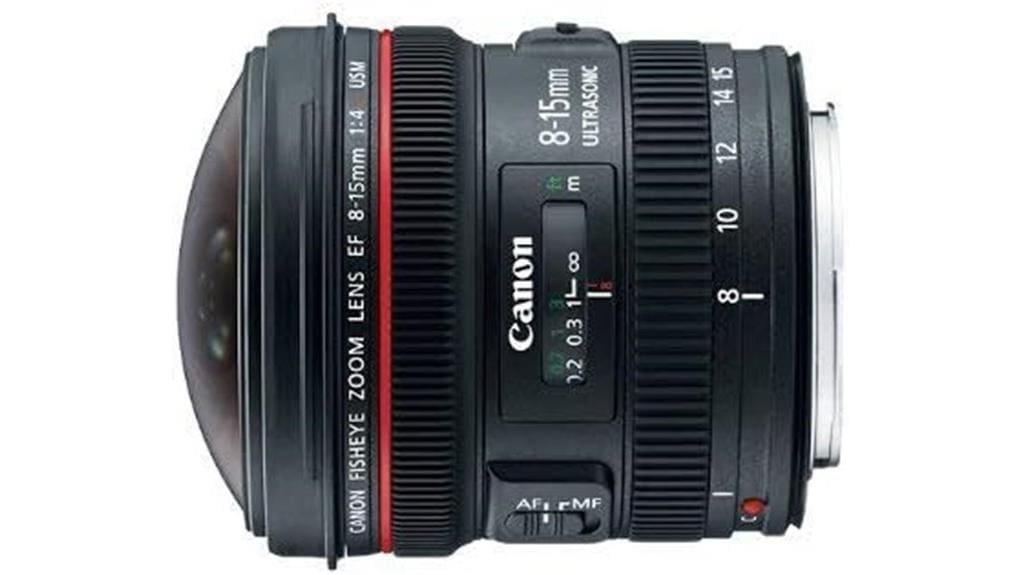

You’ll get a pro-grade 8–15mm fisheye zoom that delivers true 180° coverage, L-series build, UD glass and subwavelength/fluorine coatings in a renewed package. It gives strong center sharpness (best f/5.6–f/11), predictable barrel distortion, reduced chromatic aberration and a rear gel holder, but shows corner falloff at 8mm and has no image stabilization. Verify serial 4427B002, inspect optics and warranty before buying — continue for practical tips, examples and a checklist.
Some Key Takeaways
- Renewed unit offers identical L-series optics (8–15mm, UD elements, subwavelength and fluorine coatings) at a lower price.
- Delivers true 180° fisheye: circular at 8mm on full-frame, diagonal at 15mm or on smaller sensors.
- Strong center sharpness best between f/5.6–f/11, with corner falloff and reduced microcontrast at 8mm circular setting.
- No image stabilization, constant f/4 aperture, USM with full-time manual override (autofocus may vary on older bodies).
- Check renewed condition: verify serial 4427B002, inspect for fungus/scratches, confirm rear gel holder and return warranty.
What the Canon EF 8-15mm F/4l Fisheye USM (Renewed) Actually Is
Think of the Canon EF 8–15mm f/4L Fisheye USM (Renewed) as Canon’s ultra-wide, professional-grade fisheye zoom for EOS SLRs: a compact, 8–15mm EF‑mount lens that delivers true 180° fisheye coverage (circular on full‑frame, diagonal on other formats). You’ll get a compact overview of purpose and construction: L-series build, UD glass, subwavelength and fluorine coatings, rear gel filter holder, and full-time manual focus. In historical context, it consolidated fisheye versatility by offering the world’s widest zoom fisheye when introduced, replacing fixed focal limitations and enabling single-lens solutions for creatives needing extreme perspective. It’s also a lens that pairs well with extension tubes for close-up creativity, especially when using extension tubes to explore macro perspectives.
Key Specs That Matter for Photographers and Filmmakers
Having outlined what the 8–15mm f/4L Fisheye USM is and how it fits into Canon’s lineup, let’s focus on the specifications that will affect your shooting choices. The 8–15mm range delivers extreme perspectives and 180° coverage; use 8mm for full-frame circular fisheye, 15mm for diagonal coverage. Constant f/4 limits low light performance compared with faster primes; plan ISO and stabilization accordingly (no IS). Build and rear gel holder aid workflow. USM focus is fast; note full-time manual override and specific autofocus behavior on older bodies. Weight, size, and mount compatibility suit both photographers and filmmakers. This lens is ideal for photographers exploring creative perspectives with fisheye lenses.
Real-World Image Quality: Sharpness, Distortion, Chromatic Aberration, and Coatings
While the Canon EF 8–15mm f/4L delivers striking ultra-wide perspectives, you’ll notice its performance varies with focal length and framing: center sharpness is strong across the range, especially between f/5.6–f/11, but edge sharpness and microcontrast fall off noticeably toward the extreme 8mm circular setting on full-frame bodies. You’ll observe measurable sharpness variation across the field; stopping down improves corners but won’t fully equalize them with the center. Barrel and fisheye distortion are inherent and predictable, correctable if desired. UD elements reduce lateral color; subwavelength and fluorine coating benefits lower flare, ghosting and make cleaning easier, preserving contrast. This makes it a compelling option for enthusiasts looking for essential lens gear to expand their creative perspectives.
Practical Uses, Handling, and Compatibility (Full-Frame vs APS-C, Filters, Mounting)
Because the 8–15mm focal range delivers extreme perspectives, you’ll use this lens primarily for immersive interiors, creative landscapes, action sports, and select cinematic shots where pronounced curvature or a full 180° field is required. You’ll rely on manual handling for fine focus tweaks despite USM and full-time manual override. On full-frame you get circular or diagonal 180° coverage; on APS-C expect ultra-wide but non-circular fisheye images and tighter framing. Rear gel holder accepts up to three pre-cut gels; no front filter thread. Mount securely; balance on a sturdy tripod or gimbal to control distortion during motion and enable creative compositions. Perfect Tripods recommends using a robust tripod head for stable support when shooting wide-angle and fisheye lenses, especially in interior and low-light situations, to maximize image quality and creative potential with this lens and its tripod accessories.
Should You Buy the Renewed 8-15mm F/4l? Pros, Cons, and Buying Checklist
If you need the world’s widest fisheye zoom at a lower price, the renewed Canon EF 8–15mm f/4L delivers the same optical design and L-series build with a short warranty and potential cosmetic wear. You’ll get 180° coverage, UD glass, subwavelength and fluorine coatings, and solid mechanics for 540 g weight. Pros: exceptional edge-to-edge fisheye rendering, durable construction, lower cost in price comparison. Cons: 90-day limited warranty raises warranty concerns, possible cosmetic blemishes, no stabilization. Buying checklist: verify serial/model (4427B002), inspect optics for fungus/scratches, confirm rear gel holder condition, request return policy and documentation. Many photographers prefer L-series lenses for their superior build and consistent performance across focal lengths.
Some Questions Answered
Does the Renewed Lens Include Original Caps and Hood?
No, the renewed item’s box contents vary and it may not include the original caps and hood. You’ll want to check the specific cosmetic packaging details in the seller listing or contact the refurbisher directly. Renewed items typically retain core specifications and may include basic accessories, but original branded caps, hood, and full retail packaging aren’t guaranteed. Confirm before purchase to avoid surprises and make certain the exact accessories you need are included.
Is There Any Firmware or Electronic Compatibility Issues With Newer Canon Bodies?
No, you won’t face firmware or electronic incompatibility with newer Canon bodies; the EF mount remains supported. You may encounter autofocus quirks on some mirrorless-adapter setups or with very new autofocus algorithms, but full AF function works on native EF-compatible DSLRs. Metadata compatibility is intact — EXIF lens data records normally. If you use adapters, check for adapter firmware updates to minimize AF oddities and guarantee complete metadata transfer.
Can This Lens Be Used for Astrophotography Effectively?
Yes — you can use it for astrophotography effectively. You’ll capture wide angle starfields with a 180° view, great for Milky Way panoramas and sky-to-horizon shots. Expect some coma toward edges typical of fisheyes; Canon’s UD and coatings help, but coma correction is limited compared with specialized astro lenses. Use short exposures, high ISO, and careful stacking to minimize distortions and extract fine star detail across the frame.
What Kind of Warranty Claim Process Does the 90-Day Renewal Cover?
You can file a warranty claim within 90 days for defects from the renewed seller or refurbisher; they’ll assess eligibility under the return policy and authorize repair, replacement, or refund. You’ll provide proof of purchase and defect details; service turnaround depends on parts and workload but typically ranges from several days to a few weeks. Keep shipment tracking and contact seller support for status updates and expedited options.
Are There Noticeable Signs of Wear to Check on a Renewed Unit?
Yes. Inspect for cosmetic scuffs on the barrel, mount, and lens hood; minor surface marks are common but shouldn’t affect function. Check the rear and front elements for scratches, fungus, or haze. Verify focus smoothness across the zoom range and full-time manual override—it should move without grit or jumps. Test aperture blades for oil and proper action. Confirm the gel holder and mount alignment are intact and secure.