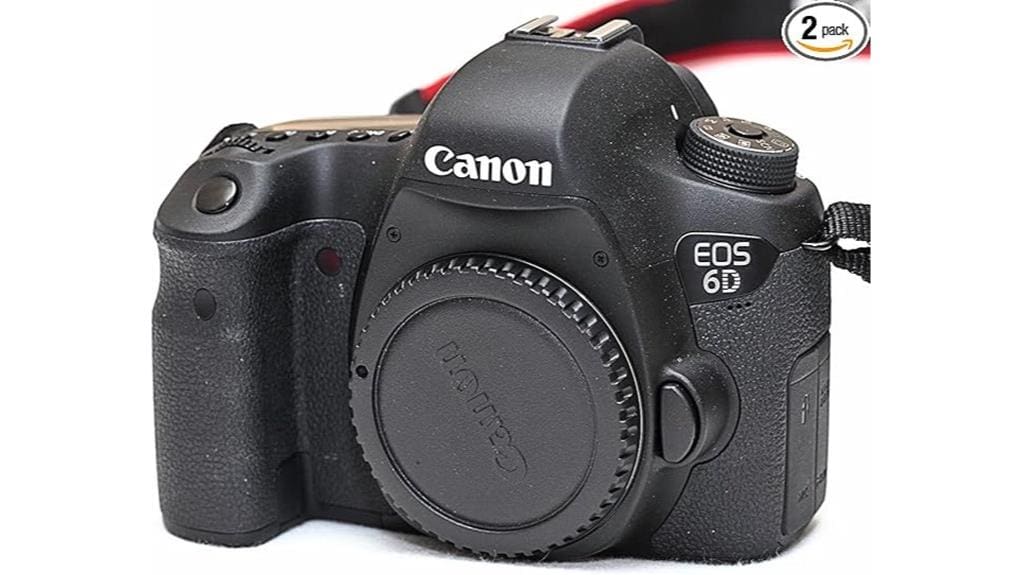

You’ll get a full‑frame 20.2MP sensor with clean files to about ISO 3200 and usable shadow recovery at base ISO. DIGIC 5+ processing yields strong JPEG color and contrast while RAW gives more editing latitude. The 11‑point AF, 63‑zone metering and 4.5 fps burst handle travel and moderate action reliably. Built like a compact DSLR with Wi‑Fi/GPS, HDMI and good battery life. Keep going and you’ll find detailed tradeoffs, sample uses and alternatives.
Some Key Takeaways
- Full‑frame 20.2MP sensor delivers high image quality and strong color fidelity, with RAW files offering greater adjustment latitude.
- Native ISO 100–25,600 (expandable) performs cleanly to ISO 3200; noise increases beyond, manageable with cautious luminance reduction.
- 11‑point AF, 63‑zone metering, and 4.5 fps continuous shooting suit static and moderately moving subjects, though AF coverage is limited.
- Solid build, excellent battery life for travel, Wi‑Fi/GPS, and ergonomic handling; use a grip and spare batteries for long sessions.
- Full HD 1080p video with manual controls and external mic capability (via hot shoe); lacks 4K and a dedicated mic jack.
How the Canon EOS 6D (Renewed) Performs at a Glance
While it’s renewed, the Canon EOS 6D delivers reliable full‑frame performance: its 20.2 MP CMOS sensor (35.8 x 23.9 mm) and DIGIC 5+ processor produce 5472 x 3648 images with clean ISO performance from 100 to 25,600 (expandable to 50,51,200,102,400), and you can shoot at up to 4.5 fps for short bursts. You’ll find an 11‑point AF, 63‑zone metering, and Full HD 1080p video with manual exposure control. The fixed 3.0‑inch LCD and optical viewfinder support accurate framing. Battery life is strong for travel use, and build quality balances lightweight handling with durable construction for regular field work. This makes it a solid choice for photographers transitioning from crop‑sensor bodies to full‑frame systems.
Image Quality, ISO Performance, and Low‑Light Results
Because the full‑frame 20.2 MP CMOS sensor and DIGIC 5+ processor work together, you get high-detail files with controlled noise up to moderate ISOs and usable results at higher settings. You’ll find color fidelity strong and high contrast rendering preserved in JPEGs, with RAW offering more latitude. Noise becomes evident beyond ISO 3200 but remains manageable with cautious luminance reduction; expanded settings trade detail for sensitivity. Dynamic range comparisons show solid shadow recovery at base ISO, tapering as ISO rises. For low‑light handheld work, stabilize or raise ISO conservatively; tripod use yields peak image quality and tonal range. This review appears on a site focused on camera gear for photography enthusiasts and digital camera fans, reflecting practical testing and product context for readers researching equipment gear guide.
Autofocus, Speed, and Real‑World Handling for Travel Shoots
Don’t expect lightning-fast tracking, but the 6D’s 11-point AF and AF-C mode deliver reliable subject acquisition for most travel scenarios. You get consistent focus on static and moderately moving subjects; low-light AF is competent thanks to the full-frame sensor and DIGIC 5+ processing. Continuous shooting at 4.5 fps won’t win action contests but suffices for street and travel reportage where rapid focusing and timing matter. Ergonomic handling is strong: compact DSLR form, well-placed controls, and light weight reduce fatigue during long walks. Battery life and lens compatibility support sustained shooting; AF predictability aids efficient workflow in the field. This camera benefits from using the right camera grip to improve handling and reduce fatigue on long shoots.
Video, Connectivity, and Practical Features for Hybrid Shooters
Though not a mirrorless hybrid, the 6D gives you solid video and connectivity tools for run-and-gun work: Full HD 1080p recording with manual exposure control and MPEG-4 capture lets you control aperture, shutter and ISO for cinematic results, the built-in microphone handles basic audio while an external mic can be used via the hot shoe (no dedicated jack), and Wi‑Fi plus GPS simplify file transfer, remote control and geotagging in the field. You’ll get reliable HDMI output and USB 2.0 transfer for tethering. The wireless workflow is straightforward for on-location delivery; monitor battery endurance—full-frame processing and Wi‑Fi will shorten runtime. Essential HDMI accessories like high-quality HDMI cables help ensure clean monitoring and recording during shoots.
Should You Buy a Renewed 6D? Cost, Warranty, and Alternatives
If you’re weighing value against age, a renewed Canon EOS 6D can be a strong pick for full-frame shooters who need classic low-light performance and reliable build at a reduced cost. You’ll get a proven 20.2MP sensor, full-frame ergonomics, Wi‑Fi/GPS and EF lens compatibility; expect 4.5 fps and a 100,000-cycle shutter rating. For purchase decisions run a price comparison versus used and newer entry full-frame bodies; factor in likely lower resale. Note the renewed unit includes original accessories and a 90-day limited warranty — read warranty terms carefully. Consider alternatives if you need higher AF point counts or 4K video. Also consider buying spare batteries and related accessories to keep shooting without interruption, especially when using the camera on long shoots or travel, and check options for spare camera batteries.
Some Questions Answered
Does the Renewed 6D Come With Original Packaging and Manuals?
Yes — the renewed 6D ships with all original accessories and typically includes original packaging and manuals as part of the box contents. You’ll also get a 90-day limited warranty; however, warranty transfer to you depends on the seller’s terms and Canon’s policy for renewed units. Verify with the seller before purchase to confirm packaging, manuals, and whether warranty transfer or registration is supported for that specific renewed unit.
Is the Battery Genuine Canon or Third‑Party?
The battery is described as genuine Canon in the renewed listing, so you can expect authentic battery authenticity and original cell origin. You’ll receive a Canon-branded LP-E6 (79 g) with manufacturer specifications matching official voltage and capacity. Check the pack for Canon holograms and serials; test voltage and cycle count on arrival. If cells or markings differ, contact the seller within the 90-day warranty window for replacement or refund.
Can I Register a Renewed Camera With Canon for Support?
Yes — you can register a renewed camera with Canon for canon registration, but you’ll typically receive limited support. Registering lets Canon record your product and provide firmware updates, service options, and notifications. Warranty coverage depends on the seller; renewed units often carry a seller-provided or short Canon-authorized warranty (90-day limited warranty in many cases). For full service terms and authorized repairs, contact Canon support and confirm eligibility before relying on extended coverage.
Are Firmware Updates Fully Supported on Renewed Units?
Yes — you’ll get firmware compatibility equivalent to new units; renewed bodies accept official Canon firmware updates. Check update availability on Canon’s support site, match your model number (8035B002) and current firmware version, then follow Canon’s instructions. Renewed condition or included accessories don’t affect update eligibility. You should register the camera to receive notifications, back up settings before updating, and guarantee reliable power and a compatible memory card during the process.
Is the GPS Antenna Removable or Replaceable?
No, the GPS antenna isn’t user-removable; it’s integrated into the camera’s body and isn’t designed for external antenna attachment. If the GPS fails or you need a different antenna, you’ll have to seek service replacement through an authorized repair center. You can, however, use external GPS modules via compatible accessories or wireless solutions for geotagging. Consult service documentation to confirm warranty implications and authorized external antenna integration options.