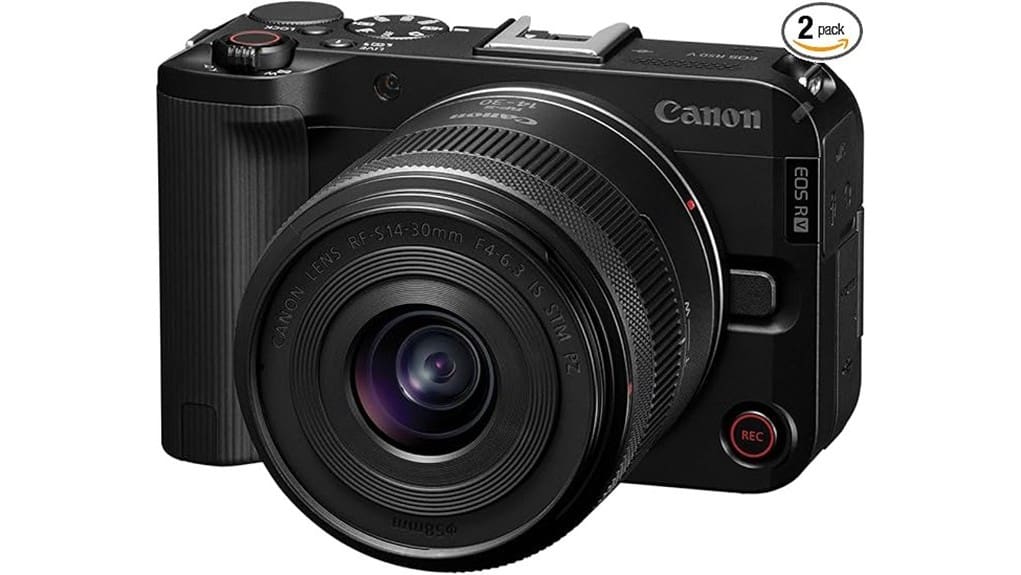
You’ll find the Canon EOS R50 V with the RF‑S14‑30mm is a compact, creator‑focused kit that nails portrait vlogging, quiet in‑camera zooms, and reliable Dual Pixel AF for run‑and‑gun shoots. Its 24.2MP APS‑C sensor and DIGIC X processor give crisp stills and clean 4K with sensible noise control, while the power‑zoom lens covers immersive wide to natural short‑tele and stays sharp centrally. Battery and single‑card limits are real—scroll on to see practical pros, cons and alternatives.
Some Key Takeaways
- Compact R50 V plus RF‑S 14‑30mm PZ makes an ideal vlogging kit with vertical-mount controls and a front record button for instant portrait shooting.
- 24.2MP APS‑C sensor and DIGIC X deliver crisp 24MP frames, reliable color, and sensible noise control up to about ISO 3200.
- Dual Pixel CMOS AF II and RF‑S lens optical IS with stabilization emulation provide quick subject tracking and steady handheld footage.
- 14–30mm power‑zoom covers tight interiors to interview focal lengths; center sharpness is strong, edges soften at extremes.
- Good ergonomics and connectivity, but expect modest battery life, a single card slot, and occasional 4K overheating during long takes.
How the Canon EOS R50 V + RF‑S14‑30mm Fits Vlogging and Content Creation
How well does the Canon EOS R50 V with the RF‑S14‑30mm zoom serve vloggers and creators? You get a compact, purpose-built kit that prioritizes usability: vertical mount, front record button, and a quiet STM power zoom for smooth framing. Autofocus is reliable for single-operator shoots, and the 14–30mm range covers tight interiors to wider social formats without switching lenses. Audio capture needs external microphones for professional results—built-in options are usable but limited. Battery life and connectivity (Wi‑Fi, Bluetooth) support mobile workflows. Overall, it’s a practical, affordable hybrid for creators who favor ergonomics and fast setup. It’s also well-suited to photographers who prefer mirrorless camera systems and compact gear.
What the 24.2MP APS‑C Sensor and DIGIC X Processor Deliver in Stills and 4K Video
Expect crisp stills and competent 4K video from the R50 V’s 24.2MP APS‑C sensor paired with Canon’s DIGIC X processor — it balances resolution, low‑light performance, and speedy pipeline for creators who shoot both photos and motion. You’ll get clean 24MP frames with sensible noise control and responsive JPEG rendering; sensor dynamics deliver usable shadow recovery without harsh artifacts. In 4K the DIGIC X manages sustained data rates, decent color gradation, and limited overheating. Canon’s color science remains faithful and pleasing straight out of camera, so you’ll spend less time grading and more time creating. For photographers who want accurate color reproduction across devices, consider using color calibration to ensure consistent results.
Real‑World Autofocus, Stabilization, and Low‑Light Performance Tested
While shooting handheld and on gimbals, the R50 V’s Dual Pixel CMOS AF II locked quickly and stayed put on faces and moving subjects, giving you reliable tracking for run‑and‑gun vlogging and short films. You’ll appreciate the predictable autofocus tracking in chaotic scenes; subject swaps are handled smoothly and recoveries are fast. Optical IS in the RF‑S zoom plus in‑body stabilization emulation keeps handheld footage steady for most workflows. Low‑light performance is respectable: usable at higher ISOs with manageable noise handling up to about ISO 3200, though shadow detail and highlight roll remain conservative. Perfect Tripods recommends pairing the R50 V with a sturdy support for mixed shooting to maximize stability and versatility for photographers shooting with mirrorless setups and tripod accessories.
How the RF‑S14‑30mm F4‑6.3 IS STM PZ Lens Performs for Wide, Standard, and Power‑Zoom Use
The RF‑S14‑30mm feels like a versatile everyday zoom that nails wide framing and handles standard ranges without fuss; its 14mm end gives immersive perspectives for vlogging and landscapes, while the 30mm side covers run‑and‑gun interview and street work with natural compression. You’ll appreciate smooth shifts thanks to the power‑zoom’s consistent, quiet STM drive — ideal for in‑camera zooms during recording. Center detail is reliable; edge sharpness drops modestly at extremes, especially wide open. Optical IS keeps handheld clips usable, though you’ll still want steadier rigs for critical cinema work. Overall: practical, lightweight, and creator‑friendly. It’s a great match for mirrorless bodies that prioritize portability and ease of use, especially when paired with compact camera sliders.
Handling, Ergonomics, and Creator Features: Vertical Mount, Front Record Button, and Articulating Screen
Get a grip on the R50 V and you’ll find Canon prioritized creators: the body feels balanced with the RF‑S14‑30mm attached, the textured grip gives secure single‑handed framing, and the vertical‑mount tripod plate actually aligns the camera’s controls for portrait shooting instead of forcing awkward rotations. You’ll appreciate deliberate button placement — the Front Record button sits naturally under your thumb for instant capture. Tilt mechanics are smooth and predictable; the articulating screen flips for vlogs and angles without wobble. Screen durability seems robust for travel use, though protectors are wise. Overall, ergonomics favor efficient, confident shooting. A good monitor setup can further improve composition and comfort when using articulating screens with monitor mount arms.
Battery Life, Media, Connectivity, and Workflow for Creators (Wi‑Fi, Bluetooth, USB)
Because Canon aimed this camera at creators who shoot long takes and frequent clips, battery life and media handling are straightforward but pragmatic: you’ll get modest endurance from the included lithium‑ion battery (lightweight at 1.6 oz) that’s fine for short vlogs or a day of intermittent shooting, but plan to carry spares for extended sessions or high‑frame‑rate 4K/120p work. You’ll manage media on a single card slot; use fast UHS‑I cards and rotate backups. Connect via Wi‑Fi/Bluetooth for quick transfers and remote control, or USB for tethering. Good battery management plus wireless backup keeps your workflow reliable. For more serious outings consider stocking camera batteries and compatible chargers to extend shooting time.
Final Verdict: Who Should Buy This Renewed Kit and Alternatives to Consider
If you want a compact, video-first kit that balances modern Canon autofocus and DIGIC X performance with a lightweight RF-S 14–30mm PZ zoom, this renewed EOS R50 V package is an economical, capable choice—especially for vloggers, social creators, and run‑and‑gun shooters who prioritize 4K/29.97p or cropped 4K/59.94p capture, reliable Dual Pixel AF II, and handy features like Vertical Mount and Front Record control. You should buy it if you’re a budget buyer seeking secondhand reliability, want excellent autofocus, and need a small, versatile setup. Consider new R10/R7 or a used R6 for higher low-light or stills needs. This kit is particularly appealing for creators who value compact system design without sacrificing core performance.
Some Questions Answered
Is This Renewed Kit Covered Beyond the 90‑Day Warranty?
No — the renewed kit only includes the 90‑day limited warranty by default. You can, however, purchase an extended warranty or check whether the seller offers a refurbished certification that includes extra coverage; some refurb programs extend protection beyond 90 days. You’ll want to confirm the seller’s policy and any third‑party warranty terms before buying. I’d recommend getting explicit documentation of extended warranty coverage or refurbished certification.
Are Lens Caps, Hood, and Original Box Included?
Yes — the renewed kit usually includes the lens cap and often a travel pouch, but it typically doesn’t come with the original box or a lens hood. You’ll want to confirm with the seller before buying: some renewed listings add extras like a hood or packaging, others only include the body, lens, basic caps, battery and charger. If you need the hood or box, budget for aftermarket replacements.
Can the Camera Record Externally via USB While Charging?
Yes — you can record externally via USB while charging, but check Firmware compatibility first. In my view, USB recording works with Power passthrough enabled, letting you capture video to a connected device while the battery charges. Charging behavior can vary: some firmware versions limit data throughput or disable simultaneous external recording, so update firmware and test your workflow. For reliable long shoots, confirm model-specific USB recording/charging rules beforehand.
Is There Any Sensor Dust or Cosmetic Wear on the Body?
No visible sensor condition issues or obvious body wear were noted; you’ll find the sensor clean and the exterior in good renewed condition. You’ll still inspect closely for micro-dust near the mount and minor scuffs on edges—nothing affecting performance. If you spot debris, you can clean the sensor professionally or with proper tools. I’d recommend testing with a lens and sensor-clean test shot to confirm before heavy use.
Does the Rf‑S14‑30mm Support Full Electronic Control on All R50 V Firmware?
Yes — the RF‑S14‑30mm supports full electronic control on current R50 V firmware, so you’ll get reliable Autofocus behavior and on‑board Aperture control via the body. You’ll want to keep firmware updated for top compatibility and occasional tweaks to AF performance. In my view, the lens-body integration is solid for vlogging and run‑and‑gun work, though very fast aperture demands aren’t its strength.