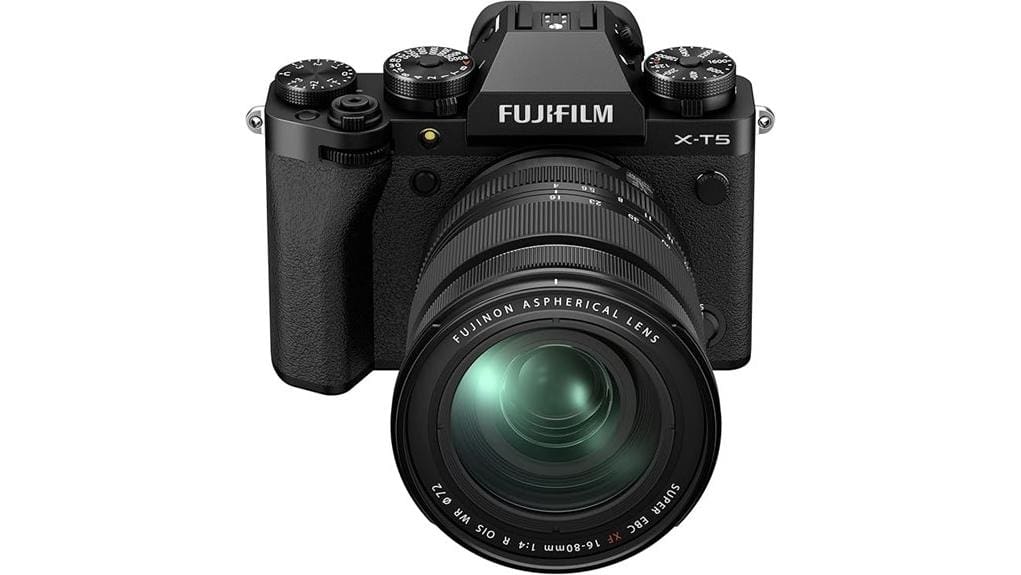
You’ll get a high-resolution 40.2MP X-Trans sensor, up to 7 stops of IBIS, and internal 4:2:2 10-bit video to 6.2K, all in a travel-ready APS-C body paired with the versatile XF16‑80mm kit lens. Autofocus is fast and reliable, low-noise performance is strong, and the lens gives excellent center sharpness with useful reach. Recording can hit heat and card limits, so plan workflow. Keep going to see detailed test notes and comparisons.
Some Key Takeaways
- 40.2MP X-Trans sensor delivers exceptional detail, wide dynamic range, and low-noise high-ISO performance for large prints and heavy cropping.
- Up to 7 stops IBIS plus 15 fps mechanical burst makes the X-T5 reliable for handheld low-light and action photography.
- Internal 4:2:2 10-bit video to 6.2K, with external ProRes RAW/Blackmagic RAW over HDMI, supports serious hybrid workflows.
- Included XF16‑80mm f/2.8–4.5 kit lens offers versatile 16–80mm coverage, strong center sharpness, and compact travel-friendly handling.
- Use CFexpress cards and portable SSDs for high-bitrate recording; heat and recording limits vary by codec and frame rate.
Core Specs at a Glance: 40.2MP Sensor, IBIS, 6.2K/4K Video, and XF16‑80mm Kit Lens
At its core, the X-T5 pairs a high-resolution 40.2MP X-Trans CMOS 5 HR sensor with up to 7 stops of in-body image stabilization, giving you the pixel-level detail and steady handheld performance to tackle landscapes, studio work, and careful reproductions. You’ll find wide dynamic range with clean tonality across highlights and shadows, and the sensor’s design plus IBIS improves low light performance by enabling lower ISOs and longer exposures without blur. The XF16-80mm kit covers versatile focal lengths, reasonable apertures, and complements the camera’s 6.2K/4K video capabilities for hybrid shooters seeking precision. This package is ideal for mirrorless camera enthusiasts looking for essential gear that balances high-resolution stills and advanced video features.
How the X‑T5 Performs in Real Shooting: Image Quality, Autofocus, and Stabilization
While you’ll immediately notice the X‑T5’s 40.2MP X‑Trans sensor delivers exceptional resolution and tonal gradation, its real-world strengths are how that detail combines with low‑noise performance and IBIS to produce usable images in situations where lesser bodies would struggle. You’ll get fine textures and clean shadows up to high ISOs, and IBIS’s up to 7 stops steadies handheld shots across the XF16‑80mm range. Autofocus is fast and consistent with plentiful phase‑detect points, minimizing shutter lag in single and continuous modes. For action you’ll rely on 15 fps mechanical shooting; for slow light, the balance of AF, IBIS, and noise control impresses. CFexpress cards also speed up workflow by providing high sustained write speeds for fast image capture.
Video Workflow and Recording Limits: Internal 4:2:2 10‑Bit, 6.2K, and External RAW Options
Having seen how the X‑T5 pairs its high‑resolution sensor, IBIS, and reliable AF for stills, it’s worth examining how those strengths map to video capture and postproduction. You get internal 4:2:2 10‑bit recording up to 6.2K, which gives ample latitude for Color grading and delivers clean 4K downsamples. Recording limits depend on codec, frame rate, and heat—plan for media and cooling during long takes. For maximum flexibility, you can route HDMI to External recorders and capture 12‑bit ProRes RAW or Blackmagic RAW, but you’ll need compatible devices and fast storage to handle high data rates. Portable SSDs are an excellent option for photographers needing fast, reliable storage for portable SSDs and on-location workflows.
XF16‑80mm Kit Lens in Practice: Sharpness, Aperture Tradeoffs, and Handling
Because Fujifilm bundled the XF16‑80mm with the X‑T5, you’ll get a versatile walkaround zoom that balances reach and image quality without demanding constant lens changes. You’ll find center sharpness strong from wide to short tele, with corners improving stopped down; expect peak resolution around f/5.6–f/8. The f/2.8–f/4.5 aperture range forces tradeoffs: wider settings aid low light and subject isolation but soften edges and increase lens flare on bright highlights. Autofocus and IBIS keep shots usable; the lens’ handling balance on the X‑T5 feels neutral, compact, and well-suited for travel and street work. This makes the kit particularly attractive for photographers who prioritize versatile zoom performance in a compact setup.
Who Should Buy the X‑T5 + XF16‑80mm and How It Compares to Alternatives
If you want a high-resolution, travel-ready mirrorless that balances stills and video, the X‑T5 with the XF16‑80mm is a compelling choice: it gives you a 40.2 MP sensor for large, detailed prints or heavy cropping, IBIS up to 7 stops for handheld low‑light work, and a flexible 16–80mm zoom that handles most everyday focal lengths without constant lens changes. You should buy it if you prioritize travel versatility, street photography responsiveness, and high-res detail without swapping bodies. Alternatives like lighter APS-C zoom kits or full-frame mirrorless trade resolution, IBIS, or lens range; choose based on weight, budget, and low‑light needs. Perfect tripods can help stabilize handheld work and improve low-light results when paired with this kit; consider tripod compatibility when planning your gear.
Some Questions Answered
Does the X-T5 Have a Weather-Sealed Body for Shooting in Rain?
Yes — the X-T5 features weather sealing and weatherproof construction, so you can shoot in light rain and dusty conditions with confidence. You’ll still want to use weather-sealed lenses (like the XF16-80mm isn’t fully weatherproof) and avoid prolonged exposure to heavy downpours or submersion. Always dry and check seals after wet use, and consider a rain cover for extended shoots to protect controls and ports.
What Memory Cards Are Recommended for 6.2k/Prores RAW Recording?
You’ll want CFexpress Type B cards for reliable 6.2K/ProRes RAW recording; they handle sustained high write speeds and large file sizes. Use UHS II SDXC cards only for high-bitrate H.265/H.264 or backup stills—UHS II can’t reliably sustain ProRes RAW throughput. Choose reputable brands (Sony, ProGrade, SanDisk), VPG200/CFE VPG ratings, and match card reader and firmware for max transfer speeds. Keep multiple cards and backups to avoid data loss.
Can the Battery Be Charged In-Camera via USB-C While Shooting?
Yes — you can charge the battery via USB-C while you’re shooting, but there are limits. You’ll get USB power delivery for battery charging and extended live shooting, yet continuous high-drain tasks like 6.2K/ProRes RAW may still rely on battery capacity and heat limits. For reliable long sessions, use a fully charged spare battery or an AC power adapter with the camera’s USB‑C PD input to avoid interruptions during extended live shooting.
Is There Built-In Intervalometer/Timelapse Functionality for Long Exposures?
Yes — you’ve got a built in intervalometer for timelapse work. You can set interval, number of frames and exposure settings, and the camera handles timelapse exposure sequences automatically. For long exposures you’ll still use bulb or long-exposure modes; the intervalometer will trigger those exposures but total exposure length is limited by sensor heat and battery. Use external power for very long sessions to avoid interruptions.
What Warranty and Repair Options Exist Beyond the 1-Year Warranty?
You can buy Extended service plans from Fujifilm or retailers to lengthen coverage beyond the 1-year warranty. Those plans often cover accidental damage, parts, and labor for an extra fee. You can also use Third party repairs or independent camera technicians for out-of-warranty fixes; just check parts authenticity and warranty-voiding policies. Keep receipts and serial numbers, compare costs, and ask about turnaround times and genuine parts before committing to any service.