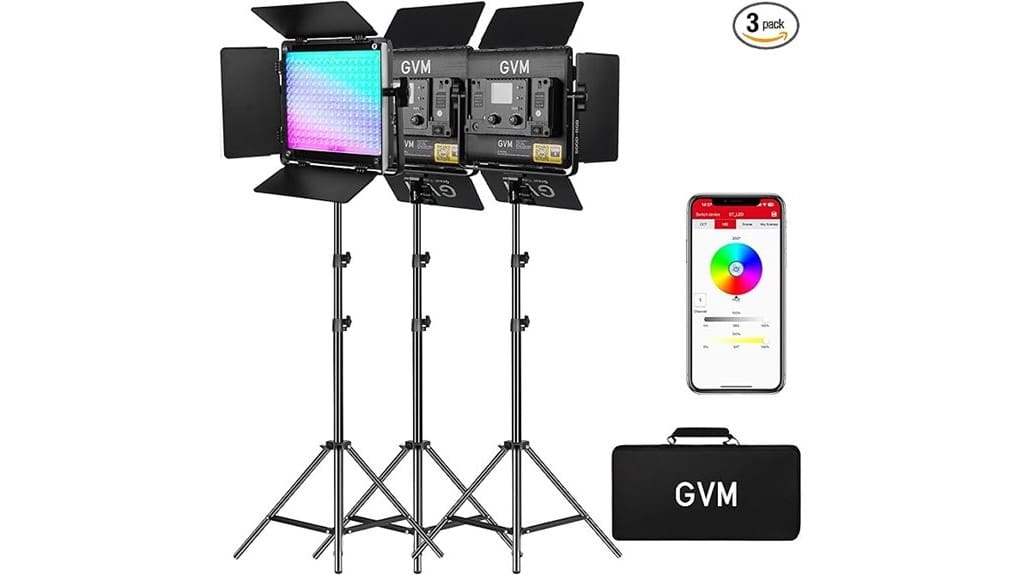
You’ll find the GVM 800D RGB three-panel kit gives you punchy, color-accurate light in a compact, portable package. Each 1 kg panel delivers about 19,500 lux at 0.5 m with CRI97+ bi-color fidelity, tight beam control from its optical lenses, and useful app/master–slave control plus cinematic scene modes. Stands and folding controls suit run-and-gun shoots; batteries aren’t included. It’s great for creators and small studios, and the full review covers pricing, runtime, and setup tips.
Some Key Takeaways
- Compact three-panel RGB kit offers high output and accurate color, ideal for content creators and small studios.
- Each 1 kg panel delivers about 19,500 lux at 0.5 m with bi-color 3200–5600K and CRI97+ accuracy.
- 192-LED layout plus optical lenses yield even coverage and tighter beam control with minimal spill.
- Bluetooth app, master/slave control, and 20 cinematic scene modes enable quick creative and synchronized setups.
- Portable with stands and folding light controls; accepts F750/970 batteries (not included) but is not weatherproof.
Commercial Investigation: Quick Verdict for Buyers – Is the GVM 800D RGB Right for Me?
Wondering if the GVM 800D RGB is the right kit for your shoots? You’ll appreciate a compact, three-panel set that delivers high output, accurate color, and versatile scene modes. Evaluate whether the included stands and folding light control units meet your mounting options needs; they’re portable but basic. Consider battery compatibility: it accepts F750/970 cells for location work, though batteries aren’t included, so factor additional cost and runtime into your decision. This kit suits content creators and small studios wanting controllable RGB effects and solid bi-color performance, but pros needing weatherproofing or heavier-duty mounts should look elsewhere. Many buyers choose it as part of a broader setup when selecting video light panels for consistent, high-quality lighting.
GVM 800D RGB: Key Specifications and What They Mean for Real Shoots
Because you’ll want to match gear to real shooting needs, here’s what the 800D RGB’s specs actually mean on set: the three lightweight 1 kg panels give you high output (19,500 lux at 0.5 m) and tight color control (3200–5600K bi-color with CRI97+), so you can light interviews, product shots, and RGB effects without fighting poor color rendering; the 192-LED layout and optical lens design provide even coverage but expect the included folding control units and stands to be best for run-and-gun or small-studio setups rather than heavy rigging; and while Bluetooth app/master-slave control plus 20 cinematic scene modes add creative flexibility, remember batteries (F750/970) aren’t included, AC power is required for long sessions, and the unit isn’t weatherproof—so plan power and protection for location work. You’ll appreciate the high color fidelity for accurate skin tones and product colors, and scene customization through app or onboard controls lets you dial in looks quickly. For tight spaces or quick setups, the compact panels and stands are ideal; for larger rigs, budget sturdier support and power. These RGB lights also pair well with other accessories popular among photography enthusiasts for creating vibrant setups.
How the 800D Performs in the Studio and On-Location (Brightness, Color, and Modes)
You’ll notice the 800D’s specs translate to dependable studio output and surprisingly practical on-location use: at 0.5 m each panel delivers about 19,500 lux, so three panels give strong, controllable illumination for interviews, small product setups, or keyed fill without relying on modifiers. You’ll get accurate skin tones from the CRI97+ bi-color range (3200–5600K) and predictable softbox compatibility for diffusion. The optical lens design tightens beam control, minimizing spill. Scene modes and cinematic effects are useful for quick setups, while measured real world falloff remains manageable—expect useful light out to typical interview distances. This makes the 800D a solid option for photographers focused on bi-color video lights and practical studio/on-location workflows.
Control, Power, and Workflow: App, Master/Slave, and Battery/AC Options
When you need fast adjustments on set, the 800D gives you flexible control options: the GVM app connects over Bluetooth for precise remote adjustments, the master/slave setup lets one panel dictate settings for the others, and the LCD provides on-unit readouts when you’re hands-on. You’ll appreciate the App integration for grouping lights, saving scenes, and fine-tuning hue/CCT remotely — range is adequate for small sets. Master/slave works reliably for synchronized changes, cutting setup time. Battery flexibility (F750/970 or AC) lets you choose portability or continuous power, though batteries aren’t included, so plan accordingly. Our store also offers curated video light kits designed for photographers and hobbyists to build better lighting setups.
What’s in the 3-Pack Kit, Durability, Warranty, and Who Should Buy It
After covering control and power, let’s look at what you actually get in the 3-pack and how it holds up. The kit contents include three 192-LED panels, three adapters, folding light controls, adjustable stands, woven bags, a carrying bag and accessory box—batteries aren’t included. Durability testing shows sturdy construction and reliable mounts but no water resistance, so avoid wet use. Warranty coverage is one year, plus a 30-day return option from the seller. Ideal buyers are content creators or small studios who need high-CRI, portable RGB panels and value app/master-slave control without battery extras. These panels pair well with field monitors for on-set framing and exposure checking, especially when used alongside monitoring tools.
Some Questions Answered
Does It Work With Third-Party Softboxes or Modifiers?
Yes — you can use third-party softboxes and modifiers if they support a Bowens mount or a compatible adapter. You’ll have to confirm the panel’s frame accepts Bowens or use a magnetic grid-style adapter for quick attachment. That gives you flexibility to mount softboxes, grids or magnetic grids for shaping light. Don’t forget to check size and weight compatibility, since heavy modifiers may stress the included stands and mounts.
Can It Be Daisy-Chained for Simultaneous AC Power?
No — you can’t daisy chain the panels for simultaneous powering from a single AC source. Each GVM 800D panel uses its own AC adapter or individual battery, so you’ll power them separately or use the master/slave Bluetooth control for synced output. That means simultaneous powering requires plugging each adapter into power or using multiple batteries; evaluate your setup for outlets, cable management, and surge protection accordingly.
Are There Firmware Updates and How Are They Installed?
Yes — firmware availability exists and updates are delivered occasionally. You’ll use the GVM App (Bluetooth) for the update procedure: connect a panel, check the app’s device page for firmware availability, then follow prompts to download and install. Keep panels on AC or fresh batteries, stay close to the phone, and don’t power off during transfer. Updates improve stability and features; you’ll evaluate release notes before installing.
Is There a Fan and Does It Make Noise During Long Shoots?
Yes — the panels use active cooling, so you’ll hear an audible hum during long shoots. You’ll find the fan engages to manage heat with sustained high output or prolonged use, keeping color and brightness stable. The noise is noticeable but generally low; it may matter in very quiet recording environments. If you need silent operation, you’ll want external audio mitigation or limit fan-triggering settings and lower sustained output.
Can It Be Used for Outdoor Rain-Covered Shoots With a Rain Cover?
Yes — you can use it outdoors with a rain cover, but you shouldn’t rely on the light itself for moisture protection since it’s not water resistant. Use dedicated waterproof accessories like sealed covers and gaffer-taped seams, keep batteries and adapters sheltered, and angle the panels to shed runoff. For safe operation, follow weatherproofing tips: avoid heavy wind, test stability, and monitor temperature; stop shooting if condensation appears.