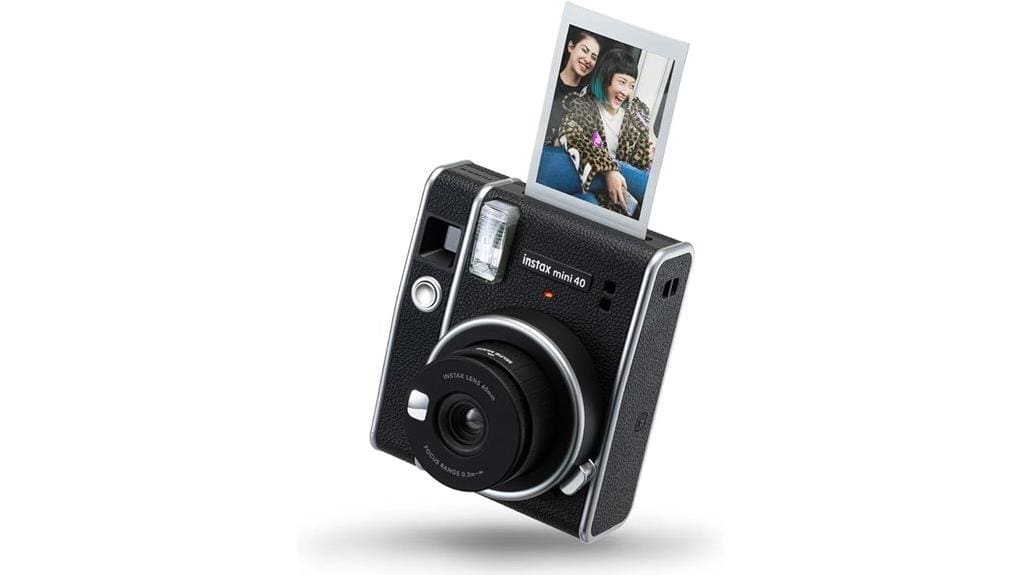

You’ll find the Instax Mini 40 is a compact, tactile instant camera that’s built for easy, everyday shooting with a vintage metal-and-texture look you’ll enjoy holding. It uses automatic exposure and a fixed close-focus lens to deliver warm midtones, pleasing micro grain, and punchy shadows; ISO 800 gives bright indoor shots but tight exposure latitude in harsh sun. Controls are simple and reliable, the body feels premium, and practical tips will help you get the best prints.
Some Key Takeaways
- Compact, stylish instant camera that produces credit-card sized prints with a vintage textured finish and silver accents.
- Beginner-friendly autofocus and automatic exposure deliver predictable results with minimal user settings.
- Prints show warm midtones, pleasant micro grain, vivid saturation, and punchy shadows, but highlights can clip in harsh sun.
- Selfie-friendly features include a close-up lens ring and a mirror; tactile controls and optical viewfinder simplify shooting.
- Good value for reliable everyday use and gifting, though it lacks advanced controls and runs on two AA batteries.
Is the Instax Mini 40 Worth Buying? Quick Verdict and Who It’s Best For
If you want an easy-to-use, stylish instant camera that delivers credit-card sized prints with predictable exposure, the instax mini 40 is worth buying—especially if you value tactile, immediate photos over high-resolution detail. You’ll appreciate the vintage aesthetic: textured finish, silver accents, and compact silhouette that reads classic on shelves. It’s beginner friendly, with automatic exposure and simple controls that cut setup time. Portability benefits include 330 g weight and pocket-friendly dimensions for on-the-go shooting. For gifting, its premium look boosts gift appeal; for users wanting tactile prints and reliable autofocus, it’s a practical, stylish choice. Our shop also offers camera straps designed for passionate photographers that pair perfectly with compact instant cameras.
What You Get and How the Mini 40 Works: Key Features, Size, and Handling
Unpack the Mini 40 and you’ll find a compact, tactile instant camera built around simplicity: the box includes the black instax mini 40 body with its textured finish and silver trim, a handstrap, and a concise user manual (film is sold separately). You’ll handle compact portability easily — the 330 g body fits a coat pocket. Tactile controls include a pronounced shutter button, zoom-like close-up lens ring, and a selfie mirror adjacent to the fixed-viewfinder. Automatic exposure and selectable shutter settings simplify shooting. Top-mounted film ejection, battery compartment and strap lug are logically placed, so you operate quickly and reliably. It’s a useful companion for mirrorless camera enthusiasts who want instant prints alongside their digital work.
Image Quality and Film Costs: Real-World Prints, Exposure, and ISO 800 Performance
Having handled the Mini 40 and felt how it meters and frames, you’ll notice those design choices directly affect the prints you get: the camera’s automatic exposure and fixed close-focus lens push contrast and highlight roll-off in ways that show up immediately on instax mini film. You’ll see warm midtones, clipped highlights in harsh sun, and a pleasing micro film grain that adds texture. ISO 800 sensitivity yields bright exposures indoors but reduces exposure latitude, so blown highlights are hard to recover. Frame composition matters: the lens’ field and the camera’s metering bias produce prints that favor punchy shadows and vivid saturation. For keeping those prints looking their best, consider regular cleaning with lens cleaner to avoid smudges and maintain clarity.
Everyday Use: Shooting Modes, Selfie Setup, Close-Up Performance, and Tips
Regularly you’ll find the Mini 40 straightforward to operate: its automatic exposure and simple shooting modes let you concentrate on composition while the camera handles shutter and brightness, and the optical viewfinder gives a clear, low-latency framing reference for quick snaps. You’ll switch modes with a tactile dial; use portrait framing guides in the viewfinder and rely on ambient lighting for softer skin tones. Selfie setup uses the built-in selfie lens and mirror—extend the close-up lens for sharp near subjects. Practice flash etiquette to avoid washout; wipe fingerprints for routine lens care and keep prints consistent. The Mini 40 pairs well with a range of instant camera accessories to enhance everyday shooting and print handling.
How the Mini 40 Compares: Alternatives, Price/Value, and Final Recommendation
While the Mini 40 doesn’t reinvent instant photography, it gives you a compact, mechanically tidy package that competes well on build, simplicity, and print quality against similarly priced Instax models and retro-style competitors. You’ll favor its premium textured finish and retro aesthetics if tactile cues matter. Compared with Mini Evo or Polaroid variants, the Mini 40 trades advanced controls for reliability, lighter weight, and simpler operation. Consider battery life (uses two AA; conservative but replaceable) and the thriving accessory ecosystem for straps, cases, and close-up lenses. Strong resale value and consistent film costs make it a practical, stylish buy. Also consider pairing it with a comfortable camera sling strap for everyday use to protect the camera and keep it ready to shoot with comfortable support.
Some Questions Answered
Does the Mini 40 Have a Built-In Flash Recycle Time Warning?
Yes — you’ll see a flash indicator that doubles as a recycle warning. You’ll notice a small lamp near the lens that lights while the flash recharges, so you won’t try to fire too quickly. The visual cue is clear and technical: steady light means ready, pulsing or off means charging. This optical signal helps you time shots precisely, avoiding underexposed frames or wasted film during rapid shooting.
Can I Use Third-Party Instax Mini Film Cartridges?
Yes — you can use third-party instax mini film cartridges, but check film compatibility carefully. You’ll load cartridges the same way, and shots will eject as credit-card-sized prints. Image quality may vary: third-party emulsions can shift color, contrast, grain, and exposure predictability compared with genuine instax film. For consistent technical results and true-to-camera color rendering, stick with Fujifilm instax mini film; otherwise expect visual and tonal differences.
Is the Camera Battery Type and Compartment Accessible on Flights?
Yes — the battery accessibility is straightforward: the compartment sits on the camera base, secured by a small sliding latch; you’ll pop it open with your thumb to replace two AA batteries (not lithium button cells). For flight restrictions, carry spare AA cells in carry-on, not checked baggage, and keep them in original packaging or insulated terminals to prevent shorting. You’ll avoid surprises at security by removing batteries only if asked.
Are Replacement Parts Like the Selfie Mirror Available Separately?
Yes — replacement mirror parts aren’t typically sold by Fujifilm separately, so you won’t find an official replacement mirror in most channels. You can source third‑party replacement mirror components or DIY accessory options (stick‑on mirrors, custom mounts) that fit the selfie lens area. You’ll want precise measurements, adhesive type, and optical flatness specs to maintain framing accuracy. Check specialty camera parts sellers or repair shops for compatible components and fitment guidance.
Does the Textured Finish Resist Fingerprints and Scratches?
Yes — you’ll find the textured finish improves textured durability and helps surface longevity by masking light fingerprints and fine abrasions. The high-quality textured coating diffuses oils visually, so smudges aren’t obvious; deep scratches will still catch light. For technical care, wipe with a microfiber cloth, avoid abrasive cleaners, and store in a padded case to minimize impact scratches. Regular gentle maintenance preserves the textured surface and extends overall longevity.