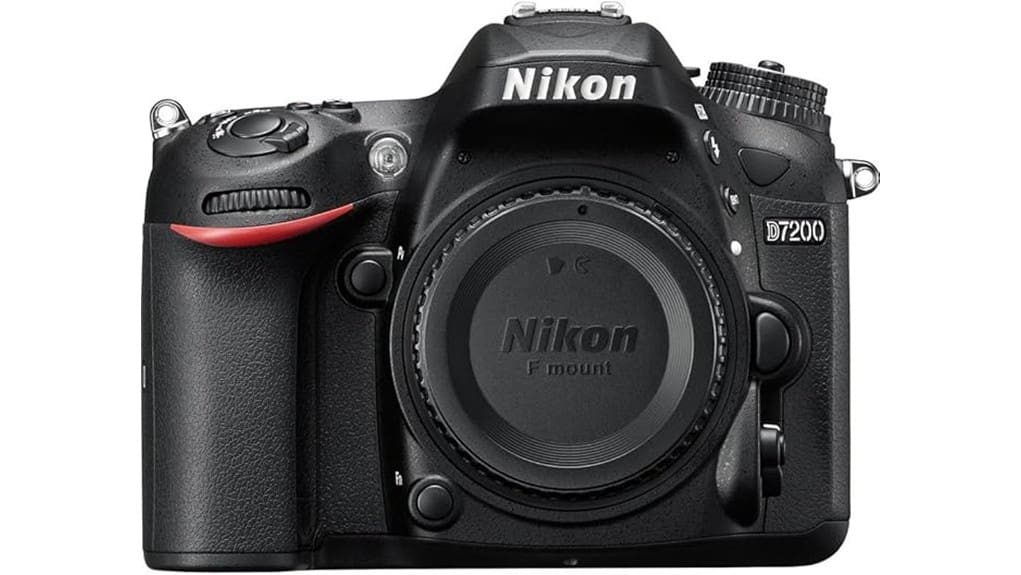

The Nikon D7200 gives you a rugged, pro-oriented DX DSLR with a 24.2MP no‑OLPF sensor, EXPEED 4 processing, 51-point AF and dual SD slots, delivering sharp JPEGs and reliable subject tracking at 6 fps. You’ll get native ISO 100–25,600 (expandable), solid high‑ISO web performance to ISO 6400, and full HD 60p video with external mic input. Controls, battery life and connectivity suit studio and field work; keep going to learn detailed tradeoffs and alternatives.
Some Key Takeaways
- Excellent 24.2MP DX sensor (no low-pass filter) delivers high detail and sharpness for enthusiasts and pros.
- EXPEED 4 processor enables reliable JPEG rendering, 6 fps bursts, and top shutter speed of 1/8000s.
- 51-point Multi-CAM 3500DX II AF system provides accurate single-point focus and robust continuous tracking.
- Native ISO 100–25,600 (expandable to 102,400) yields usable images to ISO 6400, with noise reduction softening microdetail above ISO 3200.
- Solid ergonomic DSLR body with dual SD slots, Wi‑Fi/NFC/USB/HDMI connectivity, and long battery life (EN-EL15).
What This Review Helps You Decide About the Nikon D7200
Who needs the D7200? You need to decide if this DSLR fits workflow, handling, and system requirements. This review helps you assess lens compatibility via Nikon F mount, AF coupling, and contact support for older optics and modern AF-S lenses. You’ll evaluate dual SD slots, battery life with EN-EL15, and physical controls for studio or field use. It clarifies connectivity (Wi‑Fi, NFC, USB/HDMI) for tethering and media management. Finally, it summarizes warranty details: one-year manufacturer parts/labor (batteries/software excluded) plus retailer return policy—so you can weigh repair risk versus budget. As a retailer focused on DSLR accessories, we also highlight essential camera gear that complements the D7200 for enthusiast photographers.
Key Specs That Matter for Photographers (Sensor, AF, ISO, Burst)
Although it’s a midrange DSLR, the D7200’s core specs give you tools that matter: a 24.2 MP DX CMOS sensor without an OLPF and EXPEED 4 processing for high detail and sharpness; a 51-point Multi-CAM 3500DX II AF system with phase-detection for reliable subject acquisition and tracking; a native ISO range of 100–25,600 (expandable to 102,400) for flexible low-light performance; and a 6 fps continuous rate with a 1/8000 s shutter ceiling for action and burst shooting. You’ll get durable sensor construction and reliable sensor durability measures. AF customization options let you tune tracking sensitivity, focus modes, and individual AF points. For photographers using tripods, choosing the right tripod head can significantly improve composition and stability by allowing precise framing and smoother adjustments with fluid motion.
Real-World Image Quality: JPG/Low Light/Dynamic Range Results
When you push the D7200 hard in mixed lighting, its 24.2 MP sensor and EXPEED 4 produce JPEGs with fine detail and controlled noise up to about ISO 3200, after which noise suppression begins to soften microcontrast and edge detail. You’ll find high iso handling competent: usable files to ISO 6400 for web, but diminished texture. In-camera jpeg sharpening is conservative; you can increase sharpening in post. Noise reduction balances luminance and color but reduces microdetail at high ISOs. Shadow recovery preserves midtone separation with modest noise lift. Skin tones remain natural and highlight retention is competent for typical scenes. This body pairs well with quality lenses for mirrorless-style versatility and improved handling in many shooting situations mirrorless camera enthusiasts.
Autofocus, Metering, and Shooting Performance in Practice
Because Nikon equipped the D7200 with the Multi-CAM 3500DX II 51-point AF module and EXPEED 4 processing, you get fast, reliable phase-detection focus and accurate metering across most shooting situations. You’ll find single-point AF precise for static subjects and focus tracking robust when you use continuous AF at up to 6 fps. Live View relies on contrast-detect, slower but usable for critical framing. Exposure metering (matrix, center-weighted, spot) reads consistently; i-TTL flash integrates well at 1/250s sync. Dual card slots guarantee workflow flexibility. Overall, the D7200 balances speed, metering accuracy, and practical durability. The site also carries a range of accessories for digital cameras, including grips and batteries for extended shooting and camera accessories to complement the body.
Video Capabilities and Limitations for Hybrid Shooters
Having covered autofocus, metering, and continuous shooting, let’s look at the D7200’s video abilities and limits for hybrid shooters. You get Full HD 1080p at up to 60 fps with MP4 capture, reliable exposure control and manual settings for controlled workflows. Audio benefits from an external mic input, but no headphone jack limits monitoring. The fixed rear LCD and DSLR phase-detect AF in live view constrain smooth continuous autofocus; you’ll rely on manual focus for critical pulls. Expect some rolling shutter during fast pans and limited in-body stabilization, so use stabilized lenses or rigs for run-and-gun work. Consider adding on-camera lighting like compact LED panels to brighten scenes and improve image quality with on-camera LED lights.
Ergonomics, Battery Life, Connectivity, and Daily Usability
Although compact for a prosumer DSLR, the D7200’s grip and control layout give you confident handling for extended shoots. You’ll find grip comfort solid with textured surfaces and a deep hold that reduces fatigue. Buttons and dials sit logically; reach to primary controls is direct, aiding fast adjustments. Battery life with the EN-EL15 is strong—expect multi-day shooting under mixed use, and the included MH-25a charger is efficient. Dual SD slots simplify workflow. Built-in Wi‑Fi and NFC, plus USB and HDMI ports, enable tethering and file transfer. Menu navigation is clear, hierarchical, and responsive for daily use. For prolonged sessions and travel, pairing the camera with dedicated camera batteries and quality chargers can significantly extend shooting time.
Who Should Buy the D7200 Today and the Best Alternatives to Consider
If you need a rugged, high-resolution DX DSLR that excels for product, sports, and wildlife shooting without moving to mirrorless, the D7200 still delivers a compelling blend of image quality, robust AF and long battery life at a competitive price. You should buy one if you value optical viewfinder shooting, dual card slots, and dependable 51-point phase-detect AF for tracking fast subjects. As a used camera it’s attractive for budget-conscious pros and enthusiasts. For future proofing, consider newer mirrorless bodies (Z50/Zfc or used full-frame Z6) or the Canon EOS R7 as alternatives offering improved AF, video, and lens ecosystems. A hard shell camera case provides reliable protection for DSLRs like the D7200 when transporting gear or shooting in harsh conditions, making it a smart accessory for serious shooters who travel frequently and need rugged protection.
Some Questions Answered
Does the D7200 Include In-Body Image Stabilization?
No — the D7200 doesn’t have in body stabilization or sensor shift. You’ll rely on lenses with optical stabilization (VR) for shake reduction. The camera’s 24.2 MP DX sensor and EXPEED 4 processor don’t provide mechanical sensor-shift compensation. For handheld low-light or slow-shutter work, choose VR-equipped Nikkor lenses or use faster shutter speeds, tripods, or higher ISO settings to mitigate blur since stabilization must come from the lens, not the body.
Can the Camera Use Modern AF-S and AF-P Lenses Without Limitations?
Yes — you can use modern AF‑S and AF‑P lenses without major limitations. AF P compatibility is supported by the D7200; AF‑P lenses work for stills and video but may require firmware updates for optimum performance. The body lacks an internal focus drive, so Focus motor use is only for AF‑S/AF‑P lenses with built‑in motors; older screw‑drive AF lenses won’t autofocus. Expect full metering and exposure functionality.
Is a Vertical Battery Grip Available and Compatible?
Yes — a vertical battery grip exists and is compatible. You can use Nikon’s MB-D15 vertical grip for the D7200, which accepts an additional EN-EL15 battery or eight AA cells and provides duplicate controls for portrait shooting. Third party compatibility is common (Meike, Neewer, Vello, etc.), offering equivalent functionality and lower cost; verify firmware compatibility and battery/contact alignment before purchase to avoid autofocus or power issues.
How Weather-Sealed Is the D7200 for Harsh Environments?
The D7200 is well‑sealed for field use; you’ll find rubberized seals and weather gaskets at key joints (battery door, memory card slots, buttons, and mount) that resist dust and light moisture. It’s not fully submersible or rated to a formal IP standard, so you shouldn’t expose it to heavy rain or immersion. Use lens seals and judgment in prolonged harsh conditions to maintain reliability and prevent internal contamination.
Does the Camera Support Tethered Shooting Over USB or Wi‑Fi?
Yes — you can use tethered workflows over USB and perform wireless control via Wi‑Fi/NFC. You’ll connect the D7200 to a computer with the USB cable for direct file transfer and remote capture using compatible tethering software; Wi‑Fi/NFC lets you trigger capture, preview images, and transfer files to mobile devices with Nikon’s apps. Expect basic tether features (remote release, image transfer), not the advanced studio integrations of newer pro bodies.