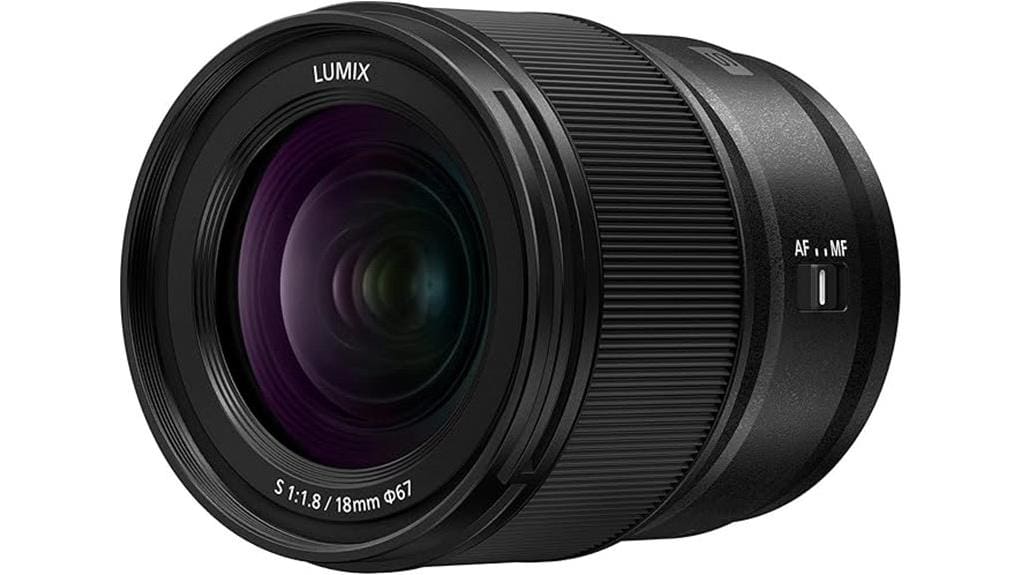

You’ll like the LUMIX S 18mm f/1.8 if you want a punchy, travel‑friendly wide that stays sharp center-to-edge and controls chromatic aberration well. Autofocus is fast and reliable on modern L‑Mount bodies, close-focus to 0.18 m is handy, and focus breathing is minimal for video. Aperture ramps smoothly and the compact, weather‑sealed body is easy to carry all day. It’s ideal for hybrid shooters and hobbyists—keep going to see detailed comparisons and sample results.
Some Key Takeaways
- Excellent optical performance with strong center resolution, impressive edge-to-edge sharpness, and only slight corner softening at the widest apertures.
- Fast, accurate AF with responsive phase-detection tracking and quick locks on modern L‑Mount bodies.
- Close-focus to 0.18 m, short focus throw, and minimal focus breathing make it great for near-subject and video pulls.
- Lightweight, compact, weather-sealed design balances portability with durable feel, ideal for travel and all-day use.
- Silent, smooth aperture ramps and minimal mechanical noise suit hybrid shooters and video work with stabilized systems.
How the LUMIX S 18mm F1.8 Performs Optically
When you put the LUMIX S 18mm F1.8 on a camera, its 18mm wide-angle perspective delivers natural-looking scenes with impressive edge-to-edge sharpness—especially notable at smaller apertures but already strong wide open thanks to the F1.8 design. You’ll find center resolution excellent, with microcontrast that renders textures cleanly. Edge sharpness holds up well though you may see slight softening in extreme corners at widest apertures. Chromatic aberration is well controlled; only high-contrast edges reveal minor fringing that’s easily corrected in raw. Overall optical performance is balanced: excellent for landscapes and architecture, with predictable, usable results for critical work. This makes it a strong choice for photographers focused on portrait camera lenses who want wide-angle performance with reliable image quality.
Autofocus, Focus Breathing, and Close-Focus Handling
Overall, the LUMIX S 18mm F1.8 locks quickly and accurately on both stills and video-focused bodies, giving you reliable subject acquisition even in low light. You’ll benefit from swift phase detection AF on modern L-Mount bodies, with responsive tracking for landscapes-to-people shifts. Close-focus handling to 0.18 m feels natural; the focus throw is short, letting you nail near subjects without hunting. Focus breathing is minimal, so framing stays consistent during subtle pulls. A minor caveat: on slower bodies you may notice slight focus jitter unless you enable backlash compensation — that fixes mechanical slack effectively. Its compact design and optical performance make it an excellent choice for photographers who prefer prime lenses and want superior image quality.
Video Features: Smooth Aperture and Motion-Friendly Design
Because filmmakers need consistent exposure and smooth shifts, the LUMIX S 18mm F1.8 delivers impressively even aperture ramps and negligible mechanical noise during adjustment. You’ll appreciate the silent aperture control for run-and-gun shoots; variations stay clean without picking up motor whirrs. Minimal focus breathing and predictable iris behavior let you pull focus and expose without surprise highlights or framing shifts. Motion-friendly design pairs well with stabilized footage from body or gimbal, keeping handheld pans smooth. Critically, the lens favors subtlety over dramatic servo-style changes—great for narrative work but less suited if you want exaggerated, rapid aperture chops. Top handles can improve handheld comfort and control for prolonged shooting sessions, especially when using camera top handles to steady wide-angle movements.
Build, Weather Sealing, and Everyday Portability
The lens’ handling complements its video-friendly mechanics, offering a compact, lightweight package you can carry all day without strain. You’ll notice precise manual rings and a well-damped focus throw that feel engineered, not toy-like. Compact portability is real: it slides into most bags and won’t unbalance small mirrorless bodies. Panasonic’s rugged sealing gives confidence in damp or dusty shoots, resisting splash, dust, and moderate cold. Still, the all-plastic exterior lacks the tactile reassurance of metal; you trade premium heft for everyday ease. Overall, build and rugged sealing suit field work, though finish and materials could be more premium. For added protection when transporting this lens, consider storing it in a rugged protective case.
Who Should Buy This Lens and Value Compared to Alternatives
Who needs the Panasonic LUMIX S 18mm F1.8? You do if you want a compact, rugged wide-angle that excels at landscapes, night skies, architecture and close natural-looking scenes. If you shoot handheld on budget travel trips or need a small, weather-sealed optic for all-day carry, this lens gives strong center-to-corner sharpness, minimal focus breathing and consistently pleasing, creative bokeh for foreground isolation. Pros who require ultra-fast primes or specialized rectilinear correction might prefer pricier alternatives; hobbyists and hybrid shooters will find this a smart balance of performance, build and price. Consider it when portability and image quality matter. It’s especially well suited for photographers who frequently use weather-sealed bodies and want gear that withstands varied shooting conditions.
Some Questions Answered
Does This Lens Come With Image Stabilization?
No, it doesn’t include optical stabilization. You’ll rely on your camera’s sensor shift compatibility for steady shots, especially handheld in low light or for videocapture. That means stabilization performance depends on your body’s IBIS quality rather than the lens. You’ll get sharpness from the F1.8 optics and minimal breathing for video, but plan to pair it with a camera that offers robust sensor-shift stabilization if you need dependable shake reduction.
What Filter Thread Size Does the Lens Use?
The filter thread size is 67mm, so you’ll want a 67mm filter diameter for front-cap compatibility and accessory matching. You’ll appreciate that common 67mm filters and caps fit directly, avoiding step-up rings for standard glass. Critically, check your front cap seating and third-party filters for proper clearance with wide-angle coverage to prevent vignetting; choose slim-profile filters if you want zero impact on corner performance at wide apertures.
Is a Lens Hood Included in the Box?
Yes — a lens hood is included. When you check the box contents, you’ll find the hood alongside the front and rear caps, lens pouch, and documentation. You’ll appreciate the hood’s snug fit and effective flare control, though it’s modest in size compared with dedicated petal designs. If you need more sun protection or physical impact resistance, consider aftermarket options; the supplied hood handles typical wide-angle needs but isn’t overly robust.
Can It Be Used on APS-C L-Mount Bodies Without Issues?
Yes — you can use it on APS-C L‑mount bodies, but expect a 27mm equivalent field of view due to crop compatibility. You won’t need mount adapters for native L‑mount APS‑C cameras, though adapters exist if you’re mixing systems. Optical performance stays strong, but corner behavior and bokeh will change with the smaller sensor. Critically, autofocus and sealing generally remain reliable, yet test for vignetting and edge sharpness on your specific body.
What Warranty Coverage Does Panasonic Provide for This Lens?
Panasonic typically offers a limited warranty that covers defects in materials and workmanship for a warranty duration of one year (varies by region). You’ll need proof of purchase to get repairs or replacement; extended plans may be available. Service centers handle authorized repairs and inspections, but expect out-of-warranty charges for accidental damage. Check your local Panasonic terms and registered product info so you know specific coverage, exclusions, and authorized service centers.