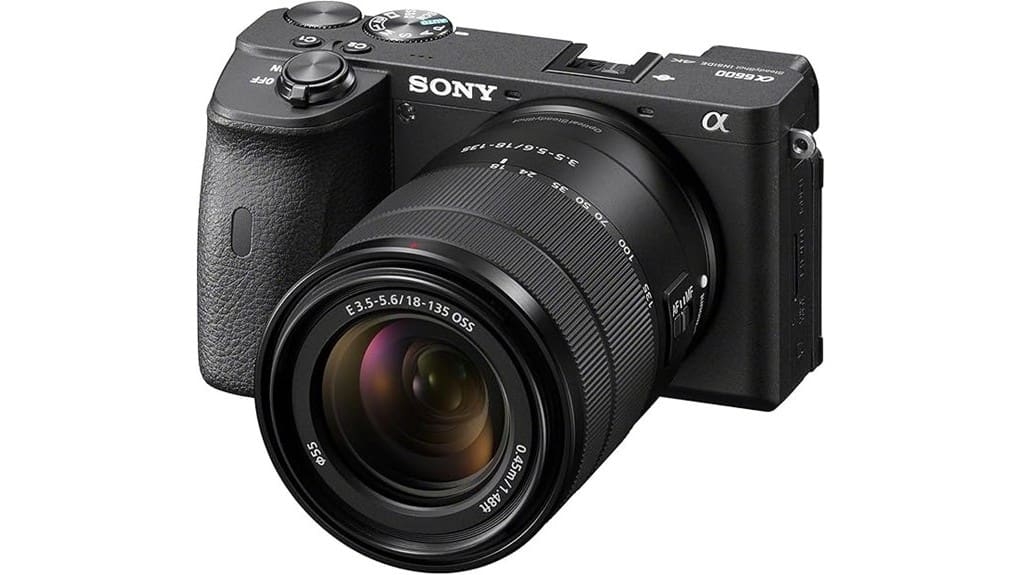
You’ll get a versatile, endurance-focused hybrid with the Sony A6600 and 18–135mm: a 24.2MP APS-C sensor and BIONZ X deliver detailed JPEGs and flexible RAW latitude, while 425-point real-time AF, 0.02s acquisition claims, and 11 fps bursts nail moving subjects. Sensor-shift 5-axis stabilization and long Z-battery runtime make handheld photo and 4K video work easier. It’s ideal for travel vlogging and mixed shoots—keep going to see performance, handling, and alternatives.
Some Key Takeaways
- 24.2MP APS-C sensor and BIONZ X deliver sharp images, good dynamic range, and manageable noise for photo and video workflows.
- 18–135mm f/3.5–5.6 kit lens offers versatile coverage for travel, vlogging, and general-purpose shooting.
- Industry-leading AF with 425 phase/contrast points, 0.02s claim, real-time tracking, and reliable subject acquisition in motion.
- 5-axis sensor-shift stabilization plus electronic stabilization produce steadier handheld photos and 4K video.
- Long Z-battery life, compact ergonomic body, and ports (HDMI, headphone, USB) support extended hybrid shoots and tethered workflows.
Sony A6600 + 18–135mm at a Glance: Core Specs and What They Mean
As a compact mirrorless kit, the Sony A6600 paired with the 18–135mm f/3.5–5.6 delivers a versatile, professional-grade toolset. You get a 24.2MP APS-C sensor size that balances resolution and low-light performance, matched to a multipurpose kit lens covering 18–135mm with reasonable aperture range. The body’s robust battery life supports extended shoots and video capture without frequent swaps. Physical controls and a customizable menu system let you tailor exposure, file format, and connectivity quickly. Overall, the combination offers a balanced, portable platform for photographers who prioritize flexibility, endurance, and efficient workflow. This kit is ideal for mirrorless camera enthusiasts who need both versatility and portability with essential gear.
Autofocus, Speed, and Stabilization: Real-World Performance Tests
Put the A6600 to the test and you’ll see its autofocus, shooting speed, and stabilization work together to tackle real-world demands. You’ll rely on 425 phase- and contrast-detection points and 0.02s AF claims to lock focus quickly; real-time AF and subject tracking kept moving subjects centered during 11 fps bursts. Sensor-shift 5-axis stabilization noticeably steadied handheld tele shots with the 18–135mm, reducing blur at slower shutter speeds. In dim scenes, low light performance remained usable up to moderate ISO, with AF maintaining hit rates though with slightly increased hunting. Results are consistent, predictable, and professionally usable. The A6600 pairs especially well with lenses and accessories favored by DSLR enthusiasts who seek versatile gear for stills and video.
Image and Video Quality: JPEG, RAW, and 4K Footage Examples
When you examine the A6600’s output, its 24.2 MP sensor and BIONZ X processor deliver images that balance fine detail with controlled noise, whether you shoot JPEGs or pull RAW files for heavy grading. You’ll find JPEG detail impressive straight from camera, with well-managed sharpening and color rendering for quick delivery. If you plan extensive edits, the RAW workflow retains shadow and highlight latitude and responds predictably to exposure and color adjustments. For video, native 4K footage holds texture and color for confident 4K grading, and the camera’s Footage stabilization—sensor-shift plus electronic—keeps handheld clips steady. External camera monitors can further improve critical focus and exposure decisions with real-time monitoring during both stills and video capture.
Handling, Battery, Ports, and Daily Shooting Workflow
Although the A6600’s compact body feels at home on long shoots, its heft and grip design make it especially comfortable for extended handheld use, letting you maintain control without constantly shifting hands. You’ll notice grip comfort immediately, with textured contours that stabilize heavy zooms and speed up framing. The Z-battery gives long runtime; swap and charge via USB 3.0 for minimal downtime. Ports include HDMI, headphone jack, and USB for tethering and monitoring. For workflow optimization, set custom buttons, use continuous AF and UHS‑compatible cards, and establish a shoot-to-edit routine to maximize uptime and consistency. Keep a spare camera battery on hand to avoid interruptions during long sessions.
Who Should Buy the A6600 Kit : Value, Alternatives, and Final Verdict
If you need a compact, dependable hybrid that handles demanding autofocus and long handheld sessions without sacrificing battery life, the A6600 kit is a smart buy. You’ll get class-leading AF, 5-axis stabilization, and a versatile 18–135mm that suit travel vlogging and mixed photo/video shoots. For a beginners’ upgrade it balances ease of use with pro features—long recording, reliable tracking, and strong battery life justify the price. Alternatives include Fujifilm X-S10 for color rendering or APS-C bodies with faster lenses if low-light is critical. Verdict: excellent value for hybrid creators who prioritize AF and endurance. Gear Guide caters to photographers and camera fans with product recommendations and resources for digital camera enthusiasts, making it a useful place to explore camera gear.
Some Questions Answered
Does the Kit Lens Include Weather Sealing?
No, the kit lens doesn’t include weather sealing. You should assume limited weather resistance and treat lens durability as moderate for general use, not for heavy moisture or dust exposure. For reliable shooting in adverse conditions, you’ll want a weather-sealed lens or protective coverings. Consider adding rain sleeves, gaskets, or choosing higher-tier Sony E lenses with explicit sealing to guarantee long-term durability and consistent performance in challenging environments.
Can the A6600 Charge via USB While Shooting?
Yes — you can USB charging the A6600 while Live shooting. You’ll use USB power to keep the camera running and record video, but make sure you use a compatible high-current USB source or USB PD adapter for reliable power delivery. Battery will still report in-camera, and recording time depends on card and heat. For uninterrupted long sessions, also consider an AC adapter or external battery pack via USB-C for stable Live shooting.
Is In-Body Stabilization Effective With Adapted Lenses?
Yes — you’ll find sensor stabilization effective with adapted lenses. The a6600’s sensor stabilization compensates for camera shake regardless of lens mounting, so adapted glass benefits from 5-axis correction. You’ll still lose any lens-based stabilization features, and effectiveness can vary with focal length and adapter play, so expect best results with shorter tele and prime lenses. Use steady technique and test combinations to gauge real-world performance.
What Accessories Are Compatible With the Single SD Slot?
You can use standard SD cards (SDXC, UHS‑I/UHS‑II compatible), plus SD adapters and Backup readers for workflow needs. You’ll also want high‑speed U3/V30/V60/V90 cards for 4K and continuous burst shooting, and SD card cases, USB card readers, and laptop Backup readers for quick transfers. For power and control, pair with external battery grips, USB power banks, and wireless remotes—these complement the single SD slot without altering compatibility.
Does the Camera Support Vertical Video Metadata Recording?
Yes — you’ll get vertical metadata recording: the camera sets a rotation flagging in files when you shoot vertically, so compatible software and players recognize orientation. You’ll still need to confirm your workflow supports that flag (some editors ignore it). For video, exported 4K files include orientation metadata; for stills, JPEGs/RAW carry EXIF orientation tags. If playback shows sideways, apply rotation in post or use software honoring rotation flagging.