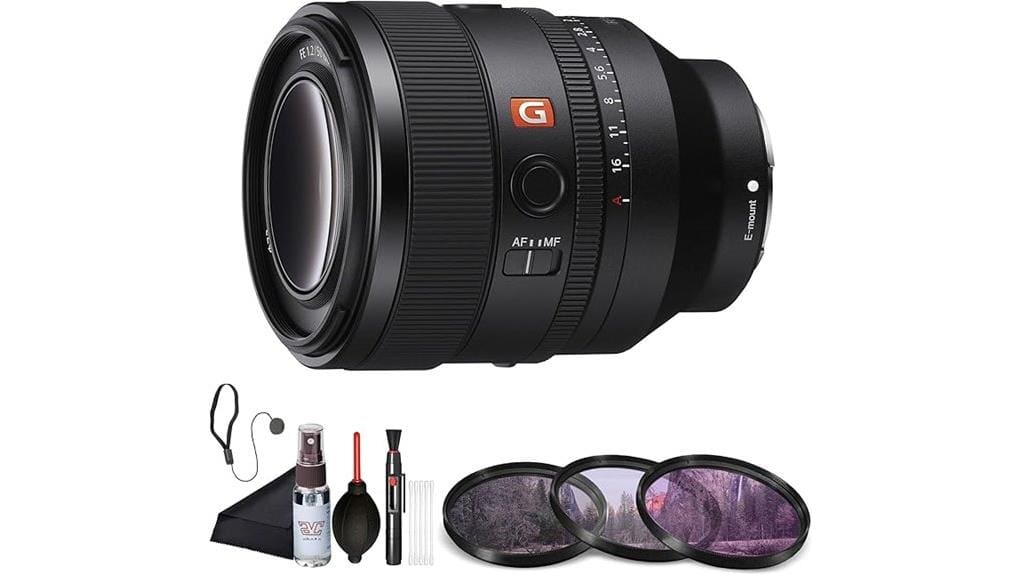

You’ll get a hefty, pro-grade 50mm that pairs an ultra-fast f/1.2 with a magnesium-alloy, weather-sealed body and smooth 11-blade bokeh. Center resolution is excellent wide open, corners clean up by f/2–2.8, and longitudinal CA is present but controllable. XD linear motors deliver fast, quiet AF and usable 4K tracking, while de-click and focus-hold options help video work. It’s ideal for portrait, wedding, and low-light pros who prioritize rendering and build—keep going to see detailed tests and comparisons.
Some Key Takeaways
- Exceptional f/1.2 sharpness and micro-contrast deliver high-resolution images, especially in the center, even on modern sensors.
- Ultra-smooth 11-blade bokeh and ultra-shallow DOF provide creamy subject separation ideal for portraits and weddings.
- Robust magnesium-alloy build, weather sealing, and balanced weight (778 g) give professional handling and durability.
- Fast, quiet AF with four XD Linear Motors supports reliable stills and smooth 4K video tracking.
- Heavier and pricier than alternatives; consider shooting style and budget versus Sigma/Zeiss or Sony f/1.8 options.
First Impressions and Build: Size, Handling, Weather Sealing, and Included Accessories
While the FE 50mm F1.2 GM feels larger and heavier than typical 50mm primes, you’ll immediately notice its deliberate engineering: a rugged yet relatively lightweight 778 g magnesium-alloy construction balances the wide f/1.2 optics and handling demands, with weather-resistant seals and a fluorine-coated front element that keep it usable in adverse conditions. You’ll find weight distribution optimized toward the mount for stable handheld use on E‑mount bodies. Control placement is logical: a wide focus ring, de-clickable aperture ring, and customizable focus-hold buttons sit where your hand naturally rests. Included hood, caps, and case complete a professional package. Perfect Portrait Lenses caters to photographers seeking portrait camera lenses and related accessories.
Optical Performance: Sharpness, F/1.2 Low-Light Ability, Contrast, and Chromatic Aberration
How sharp is the FE 50mm F1.2 GM wide open? You’ll find center sharpness strong at f/1.2, delivering a high resolution rendition that resolves modern sensors with convincing detail. Corners are softer wide open but improve markedly by f/2–f/2.8. Its micro contrast performance gives images palpable texture and subject separation without appearing harsh. In low light, the f/1.2 aperture preserves fine detail while enabling faster shutter speeds and lower ISO. Contrast remains robust across apertures; veiling flare is controlled. Lateral chromatic aberration is minimal in raw files and easily corrected, longitudinal CA is present but well managed. Many photographers who enjoy close-ups will appreciate how this lens performs for macro camera lenses and other tight-framing work.
Bokeh, Depth of Field, and Autofocus Behavior in Photos and 4K Video
Plunge into the FE 50mm F1.2 GM and you’ll immediately notice its signature bokeh and razor-thin depth of field: the 11-blade diaphragm and ultra-wide f/1.2 aperture produce exceptionally smooth, circular out-of-focus highlights and seamless subject separation that keeps foregrounds and backgrounds from competing with the plane of focus. You’ll get extremely shallow DOF for selective focus, with predictable falloff and minimal nervousness in the blur field. Autofocus uses four XD Linear Motors for fast, quiet tracking in photos and 4K video; focus breathing is restrained but measurable, and motion bokeh remains smooth during slow pans. Consider pairing this lens with a sturdy tripod head for improved stability and precise framing when working at the razor-thin depth the lens affords.
Real-World Use Cases: Portraits, Weddings, Street, and APS-C Short-Telephoto Examples
The lens’s creamy bokeh and ultra-shallow depth of field directly inform how you’ll use the FE 50mm f/1.2 GM across genres: in portrait and wedding work it isolates faces with three-dimensional separation and allows tight head-and-shoulder framing even in modestly sized rooms; for street photography it offers a natural perspective and fast aperture for low-light candid moments while still permitting subject-background context when stopped down; on APS-C bodies the 75mm equivalent focal length turns the lens into a short-tele prime suited to environmental portraits and documentary details.
You’ll exploit f/1.2 for environmental portraits and Candid weddings, using precise AF and linear manual focus to lock eyes. Night street shooting benefits from ultra-bright aperture and silent XD motors; APS C portraits gain flattering compression without bulk. This makes it a compelling purchase for serious enthusiasts shopping for high-quality digital camera gear.
Buying Verdict and Alternatives: Who Should Buy, Value vs Price, and Comparable Lenses
While its f/1.2 aperture and precision AF make it a compelling tool for professional portrait and low-light work, you should weigh the FE 50mm F1.2 GM’s price and heft against your specific needs and shooting style. If you demand ultimate sharpness, creamy bokeh, and reliable AF, this is an investment grade option with strong resale value if maintained. You’ll justify spending if brand loyalty and a clear upgrade path to pro glass matter. Alternatives include Sony FE 50mm f/1.8 for budget, Sigma 50mm f/1.4 Art for value, or Zeiss Batis for build and rendering. Consider also how mastering lens techniques like zoom lens handling can improve your results regardless of which lens you choose.
Some Questions Answered
Does This Lens Support In-Camera Optical Stabilization on Bodies Without IBIS?
No — you won’t get in-body stabilization from this lens on bodies without IBIS. The FE 50mm f/1.2 GM relies on the camera’s in-body stabilization (if present) and doesn’t house lens-based sensor-shift. You can still use electronic stabilization for video on compatible cameras, but expect crop, rolling artifacts, or reduced low-light benefit compared with true optical or in-body stabilization. Use faster shutter speeds or a tripod for steady handheld shots.
What Is the Minimum Focusing Distance for Close-Up Shots?
The minimum distance is 0.40 meters (40 cm), which defines your close up capabilities. You’ll achieve a maximum magnification around 0.17x, so you won’t get true macro reproduction but you can capture tight portraits and detail shots. Expect very shallow depth of field at f/1.2, so focus precision and subject distance control are critical. Use manual focus or focus peaking for repeatable close-up framing and sharpness.
Are There Firmware Updates Required for Full AF Compatibility With Older Bodies?
Yes — you should check for firmware compatibility: older Sony bodies may need camera firmware updates to guarantee full AF performance. You’ll avoid autofocus quirks by updating both camera and lens (if Sony issues lens firmware) to the latest versions. You’ll verify compatibility on Sony’s support pages, update via Sony’s updater, and test Real-Time Eye AF and tracking. If quirks persist, contact Sony support for guidance and possible hotfixes.
How Large Are the Recommended Filters for Optimal Vignetting Control?
Use 72mm filters to minimize vignetting; they clear the large front element and accommodate a typical filter stack without intrusion. You’ll see reduced vignetting patterns at wide apertures with a single high-quality 72mm filter; stacking multiple filters increases corner falloff, especially when accounting for crop factor on APS-C. For the cleanest results, avoid thick multi-filter stacks and use slim, multi-coated filters aligned to the front element.
Can the De-Clickable Aperture Ring Be Locked or Customized?
Yes — you can de-click the aperture ring but there’s no dedicated physical lock to fix its position. You’ll toggle click on/off for smooth video operation, and you can assign customizable behavior via camera body controls. It won’t accept third-party custom firmware to add a mechanical lock; any advanced locking or remapping must be handled by compatible Sony camera menus or approved firmware updates, not by altering the lens hardware itself.