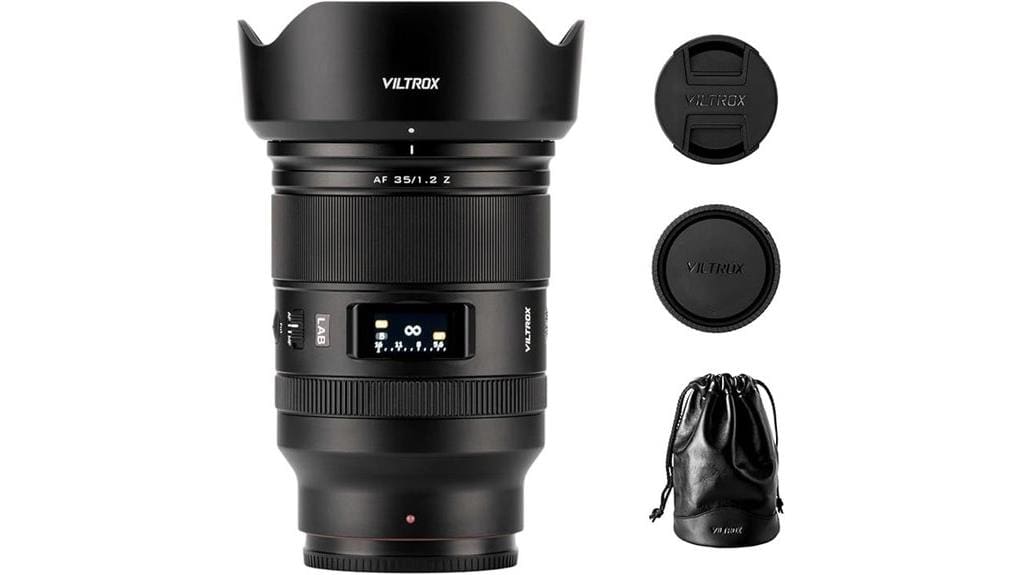

You’ll get pro-level low-light performance, creamy f/1.2 bokeh, and strong center sharpness that opens up to usable edge detail by f/2.8, all in a compact Z‑mount 35mm that balances heft with usable handling. HyperVCM AF is fast and silent for video, the aperture ring clicks (and de-clicks), and two focus‑hold buttons plus an LCD add practical control. Expect solid build and a 0.34 m close focus; keep going to see full lab results and real-world samples.
Some Key Takeaways
- Excellent low‑light performance and creamy bokeh from the f/1.2 aperture, ideal for subject isolation and cinematic looks.
- HyperVCM AF is fast, quiet, and smooth, making it reliable for run‑and‑gun video and stills.
- Strong center sharpness at f/1.2 with usable edge detail by f/2.8 and high contrast retention.
- Solid, compact f/1.2 build with aperture ring, focus‑hold buttons, and integrated LCD for professional control.
- Drawbacks include noticeable weight, larger size, and a premium price compared with some alternatives.
VILTROX 35mm F1.2 Z at a Glance: Who It’s For and Key Specs
While this 35mm f/1.2 is aimed at photographers who need strong low-light performance and pronounced subject isolation, it’s also well suited for videographers who want smooth, cinematic focus shifts. You’ll appreciate the ultra-large aperture for Portrait staging and shallow depth control, and the HyperVCM AF for fast, quiet shifts in run-and-gun Street storytelling. Specs are clear: Z‑mount full‑frame compatibility, aperture ring with click stops, focus-hold buttons, and a 0.34 m minimum focus for close-up framing. Build balances weight and function; the integrated LCD gives real-time status. It’s practical for hybrid shooters seeking expressive bokeh and reliable AF. Essential Lens Gear offers a curated selection of camera lenses and accessories that complement lenses like this.
Optical Performance in the Lab: Sharpness, Bokeh, and Low‑Light Results
Having outlined who benefits from the VILTROX 35mm f/1.2, let’s look at how it actually performs in the lab. You’ll see impressive center sharpness at f/1.2—fine detail holds well and remains usable across the frame by f/2.8. Contrast and micro‑contrast are strong thanks to the complex element layout, controlling aberrations. Bokeh is a highlight: you get creamy bokeh with smooth rendering and minimal onion rings, aided by the large aperture and aspherics. In low light the lens delivers usable exposure and retained detail wide open, with controlled coma and pleasing highlight roll‑off for night scenes. Polarizing filters can further enhance outdoor contrast and reduce reflections for improved results with this lens, especially when shooting foliage and skies polarizing filters.
Autofocus, Handling, and Control: HyperVCM AF, Focus Buttons, and Aperture Ring
Grab the VILTROX 35mm f/1.2 and you’ll notice its handling is geared toward fast, deliberate shooting. You get HyperVCM AF that locks quickly and shifts smoothly, noticeably faster than typical STM-driven lenses. The motor’s silent operation makes tracking for video discreet and avoids hunty audio artifacts. Two customizable focus‑hold buttons are well placed; you can assign back-button AF or more specific functions via custom mapping. The aperture ring has satisfying click stops and can be de-clicked for video; tactile feedback is precise. Overall control feels professional: responsive, configurable, and designed to keep you in charge during fast-paced work. This kind of design suits photographers focused on mastering smooth focus for enthusiast-level work.
Close‑Up, Build, and Compatibility: Minimum Focus, Mount Fit, and Physical Features
You’ll also appreciate how the 35mm f/1.2 handles close work and physical fit on Z‑mount bodies. Its 0.34 m minimum focus yields a maximum magnification of 0.17x, offering useful minimum reproduction for tight portraits and detail shots without a macro adapter. The barrel feels solid and compact for an f/1.2, and physical ergonomics are thoughtful: well-placed focus-hold buttons, tactile aperture ring with click stops, and a robust mount fit that seats securely on Z-series cameras. Integrated LCD gives quick status feedback. Overall build balances heft and usability, though it isn’t featherlight for extended handheld use. This makes it a practical option for photographers who use camera cages to stabilize and accessorize their gear.
Real‑World Verdict and Buying Advice: Image Examples, Pros vs Cons, Who Should Buy
While the VILTROX 35mm f/1.2 Z LAB pushes boundaries with its ultra-fast aperture and close-focus ability, it’s at real shoots where you’ll see whether those specs matter to your work — sharp, contrasty images even wide open, creamy bokeh for subject separation, and confident AF that keeps pace with run-and-gun scenarios. Review the sample gallery to judge rendering and edge performance for your style. Pros: stellar low-light, pleasing bokeh, fast HyperVCM AF, handy LCD and controls. Cons: size, some weight, and price vs alternatives. Purchasing checklist: compatibility, handling, and image priorities before you buy. Consider also how your lighting setup and accessories—especially if you use bi-color video lights—will interact with ultra-fast lenses in mixed lighting.
Some Questions Answered
Does the Lens Include Weather Sealing for Dust and Moisture Protection?
No, it doesn’t offer full weather sealing; the lens lacks thorough weather sealing and moisture resistance for confident use in heavy rain or dusty conditions. You can expect some basic resistance from typical construction tolerances, but it’s not rated for robust outdoor abuse. If you need reliable weather sealing and strong moisture resistance, you should consider Nikon-native options or higher-tier third-party lenses that explicitly advertise sealed mounts and environmental protection.
Can the Integrated LCD Display Be Customized or Turned Off?
Yes — you can customize the integrated LCD display and turn it off. You’ll access display customization through the lens menu to choose which status readouts show, set brightness, and enable a sleep timeout. For power management you can disable the screen to conserve battery or set shorter timeouts; those choices reduce drain during long shoots. Overall, controls are straightforward and offer practical, user-focused options for real shoots.
Is There In-Lens Optical Stabilization (Vr/Is)?
No — there’s no in lens stabilization or internal OIS; the lens lacks VR/IS. You’ll rely on camera body sensor shift compatibility for stabilization, so optical vibration is not corrected inside the lens. That means handheld low-light shooting depends on your Z‑mount body’s IBIS performance and high f/1.2 aperture. If you need built‑in stabilization, you’ll want a lens explicitly advertising in lens stabilization or internal OIS.
What Is the Warranty Period and Available Service Options?
The warranty length is typically one year from purchase for defects, though some regions extend this to two years; check your retailer and serial registration. You’ll find Service plans that include paid repairs, extended warranties, and accidental-damage coverage through Viltrox or authorized dealers. You should register the lens, keep receipts, and confirm service-center locations. If you want longer protection, opt for an extended Service plan or third-party insurance at purchase.
Are There Firmware Updates for AF Performance via Camera Body?
Yes — you can get autofocus tweaks via camera body firmware updates and lens firmware flashes; check your camera’s firmware history for compatibility notes. You’ll install lens firmware through the camera or USB dock (if supported), and some AF behavior improvements arrive from camera-side updates that refine communication and AF algorithms. You should track firmware history, follow update instructions precisely, and test AF performance after each update to confirm improvements.