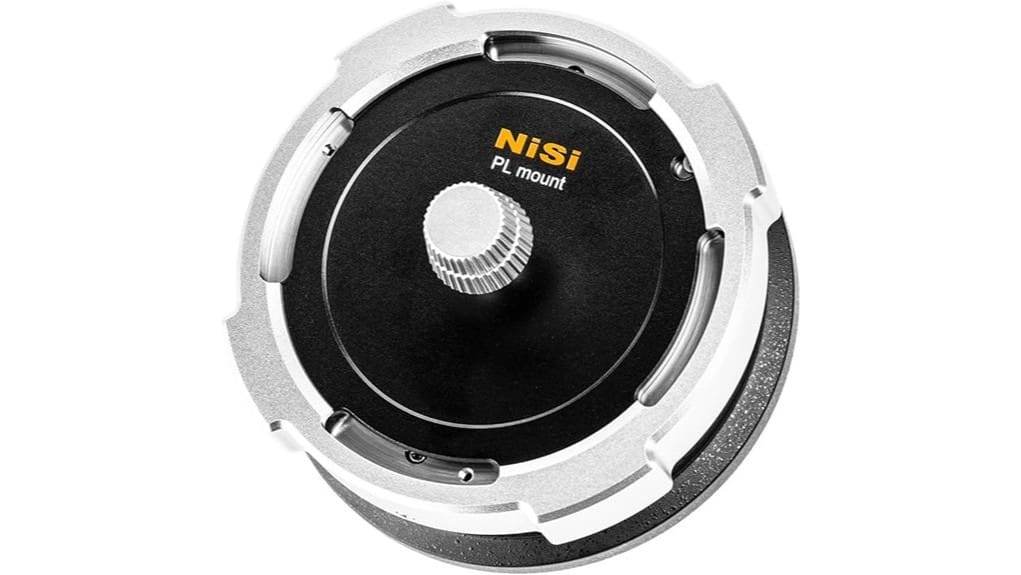
You’ll get a precision stainless‑steel Arri Maxi PL‑to‑Fujifilm GFX adapter that preserves flange distance and manual control for reliable infinity focus on GFX 100/100S/50S II/50R. It’s passive, so there’s no electronics or metadata, and it mounts via PL bayonet with a modest torque lock. Internal flocking and matte finishes cut veiling flare; low, concentrated mass aids balance. It’s rugged with a 12‑month warranty — keep going to see detailed fit, handling, and tradeoffs.
Some Key Takeaways
- Precision stainless-steel PL-to-Fujifilm GFX adapter preserves flange distance for reliable infinity focus on GFX 100/100S/50S II/50R.
- Passive design: no electronic communication or aperture control; manual lens operation and metadata unaffected.
- Internal advanced flocking and matte finishes reduce internal reflections, improving contrast and cine lighting fidelity.
- Lightweight, concentric construction (~164–186 g) minimizes front-heavy torque and maintains repeatable registration when swapping lenses.
- Durable build with 12-month warranty; verify seals, alignment, and consider a protective case for location use.
What the NiSi Athena PL-GFX Adapter Is and Who It’s For
The NiSi Athena PL-GFX adapter lets you mount ARRI Maxi PL cinema lenses—like NiSi’s Athena PL series—onto Fujifilm GFX cameras, preserving the lenses’ manual control and optical characteristics. You get a stainless steel, precision-machined PL-to-GFX converter that maintains flange distance for infinity focus and minimizes internal reflections via advanced flocking. It’s aimed at hybrid stills and cinema operators who need cine lighting fidelity, consistent alignment, and minimized lens breathing for critical focus pulls. You’ll value its lightweight portability for location work, predictable manual focus operation, and factory support; verify specific optical specs with NiSi before purchase or heavy use. It’s a good match for photographers interested in smooth focus and camera follow focus systems.
How It Fits: Compatibility and Mounting With Fujifilm GFX Cameras
When you mount the NiSi Athena PL-GFX adapter, it provides a secure Arri Maxi PL-to-Fujifilm GFX interface that preserves correct flange distance so PL cine lenses achieve infinity focus on GFX 100S, GFX 100, GFX 50S II, and GFX 50R bodies. You align the PL bayonet, seat the adapter, and rotate until the lock engages; specified mounting torque is modest to prevent thread stress while ensuring repeatable registration. The adapter is passive—there’s no electronic communication for aperture or metadata—so you’ll rely on manual focus and iris control. Fitment is precise; verify seals and alignment before critical shoots. For photographers who also use tripod and support systems, consider pairing the adapter with a dedicated L-bracket to improve handling and balance.
Build, Handling, and Optical Design Features That Affect Image Quality
Mounting the NiSi Athena PL-GFX adapter as described preserves flange distance and lens registration, and that mechanical precision directly affects image quality through build and optical design. You’ll notice stainless steel construction and tight mechanical tolerancing maintain concentricity and repeatable back focus, reducing tilt and decenter artifacts. Spray-coated exterior aids grip; internal flocking suppresses stray reflections that would lower contrast. Lightweight 164 g mass minimizes load on camera mounts while still resisting flex. Consider thermal expansion in prolonged shoots; stainless steel reduces dimensional drift versus softer alloys, preserving registration and consistent image plane alignment under varying temperatures. This attention to precision is essential for adapting lens mount adapters between systems without compromising optical performance.
Real-World Performance: Infinity Focus, Flare Control, and Weight in Use
Because the adapter preserves flange distance with tight tolerances, you’ll reliably achieve infinity focus across PL cinema lenses on GFX bodies without iterative back-focus shimming. In practice infinity reliability is evident: targets remain sharp at long distances and repeatable when swapping lenses. Internal flocking and matte finishes provide measurable flare mitigation; contrast holds in backlit scenes and veiling flare is reduced versus unflocked adapters. At ~164 g advertised (marketing lists 186 g), weight perception is light; you’ll notice minimal added load. Handheld balance improves since mass is low and concentrated near the mount, reducing front-heavy torque during shoulder or gimbal use. Many photographers who enjoy tripods and quick-release systems will also appreciate how the adapter integrates with tripod quick release plates.
Buy-or-Skip Verdict: Pros, Cons, Warranty, and When to Choose This Adapter
You’ve seen how the adapter holds infinity focus, controls flare, and adds minimal mass; now assess whether those benefits justify buying one. You should buy if you need precise PL-to-GFX compatibility, durable stainless steel construction, low weight for handheld rigs, and internal flocking that preserves contrast. Skip if you require stabilization, weather sealing, or verified optical specs beyond mechanical reliability. Warranty covers 12 months but note warranty exclusions: misuse, impact, water, fire, loss, wear, and purchases from unauthorized sellers. Consider purchase timing around projects needing cinema glass; buy before shoots demanding robust alignment, otherwise defer until confirmed specs. Also consider using a protective case like a Pelican case to safeguard the adapter during transport and storage.
Some Questions Answered
Can This Adapter Be Used With Lens-Mounted Electronic Aperture Control?
No — it doesn’t support lens-mounted electronic aperture control. You’ll be limited to mechanical aperture operation because the adapter provides no electrical passthrough to relay electronic signals between PL lenses and GFX bodies. You can still manually set iris on compatible PL lenses, and the adapter preserves flange distance and alignment for infinity focus, but any electronic iris, metadata transfer, or lens stabilization requiring electrical contacts won’t function through this adapter.
Does the Adapter Support Lens Calibration for GFX Lens Correction Profiles?
No — the adapter doesn’t provide lens calibration for GFX lens correction profiles. You won’t get firmware compatibility that enables electronic lens corrections or profile-based calibration via the camera. Metadata passthrough is limited to mechanical mounting information; electronic aperture control and lens data aren’t transmitted. You’ll need manual correction, custom LUTs, or third-party tools to apply lens profiles. Verify with NiSi for any firmware updates that might change capabilities.
Is There Any PLay Between PL Lens and GFX Mount Under Heavy Use?
No — you shouldn’t experience noticeable play under heavy use. The stainless steel Arri Maxi PL construction and precision machining minimize mount flex and prevent alignment drift when mounted to GFX bodies. Flocking and tight tolerances keep consistent lens seating; however, extreme impacts, misuse, or unauthorized mods can introduce play. You’ll want to periodically inspect the mount interface and confirm no loosening screws to guarantee continued rigid alignment.
Will the Adapter Affect Autofocus-Capable Lenses on GFX Bodies?
No — the adapter won’t enable autofocus compatibility; PL-to-GFX adapters are mechanical only, so autofocus signals aren’t passed. You’ll lose AF functionality and electronic communication between lens and body. Expect no communication latency because there’s no electronic link; focus, aperture (if mechanical), and stabilization must be handled manually or via lens motors/rigs. Verify specific lens features before use, since some PL lenses never supported camera-driven AF.
Can I Leave the Adapter Permanently Mounted Without Risk to Camera Seals?
You can, but you shouldn’t assume improved weather resistance; the adapter isn’t water resistant and can compromise camera body seals over time. Leave it mounted for extended periods only if you inspect seals regularly and avoid moisture exposure. Also account for thermal expansion between stainless steel adapter and camera materials—temperature swings can stress mount interfaces and accelerate wear. For prolonged use, periodically remove, clean, and verify flange alignment and seal integrity.