You’ll get a compact hybrid that prints Instax mini photos instantly while letting you preview and tweak images on a 3.0″ LCD and smartphone app. Its metal-top, retro-styled body feels solid, controls are tactile, and the fixed 28mm-eq f/2 lens is sharp for normal shots with pleasant skin tones but softer corners and limited dynamic range. Printing is intentional via a lever; microSD stores high-res files. If you want compact analog output with digital control, keep going to learn specifics.
Some Key Takeaways
- Hybrid instant camera combining digital preview and tactile instant prints with robust app integration for remote capture and selective printing.
- Fixed 28mm-equivalent f/2 lens produces sharp center detail, pleasant skin tones, and limited background separation.
- 3.0″ LCD, tactile print lever, and effect dials enable precise previewing, creative looks, and intentional printing.
- microSD storage and USB support save high-res files for archiving; ongoing cost primarily film packs.
- Good for parties, travel, and social use; not for rugged conditions or interchangeable-lens photographers.
What This Review Helps You Decide (Who Should Consider the Instax Mini EVO)
If you want instant, tactile prints but also expect digital control and preview, the instax mini EVO suits you. You’ll decide based on priorities: do you value analog output with app-driven fine-tuning? The EVO pairs immediate film prints with smartphone integration for remote shooting, backup, and selective printing. Choose it if you want compact hybrid functionality, varied creative presets, and modest internal storage expandable via microSD. It’s ideal for social users, hobbyist photographers, and gift suitability—especially for someone who likes tangible photos plus app features. Don’t pick it if you need rugged weatherproofing or interchangeable lenses. Capture moments anywhere with portable photo printers using the EVO for on-the-spot prints and sharing portable photo printers.
Hands‑On First Impressions: Design, Build, and Controls of the Mini EVO
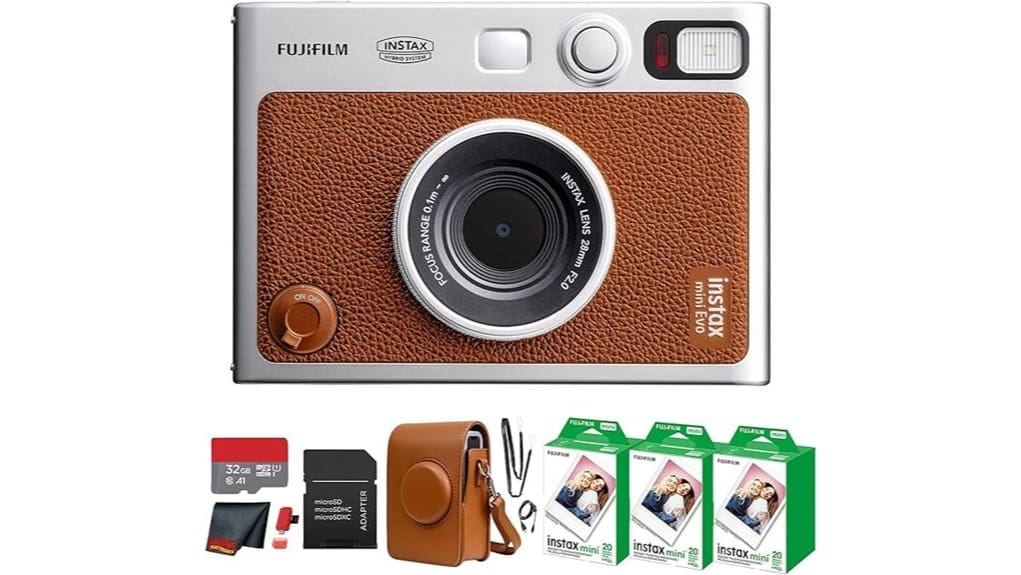
Having decided the EVO fits your mix of analog output and digital control, the first thing you’ll notice is its compact, thoughtfully weighted chassis that marries retro cues with modern ergonomics. You get solid build quality: metal top plate, textured synthetic leather, neat seams. Controls are deliberate—tactile controls include a film-effect dial, lens-effect dial, dual shutter buttons and a satisfying print lever—each offering precise detents and minimal play. The 3.0″ LCD sits flush for clear menus and previews. Vintage aesthetics are authentic without compromising usability; ports and microSD slot are accessible, and the accessory shoe aligns cleanly. This camera’s size and styling make it a natural fit for enthusiasts who build kits around camera cages.
Shooting Experience: Image Quality, Lens Performance, and Creative Effects
When you shoot with the Instax Mini EVO you get a clear sense of the trade-offs between its hybrid workflow and the instant film output: the fixed 28mm-equivalent f/2 lens delivers sharp results at normal distances and usable subject separation in low light, but corner detail softens and you’ll see some vignetting at wider frames. You’ll judge color rendition as warm and film-like, with limited saturation control. Autofocus speed is adequate for casual shooting but hunts in low contrast. Dynamic range is constrained—retain highlights carefully. Bokeh character is pleasant but tight due to focal length; creative effects expand looks, though resolution limits fine detail. This camera is particularly appealing to photographers who enjoy wide-angle perspectives and experimenting with wide-angle lenses.
Printing Workflow and Hybrid Features: LCD Review, Print Lever, and App Integration
Sharp lenses and film-like color set expectations for what you’ll print, but the Instax Mini EVO’s hybrid controls determine how faithfully that look makes it to paper. You get a clear lcd review on the 3.0″ screen for framing, exposure checks, and selecting effects; contrast and color preview are faithful though slightly boosted compared with prints. The tactile print lever gives precise, satisfying control over when an image is committed. Bluetooth app workflow adds remote capture, image transfer, and smartphone printing with granular film/lens effect adjustments. Overall, the system balances digital previewing with analog finality, with minor tonal shifts to note. Our shop also offers Lightroom presets to help match your digital edits to the Instax print aesthetic with film-like color.
Real‑World Use Cases: Parties, Travel, Portraits, and Close‑Ups (Macro)
Although it’s compact, the instax mini EVO handles a wide range of scenarios with predictable results: at parties its fast f/2 lens and built-in flash freeze moments with natural subject separation; on trips the hybrid preview and microSD storage let you batch-select prints and save high-res files; for portraits the lens produces pleasing skin tones and background blur at typical instax distances; and in macro mode the 3.9″ close‑focus delivers detailed close-ups you can tweak on the 3.0″ LCD before committing to a print. You’ll manage party lighting with manual exposure tweaks; travel durability is reasonable with the included case; portrait posing benefits from previewed framing; macro composition rewards steady hands and precise focus control. This camera is a great match for mirrorless camera enthusiasts who want compact instant-print options and essential accessories for outings.
What’s in the Box and Value: Film, Accessories, Storage, and Ongoing Costs
You’ll get a usable kit right out of the box: the camera arrives with 60 instax mini sheets (three packs of 20), a 32GB microSD card, a padded vintage-style case, shoulder strap, USB cable and card reader, plus a microfiber cloth. That bundle lowers initial spend and covers basic shooting and storage. Evaluate film costs (roughly per-pack pricing varies) against your expected print volume; ongoing expenses dominate ownership. The included case helps transport the unit, but check case durability for long-term protection. Extras you’ll likely buy: additional film, spare batteries, and protective screen or lens accessories. Consider pairing the camera with a photography tent for controlled lighting and cleaner product-style instant prints.
Buying Recommendation: Who Should Buy the Instax Mini EVO and Alternatives to Consider
If you want instant prints with digital control and creative flexibility, the instax mini EVO is a strong pick: it blends a 28mm-equivalent f/2 fixed lens, live-view LCD, and a wide palette of lens/film effects with Bluetooth connectivity and microSD storage, so you can preview, edit, and archive images before committing to the recurring cost of film. You should buy it if you value tactile controls, print-when-ready workflow, and vintage aesthetics alongside modern backup. It’s ideal as a stylish gift—gift suitability is high. Consider alternatives: Instax Mini 40 for simplicity, Polaroid Now+ for larger prints, or a compact mirrorless for full digital flexibility. The site also offers a curated selection of photography technique books to help you get the most from your new camera.
Some Questions Answered
Does the Camera Accept Third‑Party Instax Mini Film Brands?
Yes — you can use third party compatibility, but you’ll want to weigh film authenticity concerns. The camera accepts standard instax mini–format cartridges from other manufacturers, and prints mechanically fine. However, third‑party chemistry, color accuracy, and longevity can vary versus genuine Fujifilm instax film. You’ll get functional results, yet expect potential shifts in exposure, color rendering, and archival stability; test a pack before extensive shooting to evaluate quality.
Can the Mini EVO Charge From USB Power Banks?
Yes — you can charge the mini EVO from USB power banks. The camera supports USB charging via its included cable, so power banks provide convenient portable recharge. Evaluate bank capacity and output: use a bank with 5V/1–2A USB output to guarantee reliable charging. Keep battery temperature moderate; very low or high temps can slow or stop charging. Charging time varies by bank capacity and camera battery level.
Is the Leather Case Compatible With Other Instax Models?
Yes — the vintage protective case fits some other instax minis, but not all models snugly. You’ll want to check dimensions and button/accessory alignment before assuming compatibility. Leather colorways (brown, black, tan) won’t affect fit, but strap attachment options vary: the case uses small lugs and a shoulder-strap loop that suit slim minis. Bulkier models or those with protruding grips may interfere with closures or access to controls.
How Long Does a Full Battery Charge Typically Last?
You’ll get roughly 200–300 shots per full battery charge under mixed use, lasting about a day of moderate shooting; heavy print/use or Bluetooth transfers will reduce that. Battery lifespan depends on care and charge cycles—expect gradual capacity loss after hundreds of cycles. To maximize lifespan, avoid full discharges, store cool, and use regular partial charges. Replace battery when you notice markedly fewer shots per charge.
Can Firmware Be Updated via the App or microSD?
Yes — you can update firmware via microSD; the app handles some feature updates and diagnostics but typically routes major firmware files to the camera through the card. You’ll want to check firmware security notes from Fujifilm before updating and follow verified-file procedures. Evaluate update frequency against release notes; frequent updates suggest active support but may require cautious testing. Keep backups and apply only signed updates to reduce risk.