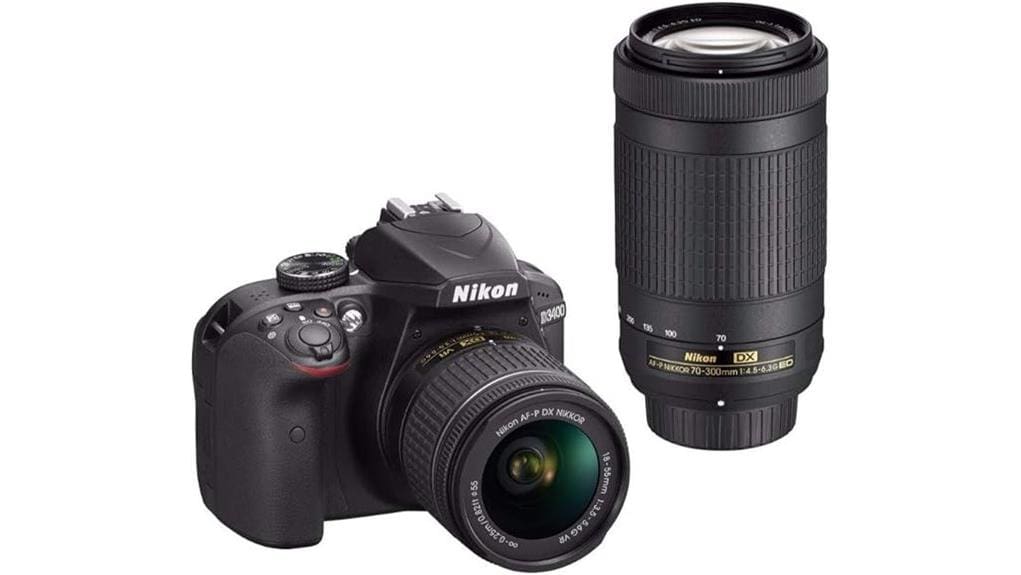
You’ll get a lightweight, reliable APS‑C DSLR that’s ideal if you’re learning photography or need a travel-ready body with two useful lenses. The 24.2MP sensor and EXPEED 4 give high-detail RAW files and controlled noise to ISO 1600–3200. The AF‑P 18–55mm VR is quick and steady; the 70–300mm ED extends reach for casual wildlife. Autofocus and features are basic but effective, and the kit represents strong used-market value if you want practical results—more specifics follow.
Some Key Takeaways
- Lightweight, beginner-friendly DSLR delivering 24.2MP image quality and EXPEED 4 processing for detailed RAW and JPEG files.
- Kit includes AF-P DX 18–55mm VR and 70–300mm ED lenses, covering wide-to-telephoto shooting needs.
- Good low-light performance to ISO 1600; ISO 3200–6400 usable with modest noise reduction.
- 18–55mm offers effective VR and quick AF; 70–300mm gives reach but needs faster shutter or support at long focal lengths.
- Strong value for learners and travel shooters, but lacks advanced AF, touchscreen, and 4K video found on newer models.
Quick Verdict : Who the D3400 Kit Is Best For
If you want a lightweight, capable DSLR for learning photography without spending much, the D3400 kit delivers: its 24.2MP DX sensor and EXPEED 4 processor produce high-detail images, the 18–55mm VR and 70–300mm ED lenses cover everyday to telephoto needs, and SnapBridge keeps transfers simple. You’ll appreciate predictable ergonomics, responsive AF for static subjects, and sensible ISO headroom for daylight and low light. This kit suits beginners travel shooters and hobbyists pursuing casual wildlife at moderate distances. You won’t get pro-level autofocus tracking or high frame rates, but you’ll gain durable image quality and straightforward operation. It’s a solid choice for mirrorless camera enthusiasts looking to complement their kit with DSLR versatility and essential gear.
What’s Inside the Kit and Key Specs That Matter
What’s in the D3400 kit, and which specs will actually affect your shooting? You get the D3400 body, AF-P DX 18–55mm VR and 70–300mm lenses, battery and charger; you’ll need a memory card and might add a battery grip for extended sessions. Key specs: 24.2MP DX sensor, 5 fps burst, native ISO 100–25600, and VR on the kit wide lens. Accessory compatibility is straightforward—SnapBridge, standard tripod mounts, and common Nikon F-mount accessories—though lens hoods for the AF-P primes are small and essential to control flare. Firmware C v1.10+ recommended. Perfect Tripods offers gear and advice to help you make the most of your setup with tripod compatibility.
Image Quality and Low-Light Performance (Sensor, ISO, EXPEED 4)
Because the D3400 couples a 24.2MP DX-format sensor with the EXPEED 4 processor, you get high-resolution files with well-controlled noise up to mid-range ISOs and good detail retention in RAW. You’ll find High ISO behavior is predictable: ISO 100–1600 yields clean images, 3200–6400 shows increased luminance noise but usable detail after modest NR. Color noise is well-managed by EXPEED 4, though extreme ISOs reveal hue shifts in shadows. Dynamic range is strong for the class, preserving highlights and recoverable midtones. Low light autofocus is competent with contrast-detection limits; expect hunting in very dim scenes. The site also carries a range of compatible accessories for Nikon users, including digital cameras and lenses.
Lens Performance: 18–55mm VR Vs 70–300mm ED in Real Use
Switching between the kit 18–55mm VR and the 70–300mm ED reveals clear trade-offs in sharpness, stabilization, and aberration control across typical shooting scenarios. You’ll find the 18–55mm excels at indoor, wide-angle tasks: quicker autofocus, effective VR for handheld low-light, and better close focus for tabletop subjects. The 70–300mm ED extends reach with tighter framing but asks for faster shutter speeds or support despite decent VR behavior at mid-tele. Sharpness peaks differ: center acuity is strong on both, corners soften on the 18–55 at wide and on the 70–300 at long end. Color rendering stays neutral, slightly warmer on the 70–300. The 70–300mm is particularly valuable for wildlife and sports where reach and compression matter, offering practical advantages for telephoto shooting scenarios.
Buy or Skip? Value, Common Alternatives, and Final Recommendations
Having weighed how the 18–55mm and 70–300mm behave in real use, you can now judge whether the D3400 kit offers the right balance of capability and cost for your needs. You’ll likely buy if you want affordable image quality, solid ergonomics, and two versatile lenses for walkaround and telephoto work. Skip it if you need advanced AF, touchscreen, or 4K — those are absent and limit future proofing. On the used market you can find good bundles; compare to newer entry bodies (D5600, used mirrorless) and prioritize lens upgrades over body swaps for value. Also consider picking a dedicated camera bag from a specialist retailer to protect your kit and simplify transport (camera backpacks).
Some Questions Answered
Does the D3400 Support RAW Shooting With Third-Party Editing Software?
Yes — you can shoot RAW and process files in third-party workflows. The D3400 records Nikon NEF RAW files (lossless/compressed options), so you’ll have RAW compatibility with editors that support NEF (Adobe Camera Raw, Lightroom, Capture One, RawTherapee). You’ll need up-to-date software or camera profiles for best demosaic and color. Expect standard EXIF metadata; SnapBridge won’t transfer full RAW over Bluetooth, so use card reader or USB for originals.
How Long Does the Battery Typically Last per Charge in Real Use?
You’ll get roughly 1,200–1,500 shots per charge in real world use, though results vary. Battery life drops noticeably with lots of continuous shooting and heavy use of live view or Bluetooth. In cold weather performance you’ll see reduced capacity—expect 20–40% shorter runtimes depending on temperature. Carry a spare battery for extended sessions or intensive burst shooting, and keep batteries warm to preserve performance.
Can the Camera Be Used for Clean HDMI Output or External Recording?
No — the D3400 doesn’t provide clean HDMI output, so you can’t directly use an external recorder for unblemished feed. You’ll get overlays and restricted signal via the mini‑HDMI port, and HDMI output mirrors camera display rather than offering a clean feed. For reliable external recorder workflows you’ll need a different Nikon body with clean HDMI support or use HDMI capture solutions knowing you’ll still face on‑screen indicators and limits.
Is There In-Camera Focus Stacking or Intervalometer Functionality?
No — the camera doesn’t offer in-camera focus stacking or a built-in interval timer. You’ll need to use external solutions: focus stacking requires manual focus bracketed shots you capture and blend in post, while intervalometer tasks demand an external interval timer or a remote that supports interval shooting. You can mimic basic intervals with third-party Bluetooth remotes or PC tethering compatible with the camera, but native automated focus stacking and interval timer functions aren’t provided.
Are There Firmware Updates Improving AF-P Lens Compatibility?
Yes — Nikon released firmware compatibility updates that improved AF‑P lens compatibility. You’ll want camera firmware C version 1.10 or later; this addresses lens firmware handshake and AF performance with AF‑P DX NIKKOR lenses. Update procedures are technical but straightforward: check your current camera firmware, download the correct Nikon firmware file, install via memory card, and verify lens firmware interaction. These updates reduce AF errors and enhance responsiveness.