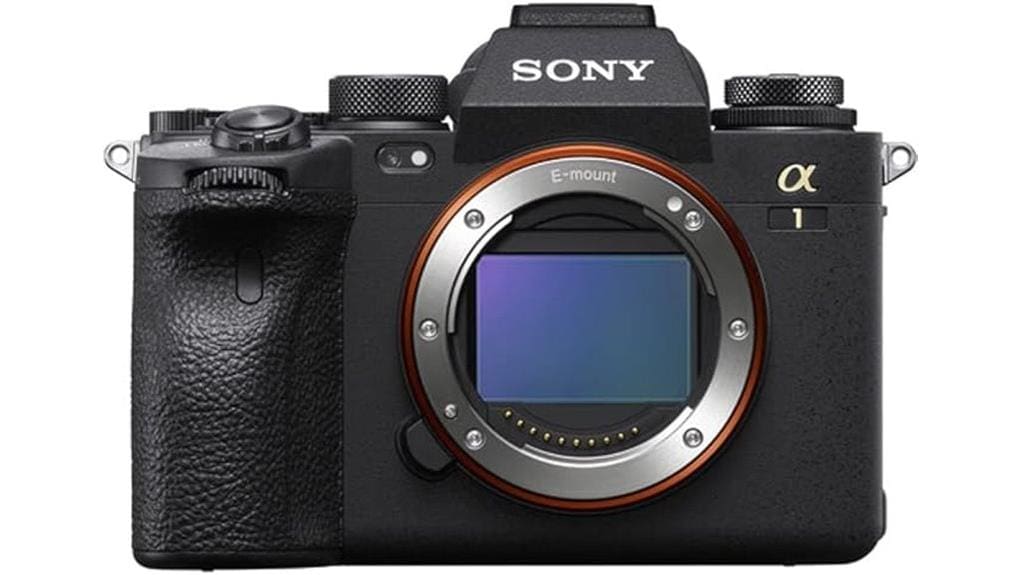

You’ll get a flagship 50.1MP stacked sensor and BIONZ XR engine that deliver detailed, low-noise files and blackout-free 30 fps bursts for studio, sports, and wildlife work. Autofocus is fast and reliable, with excellent eye tracking and a fluid 9.44M-dot EVF. The weather-sealed body and ergonomic controls suit long shifts, though heavy high-speed or 8K runs need spares and thermal care. Keep going and you’ll see how it stacks up against rivals and workflows.
Some Key Takeaways
- 50.1MP stacked Exmor RS sensor plus BIONZ XR delivers high-resolution, low-noise files even during fast burst shooting.
- Blackout-free continuous shooting up to 30 fps freezes decisive action while maintaining accurate autofocus tracking.
- 9.44M-dot, 240fps EVF provides fluid, lag-free framing and reliable subject acquisition in fast workflows.
- Robust build, deep grip, weather sealing, and customizable controls support demanding studio, sports, and wildlife shoots.
- Premium price justified for pros needing hybrid high-res/high-speed performance; alternatives may suit budget-focused users.
Sony Alpha 1 at a Glance: Verdict and Who It’s For
While the Alpha 1 packs a 50.1MP stacked Exmor RS sensor and a next‑generation BIONZ XR engine, its real achievement is combining high resolution with true high‑speed performance—so you get 50MP stills at up to 30 fps with blackout‑free shooting. You’ll find a camera built for demanding assignments: it balances pixel density, processing headroom, and robust shutter systems so professional workflows stay fluid. Prospective buyers who juggle studio, sports, or wildlife shoots will appreciate reduced compromises and predictable throughput. You’ll pay a premium, but you’ll gain a single tool that consolidates multiple pro bodies into one. The site also offers curated mirrorless camera accessories to help you get the most from the Alpha 1.
Image Quality and Speed: 50.1mp Sensor Meets 30 Fps Performance
Marry high resolution with blistering speed and you get the Alpha 1’s defining promise: a 50.1MP stacked Exmor RS sensor that delivers detailed, low‑noise files even as it pushes blackout‑free bursts to 30 fps. You’ll capture landscapes with exceptional microdetail and tonality, yet also freeze decisive action without compromise. The BIONZ XR engine and integral memory sensor enable rapid readout and efficient Memory buffer optimization, so long runs of raw frames don’t bottleneck. For High speed landscapes or sports sequences, dynamic range and noise control remain impressive, letting you prioritize composition and timing over technical tradeoffs. Macro shooters will appreciate how this combination benefits close-up work, improving detail and focus control for macro lenses and fine texture capture.
Autofocus, EVF, and Shooting Reliability in Real Use
Because Sony built the Alpha 1 around speed and accuracy, its autofocus, EVF, and shutter systems feel like a single, reliable tool in real use. You’ll notice eye tracking precision locking quickly on moving subjects, maintaining focus through erratic motion thanks to the stacked sensor and BIONZ XR pipeline. The 9.44M-dot, 240fps EVF gives fluid framing without distracting blackout, so you don’t miss decisive moments at 30fps. Low light autofocus holds surprisingly well, with consistent subject acquisition and minimal hunting. Mechanical and electronic anti-flicker control further stabilizes exposures under artificial light, making the system dependable for professional shoots. External camera monitors can further enhance framing and focus accuracy with larger, color-accurate monitor displays for studio and field workflows.
Handling, Battery, and Workflow: How It Feels to Shoot All Day
Grab the Alpha 1 and you’ll notice its heft and controls immediately—Sony has balanced a dense, weather-sealed body with thoughtfully placed dials and a deep grip so you can comfortably shoot all day without constant hand fatigue. You’ll appreciate the ergonomic balance that keeps button reach intuitive during long shifts. Battery life is solid for mixed stills and video; carry spares for heavy 30 fps bursts. Menus and customizable buttons streamline tethering and card management, speeding workflow. Thermal management is competent: extended 8K or continuous-high-speed runs induce limits, but typical pro use stays manageable with breaks. For long days on location consider carrying spare batteries and accessories like spare camera batteries to keep shooting without interruption.
Value and Alternatives: Is the Alpha 1 Worth It Compared to Competitors?
After a long day shooting with the Alpha 1 you’ll have a clear sense of its build, ergonomics, and where its strengths matter most — which makes the question of value straightforward to approach. You get flagship imaging: 50.1MP, 30 fps blackout-free capture, and top-tier EVF responsiveness, but at a premium. For price comparison, weigh absolute performance against models like the R3 or D850 for resolution/speed balance. Consider the Sony lens ecosystem — extensive native glass and third-party support reduce hidden costs. If you need unmatched hybrid speed and resolution, it’s worth it; otherwise, alternatives offer better bang-for-buck. Gear Guide readers will also appreciate the Alpha 1’s fit for enthusiast photographers.
Some Questions Answered
Does the Alpha 1 Support In-Body Pixel Shift or Multi-Shot Modes?
Yes — you get multi exposure but not a true in-body pixel shift mode. You can use the Alpha 1’s multi exposure function for compositing and creative overlays, and its fast sensor plus processing supports high-quality captures for stacking workflows. However, Sony didn’t implement a dedicated pixel shift multi-shot capture that shifts the sensor to increase color sampling/resolution. You’ll rely on multi exposure or external pixel-shift merging in post instead.
What Are the Camera’s Weather-Sealing and Durability Specifications?
You get a robust, pro-grade body built from magnesium alloy with thorough weather sealing. You’ll find sealed seams, dials and card slots that resist dust and moisture for tough conditions, and a durable shutter mechanism designed for high-duty use. You can confidently shoot in rain or dusty environments, though you shouldn’t submerge the camera; Sony’s design prioritizes splash and dust resistance plus long-term mechanical reliability.
Which Memory Card Types and Capacities Are Fully Supported?
You can use CFexpress Type A and SD Express cards; the camera accepts one CFexpress Type A slot and one SD UHS-II/SD Express slot. You’ll get full-speed, sustained performance with CFexpress Type A for 30 fps RAW bursts and heavy video. SD Express works well for high-capacity storage and backup but may limit peak sustained write compared to CFexpress. Choose capacities matching your workflow — high-capacity CFexpress for long shoots, SD Express for overflow.
How Well Does the Alpha 1 Integrate With Studio Tethering Software?
Very well — it integrates strongly with studio tethering software. You’ll get reliable cable compatibility via USB-C and Ethernet adapters, low-latency transfer, and stable live view for capture. You can automate workflows using supported tether apps and third-party plugins; the fast sensor, BIONZ XR engine, and buffering keep shoots smooth. Expect robust tether control, scripted workflow automation, and minimal hiccups when handling high-res, rapid-fire studio sessions.
Are There Firmware Updates Planned to Expand Video Features?
Yes — Sony’s communicated a firmware roadmap and there are credible feature rumors. You should expect targeted firmware updates to expand video functions, improving codec options, frame-rate flexibility, and autofocus tweaks. Don’t assume everything will arrive at once; Sony usually stages releases based on testing and user feedback. Keep an eye on official announcements and beta notes so you can plan shoots around confirmed additions rather than hearsay.