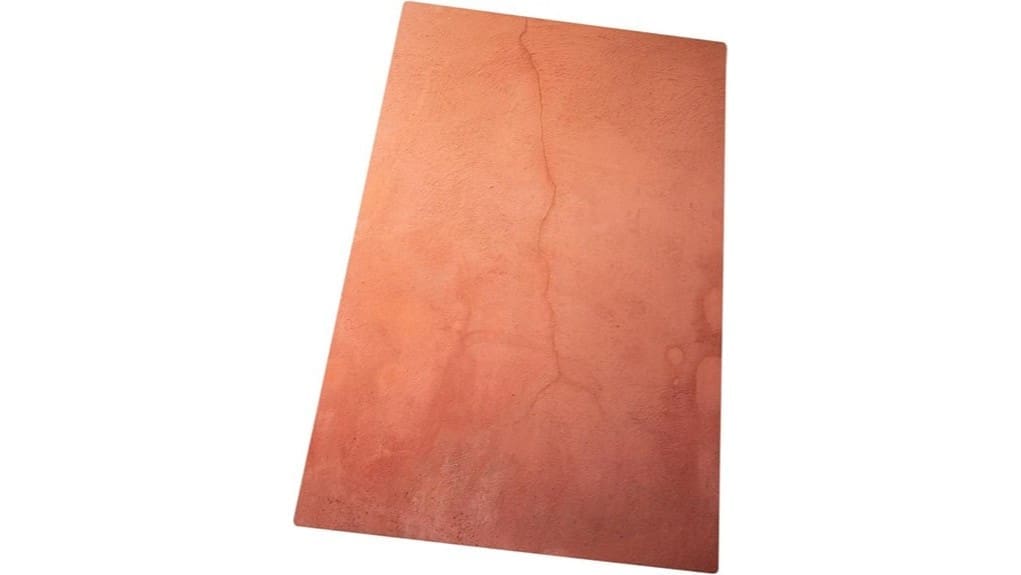
You’ll get a 24″x36″ rigid, 3mm clay-plaster replica that stays flat and light enough to move single-handedly. Its low-relief texture reads on camera without snagging props and gives soft highlights with controlled micro-contrast for predictable styling. Rounded corners and a moisture- and stain-resistant finish make cleanup and storage easy. It pairs neatly with brick backdrops for layered depth and suits phone-to-DSLR shoots; keep going to see specific lighting and pairing tips.
Some Key Takeaways
- Lightweight 24″ x 36″ rigid clay-plaster replica provides realistic low-relief texture that reads well on camera without snagging props.
- 3 mm thickness keeps the board flat and stiff while remaining easy to reposition single-handedly.
- Moisture- and stain-resistant finish enables quick cleanup after food or product shoots.
- Texture produces soft highlights and controlled shadows, reducing glare compared with glossy surfaces.
- Pairs well with brick backdrops; use 12–18″ spacing and warm/cool props to enhance depth and contrast.
What the Bessie Bakes Clay Plaster Backdrop Is and Who It’s For
Because it’s a rigid, lightweight board finished with a clay-plaster replication, the Bessie Bakes Clay Plaster Backdrop gives you a consistent, textured surface (24″ x 36″, 3 mm) that’s built for stills and video. You’ll handle a portable backdrop that’s moisture- and stain-resistant, with rounded corners for safe storage. You’ll set it flat or lean it as a vertical vignette for food, product, or social media shoots. You’ll appreciate compatibility with phone and DSLR rigs, simple styling pairings, and predictable light behavior. It’s aimed at beginner photographers and content creators seeking an affordable, reliable aesthetic base. Perfect Backdrops offers a range of photo backdrops designed to elevate your photography setup.
First Impressions: Size, Build, and Surface Feel
Moving from its intended uses to how it feels in hand, the 24″ x 36″ board strikes a balance between portability and surface area: at 3 mm thickness it’s stiff enough to lie flat without warping yet light enough to reposition single-handedly. You’ll note compact portability from the rounded corners and lightweight board design; it slips into bags and stacks without snagging. Flip the printed side up to inspect the subtle clay-plaster replication: a controlled relief that reads on camera but won’t snag props. The surface is moisture- and stain-resistant, and the tactile finish gives predictable micro-contrast for styling precision. The size and design make it ideal for collapsible photo backdrops used by photography enthusiasts.
How It Performs in Food and Product Photography (Lighting, Texture, Stain Resistance)
When you light the Bessie Bakes Clay Plaster backdrop, its low-relief texture catches highlights without creating harsh specular hotspots, so directional light sculpts form while maintaining even overall tonal response. You’ll notice soft highlights that enhance food sheen and product contours; micro-variations break up glare, improving reflective behavior versus glossy boards. Shadow control is precise—edges remain crisp without losing midtone detail—letting you dial contrast with a single modifier. Its moisture- and stain-resistant surface means spills wipe away quickly, supporting cleanup ease between setups. At 24×36 inches and 3 mm thickness, the board balances portability with reliable surface behavior for pro shoots. Perfect Vinyl Backdrops offers a wide selection of vinyl options in various sizes for photographers looking to expand their backdrop collection, including complementary vinyl designs that pair well with the Bessie Bakes finish and portable backdrop sizes.
Styling Tips and Pairings : Using It With Red & White Brick and Props
If you want crisp, cohesive scenes, pair the Clay Plaster backdrop with the Red & White Brick to create layered depth—use the plaster as a foreground plane and set the brick slightly behind or angled to introduce architectural context without competing for attention. You’ll control color contrasts by positioning warm-toned props against the cooler plaster face while letting brick red anchor the composition. Prop placement should follow a rule-of-thirds grid: low, tactile items on the plaster board, vertical elements near the brick seam to bridge planes. Maintain 12–18 inches between boards for shadow definition, and adjust angle to modulate perceived texture. For best results with photography enthusiasts, consider using these backdrops as part of a green screen backdrops workflow to streamline post-processing and compositing.
Final Verdict: Value, Use Cases, and Purchase Recommendation
Although compact and lightweight, the Bessie Bakes Clay Plaster backdrop delivers a precise, texture-forward surface that’s easy to integrate into both hobbyist and professional workflows. You’ll appreciate the 24×36-inch, 3 mm rigid board for controlled framing and quick styling; rounded corners simplify storage and protect edges. Moisture- and stain-resistant finishes mean minimal maintenance and credible long term durability for regular shoots. For food and product photographers seeking an affordable aesthetic, this is a budget friendly recommendation that doesn’t sacrifice texture fidelity. Buy if you need a portable, repeatable surface that pairs well with brick backdrops and scales from phone to DSLR. Seamless paper backdrops are a versatile companion for studios and on-location shoots when you want a clean, consistent background for photos.
Some Questions Answered
Does It Fold or Require a Stand for Vertical Shots?
No, it doesn’t fold; the lightweight 3 mm board isn’t a foldable design, so you’ll need a stand for vertical shots. You’ll handle it like a rigid panel: flip printed side up, secure edges, and mount to a small easel, clamp, or backdrop stand for stability. The rounded corners and moisture- and stain-resistant surface let you style confidently, while the clay-plaster texture stays flat and visually consistent when vertically supported on a stand.
Can It Be Cut or Trimmed to Custom Sizes?
Yes — you can trim it to custom sizes, but you’ll want to be precise. Use a straightedge and a fine-toothed saw or utility knife to cut the 3 mm lightweight board cleanly. After trimming, apply an appropriate edge sealing (clear acrylic sealer or flexible craft sealant) to protect the exposed core and maintain the moisture- and stain-resistant surface. Work on a flat surface, clamp securely, and sand edges lightly for an aesthetic finish.
Is It Safe to Use With Hot Pans or Steam?
No — it isn’t designed for contact with hot pans or prolonged steam exposure. The lightweight 3 mm board offers some heat resistance for brief, indirect warmth, but direct hot cookware or heavy steam testing can delaminate the printed surface, warp edges, or affect moisture-resistant coatings. You’ll get best results by using heat barriers, insulated trivets, or staging shots with cooled pans and controlled steam sources to protect texture and finish.
Does It Come With a Warranty or Return Policy?
Yes — you get clear warranty details and a return policy. You’ll receive a limited warranty covering manufacturing defects; check the timed coverage and claim steps on the seller page. The return policy allows returns within the specified window for unused boards with rounded corners intact; follow the RMA and packaging instructions (printed side down during shipment). Keep proof of purchase and photos to speed technical verification and refund or replacement.
Can Both Sides Be Used for Photography?
Yes — you can use both sides, but note the printed side faces down in shipping so you’ll need to flip the board. The lightweight 3 mm board is effectively double sided with a reversible print presentation; one face shows the clay plaster replication while the other is a complementary surface. You’ll get moisture- and stain-resistant performance either way, and the rounded corners preserve aesthetics and durability for repeated photographic use.