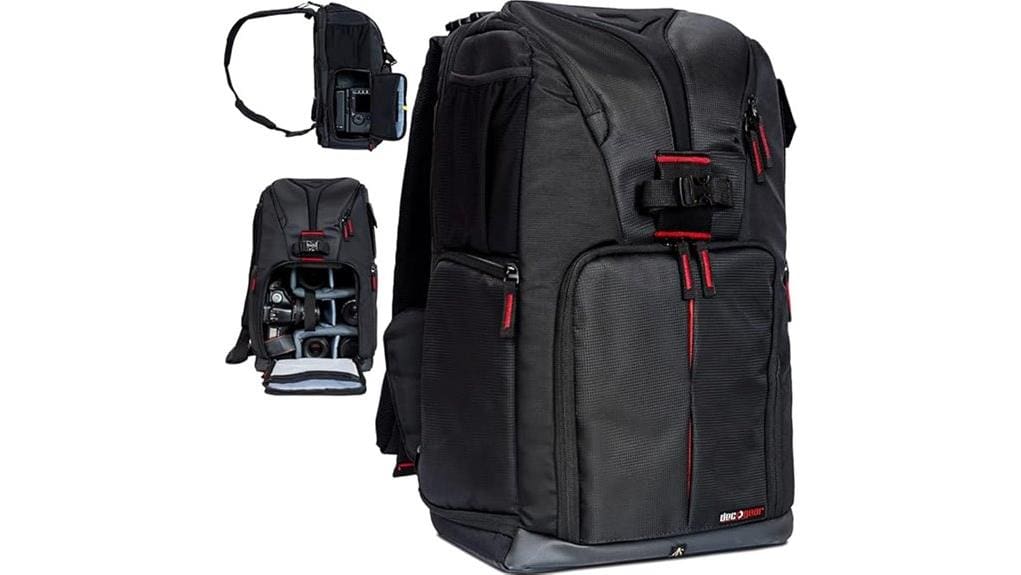
You’ll get a compact 17L pack that prioritizes organized storage and convertible carry over heavy-duty protection. It fits a 15-inch laptop, two-to-three mirrorless/DSLR bodies with lenses, a flash and small drone, using Velcro dividers and dense foam walls for vibration damping. Padding is sufficient for urban transit but thin for heavy impact, and tight fits slow reconfiguration. Straps are lightweight with a quick-swing option but lack sternum/hip support. Continue for a full breakdown.
Some Key Takeaways
- Lightweight 17L camera pack ideal for compact mirrorless or entry-level DSLR kits with two to three lenses.
- Customizable padded dividers and dense foam walls offer organized, vibration-damping protection for gear.
- Padded laptop/tablet sleeve fits up to 15-inch devices; interior holds flash, small drone, or gimbal for vloggers.
- Convertible backpack-to-sling carry and swivel strap enable quick access, but lack sternum/hip support for long hauls.
- Good value for budget-minded users, though padding and long-term durability may be limited for heavy professional use.
What’s in the Deco Gear DSLR Camera Backpack (Key Specs & Capacity)
Open the Deco Gear DSLR Camera Backpack and you’ll find a compact, 17-liter layout engineered for camera systems and travel tech: five compartments with five pockets, customizable padded dividers for multiple bodies and lenses, a padded laptop sleeve that fits up to 15.4-inch (15-inch max listed) devices, and utility pockets for tablets, drones and accessories. You’ll notice deliberate internal organization that separates heavy bodies from fragile glass, aiding balanced weight distribution when loaded. Materials are lightweight, weather-resistant nylon; zippers are standard. Capacity suits a mirrorless or DSLR with two to three lenses and a tablet, but won’t replace larger pro rigs. The pack is part of a collection catering to photographers seeking perfect camera backpacks.
How It Handles Gear: Padding, Layout, and Customizable Compartments
After sizing up the layout and capacity, you’ll notice how the pack protects and organizes gear: dense foam walls and removable padded dividers create snug, vibration-damping compartments that keep camera bodies and lenses from contacting each other, while a padded shelf isolates heavier items to maintain balance. You get a modular layout that adapts to varied kit; dividers attach with reliable Velcro and resist shifting. Padding thickness is adequate for urban transit but could be thicker for heavy impact. Access points let you reconfigure quickly, though tight fits with multiple large lenses reduce reconfiguration speed and add friction when swapping components. This design mirrors typical offerings from specialized camera bag insert vendors who focus on customizable protection.
Comfort, Carry Modes, and Weather Protection in Real Use
While the Deco Gear backpack converts easily between traditional and sling modes, you’ll notice the comfort trade-offs when loaded: the padded back panel and shoulder straps are lightweight and ventilated enough for short walks, but the three-pound empty weight plus a full kit produces strap pressure that becomes noticeable on longer hauls. You get decent shoulder padding, and the strap swivel lets you rotate the bag frontwards fast, yet the thin foam and modest ventilation channels limit sustained comfort. Weight distribution favors central load but lacks sternum or hip support, so extended carry strains shoulders and reduces stability in wet conditions despite the included rain cover. This makes it important to choose a backpack designed for photographers with camera compartments for better organization and protection.
Who This Bag Is Best For : Camera Setups, Drones, and Travel Scenarios
Given the comfort limits on long hauls, consider which setups you’ll actually carry: this bag suits compact mirrorless or entry-level DSLR kits with two to three lenses, a flash, and a tablet or small laptop, plus a compact drone rather than full-size quadcopters. You’ll appreciate the 17L volume if you’re a compact vlogger packing a gimbal, spare batteries, and minimal personal gear. Adventure families wanting lightweight, weather-resistant protection for day trips will find it useful but cramped for multi-day shoots. Don’t expect professional rigs or large drones; this is a tactical, portable solution for modest kit sizes and quick-access needs. It’s an ideal match for photographers who need dedicated storage for tripods and related gear, especially when choosing tripod bags that prioritize portability.
Final Verdict: Pros, Cons, and Should You Buy the Deco Gear Backpack?
If you need a lightweight, weatherproof pack for a compact camera kit and occasional drone use, the Deco Gear backpack delivers targeted value without pretending to be a professional transport solution. You’ll get sensible internal organization, convertible sling/backpack options, and TSA-friendly features at a budget-friendly price point. Pros: low weight, weather protection, tablet/laptop fit, flexible carry modes. Cons: limited space for full pro rigs, basic padding, questions about long term durability under heavy use. In an affordability comparison it beats pricier competitors on features-per-dollar. Buy it if you prioritize compact, economical utility over rugged, long-haul protection. This makes it a practical choice for photographers who want to keep gear dry without investing in heavy, professional cases.
Some Questions Answered
Does the Bag Include a Tripod Holder or Straps?
No, it doesn’t include a dedicated external tripod holder, but you’ll find tripod compatibility via internal Strap anchors and adjustable straps you can loop a compact tripod through. You’ll have to secure larger tripods externally or use aftermarket straps. The Strap anchors are technical and reliable for moderate loads, yet they’re not a full tripod mounting system—expect manual rigging for stability and limited convenience compared to dedicated tripod straps or pockets.
Is There Internal RFID or Anti-Theft Protection?
No — the bag doesn’t include RFID lining or built‑in anti‑theft circuitry. You’ll get locking zippers compatibility for a TSA‑approved lock, but there’s no dedicated RFID shield or integrated alarm. You can add external RFID sleeves for cards and use the locking zippers to deter casual theft, yet determined pickpockets or tech thieves won’t be stopped by the bag’s stock protections. Consider aftermarket RFID solutions and stronger locks.
Can the Backpack Straps Be Replaced or Upgraded?
Yes — you can replace or upgrade the straps, but options are limited. You’ll remove the padded harness and swap it with compatible alternatives; the bag uses modular buckles and standard attachment points rather than proprietary rails. Expect to match strap width and buckle spacing for secure fit. Upgrades improve comfort and load distribution, but check dimensions (strap length, buckle type) before purchase to avoid fit or clearance issues.
Does It Come in Different Colors Besides Dark Grey/Black?
No — it’s primarily offered in the dark grey/black with red interior; color options are limited. You’ll notice the fabric texture is lightweight nylon with a smooth, water-resistant finish rather than varied textiles or multiple palettes. If you need alternate hues or premium materials, you’ll have to look to other models or aftermarket covers. The limited palette keeps production simple but restricts personalization and aesthetic choices.
Is There a Warranty or Customer Support Contact?
Yes — Deco Gear offers a limited warranty; warranty duration varies by retailer and region, typically one year. You’ll need proof of purchase for claims. For support contact info, use Deco Gear’s customer service email and phone listed on their website or the retailer’s product page; they’ll provide repair, replacement, or troubleshooting steps. If you bought from a third party, contact that seller first to expedite warranty processing and documentation.