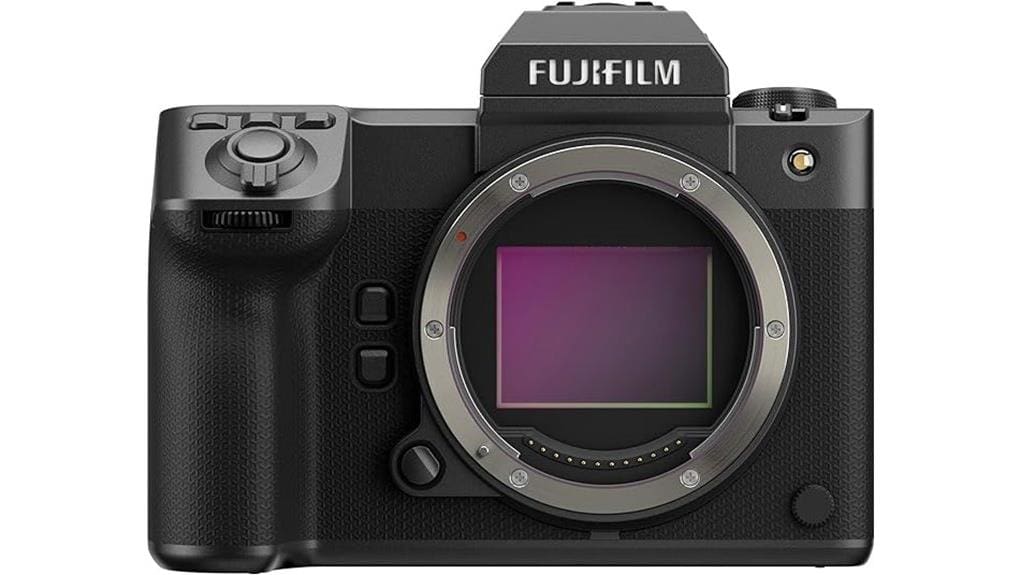

You’ll get a 102MP medium-format camera that pairs large-format resolution with cinema-grade video I/O and robust IBIS, so you can shoot studio tethered stills and 8K ProRes or ProRes RAW for post. Autofocus is deliberate but precise for critical framing, and the EVF, film sims and broad DR suit commercial and fine-art work. Lens adapters and C2C workflows bridge photo and cinema needs — keep going and you’ll find full workflow and performance details.
Some Key Takeaways
- 102MP medium-format sensor delivers exceptional resolution and crop flexibility for commercial, landscape, and fine-art stills.
- Internal 8K/30p and 4K/60p ProRes recording, plus HDMI ProRes RAW/Blackmagic RAW outputs, enable cinema-grade video workflows.
- Robust IBIS (up to 8 stops) and improved subject-tracking AF make handheld high-resolution shooting more practical.
- Pro-level connectivity (wired LAN, Wi‑Fi, Camera-to-Cloud, direct-to-SSD) streamlines on-set delivery and multi-camera sync.
- GF mount with adapters supports PL, 35mm, and legacy glass, bridging large-format photography and cinematic lens options.
What the GFX100 II Is and Who It’s For
Although it shares some DNA with Fujifilm’s high-end mirrorless line, the GFX100 II targets professionals who need large-format resolution and cinema-level video in a single body. You’ll find a medium format platform that blends 102MP capture, robust IBIS, and cinema-friendly outputs to serve professional photographers demanding stills and motion. It’s built for studio work where tethering, ProRes, and color fidelity matter, yet it’s rugged and stabilized enough for landscape shooters chasing detail in the field. Compared to full-frame alternatives, it emphasizes tonal depth, lens compatibility (GF/PL), and workflow integration for high-end commercial and cinematic production. The site also carries a curated selection of essential accessories for mirrorless users, including lenses and mounts, which complement the GFX100 II.
Image Quality and Stills Performance (102MP Sensor, Crops, and Film Sims)
Having covered who the GFX100 II is for, let’s look at what its 102MP sensor actually delivers for stills. You’ll get exceptional resolving power across GF-format frames; fine detail holds up even with significant crops to 35mm or Vista Vision ratios. The X-Processor 5 preserves micro contrast so textures remain natural, not oversharpened. Dynamic range is broad — shadow recovery and highlight roll-off give latitude for grading. Film simulations provide reliable color presets that suit editorial or fine-art work without heavy adjustments. Compared to full-frame alternatives, the GFX100 II gives you more raw detail and tonal subtlety per file. The GFX100 II pairs exceptionally well with portrait lenses that emphasize sharp center resolution and pleasing bokeh.
Video and Recording Workflows (8K/4K, ProRes RAW/Blackmagic RAW, Direct-to-SSD)
When you need cinema-grade footage straight from capture, the GFX100 II makes high-resolution workflows practical rather than painful: it records full-sensor 8K/30p and 4K/60p internally in 10‑bit 4:2:2 Apple ProRes, and sends 12‑bit 4:2:2 ProRes RAW or Blackmagic RAW over HDMI for maximum post latitude. You’ll choose ProRes RAW for cleaner debayering or Blackmagic RAW for DaVinci integration; both preserve dynamic range for heavy grading. Direct to SSD lets you offload high-bitrate clips on set while maintaining file integrity. Integrated Timecode Sync (via AirGlu BT) eases multi-camera shoots, making 8K workflows manageable and professional. For monitoring and critical focus checks on location, pairing the camera with a quality field monitor can dramatically improve framing and exposure control.
Autofocus, Viewfinder, and Stabilization in Real Shooting
Because Fujifilm paired upgraded subject-tracking algorithms with a 9.44M‑dot, 120‑fps EVF and up to 8 stops of IBIS, you’ll get a stalking‑ready system that balances speed, precision, and stability for demanding shoots. You’ll notice phase detection across the frame that locks faster on erratic motion than prior GFX models, and eyeglass tracking that maintains eye priority with spectacles. The blackout-free EVF at 5.3 fps keeps composition fluid while IBIS steadies handheld 102MP captures. In comparison to full-frame rivals, focus acquisition feels more deliberate but markedly more accurate for high‑resolution output and critical framing. External camera monitors can further enhance composition and focus verification with larger, brighter displays for studio and field use, especially when paired with external camera monitors.
Connectivity, Lens Options, and Real-World Verdict (CFW, C2C, and Buying Recommendations)
Though the GFX100 II looks like a traditional studio camera, its connectivity and lens ecosystem are built for modern, networked and cinematic workflows, and that changes how you’ll plan shoots. You get wired LAN, robust Wi‑Fi and native Camera to Cloud (C2C) for direct Cloud upload of RAW, proxies or 8K ProRes—speeding turnaround versus tethered SSD workflows. Lens adapters expand choices: GF-to-PL, GF-to-35mm and others let you mount PREMISTA, CABRIO and legacy glass. In real-world use, the GFX100 II rivals cinema bodies for codec flexibility and lens compatibility, so buy it if you need large-format image quality plus networked delivery. Lens mount adapters also open up creative lens choices for photographers using hybrid still/video workflows.
Some Questions Answered
How Long Does the Battery Last During Continuous 8K Recording?
You’ll get roughly 45–70 minutes of continuous 8K recording on a single NP‑battery under normal conditions, though real-world battery endurance varies. Expect shorter runs if you enable monitoring, Wi‑Fi/Ethernet, or direct SSD output. Thermal throttling can cut usable recording time further during hot shoots, so plan for swaps or external power. Compared to smaller cameras, the GFX’s large sensor and processing demand shorten continuous 8K runtimes.
Is There Built-In GPS or Geotagging Support?
No — you won’t find internal GPS; the camera lacks onboard satellite positioning. Instead, you’ll use Bluetooth geotagging via a paired smartphone or accessory for location metadata. That Bluetooth method’s reliable for most workflows but won’t match the immediacy or standalone precision of internal GPS. Compared to some rivals with built-in GPS, this setup trades direct accuracy for convenience and lower power draw, so plan tethering for critical geolocation needs.
What Is the Weather-Sealing Rating for Extreme Environments?
The camera offers robust weather sealing with a professional-grade dustproof rating and all-encompassing gasketed construction; you can confidently use it in heavy rain and dusty conditions. Compared to pro DSLRs and cinema bodies, its sealing matches high-end rivals, though Fujifilm doesn’t publish an IP code. You should still avoid prolonged submersion and rinse salty spray promptly. For extreme environments, pair it with sealed lenses and protective covers for maximum reliability.
Does the Camera Support Dual Card Simultaneous RAW Recording?
Yes — you can record RAW to both cards. You’ll use the dual slots for raw mirroring, so every 102MP still or RAW video file writes simultaneously to Card A and Card B for instant backup. That keeps workflow secure compared with single‑slot systems and reduces risk on location. You’ll still manage card formats and overflow behavior in menus, and performance depends on using fast, compatible media in both slots for sustained capture.
Are There Firmware Updates That Add New Video Codecs?
Yes — Fujifilm issues firmware updates that can add video codecs, and you’ll want to track their firmware roadmap and codec licensing notes. Compare past updates: Fujifilm has expanded formats and recording options via firmware when licensing allowed. You’ll check release logs for added ProRes RAW/Blackmagic RAW support or new internal codecs. Stay aware that codec licensing timelines and technical constraints often determine which formats get delivered in future updates.