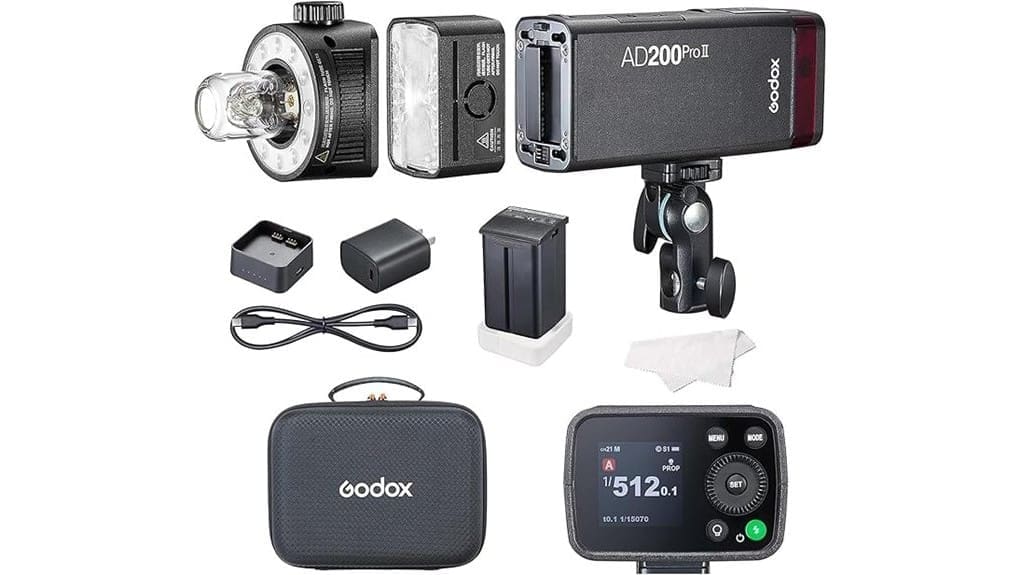
You’ll get a compact 200Ws monolight that’s built for on‑location portrait and event work, offering TTL/HSS wireless control, one‑tap X3 pairing, and 0.1‑stop power steps for precise exposures. Flash durations are short enough to freeze motion, and color stays stable across the range thanks to a bi‑color modeling lamp. Battery and USB charging make it portable, though heavy studio chaining isn’t its aim — keep going and you’ll find the detailed tradeoffs and tips.
Some Key Takeaways
- Compact 200Ws monolight delivering portable, reliable power for portrait and event photographers.
- TTL and HSS-capable with Godox 2.4G X system, one-tap pairing and low-latency X3 trigger support.
- Precise 1/512–1/1 power control in 0.1‑stop steps with very short flash durations for motion freeze.
- Bi‑color modeling lamp (nominal 5800K ±100K) with adjustable brightness for previewing lighting and color.
- Rechargeable battery with USB/external charging, good mid-power pops, but bring a spare for heavy sessions.
What the AD200 Pro II Is and Who It’s For
Wondering whether the AD200 Pro II fits your kit? You’ll find a compact 200Ws monolight aimed at photographers needing portable, reliable flash for beginner portraiture and outdoor events. You get precise TTL/HSS-capable wireless integration with rapid one-tap pairing, a bi-color modeling lamp for consistent mapping, and improved cooling to sustain bursts without thermal cutouts. The rechargeable battery and USB/external charging options keep you shooting on location. It’s not for heavy studio chains but excels where mobility, quick setup, and technical control matter. Choose it if you prioritize pocketable power and versatile wireless sync in field work. Brighten your images on the go with on-camera LED lights that complement flash for continuous lighting.
200Ws Output and Flash Control: Power Range, Duration, and Precision
Although compact, the AD200 Pro II delivers a full 200 Ws output with fine-grained control, letting you dial power from 1/512 up to full in 0.1‑stop increments for precise exposure adjustments. You get exceptional power granularity that makes subtle lighting tweaks predictable and repeatable. Flash duration tops out at very short times for motion freeze, while recycling and battery management sustain consistent cycle-to-cycle performance. Measurements show reliable flash consistency across the range, so exposure and color stay stable as you change output. For on-location and studio use, the unit balances peak output, short duration, and precise control without compromise. Heavy-duty light stands provide sturdy support and reliable positioning for demanding shoots, making them ideal companions for portable monolights like the AD200 Pro II with stable support.
Wireless, Sync, and Trigger Compatibility With Godox X3 and 2.4g System
Because the AD200 Pro II uses Godox’s 2.4G Wireless X system and one-tap pairing with the X3 trigger, you get reliable, low-latency remote control and full TTL/HSS functionality across groups and channels. You’ll appreciate predictable sync behavior: first- and rear-curtain options work, and group/channel switching is immediate. For solid multi-flash setups, verify channel mapping in the X3 menu to prevent misfires. If you hit issues, X3 troubleshooting usually means checking firmware, interference, or incorrect channel/group assignment. Overall, the system is robust and professional-grade; just keep firmware current and confirm channel mapping before critical shoots. Consider adding an HDMI accessories cable organizer to keep your camera and lighting setup tidy and protected.
Modeling Lamp, Color Stability, and Real-World Lighting Quality
When you need predictable light during setup and mixed ambient shooting, the AD200 Pro II’s bi‑color modeling lamp delivers adjustable brightness and color temperature with practical stability. You’ll appreciate its 5800K nominal output and ±100K variance, which keeps color rendering consistent across frames so white balance shifts are minimal. The lamp’s wattage control helps you preview shadow transitions and feathering without triggering flash. In testing, color stability held under modest heat, suggesting respectable lamp longevity for frequent use. For critical work you’ll still verify with a color target, but the unit provides reliable, usable continuous light for location and studio setups. Consider pairing it with dedicated studio lighting accessories to get the most versatile results.
Battery, Charging, Cooling, and Practical Portability Considerations
Having a stable modeling lamp is helpful on set, but power and thermal management determine how long you can keep shooting and how portable the AD200 Pro II feels. You get a rechargeable battery with respectable battery lifespan for shoots; expect dozens of pops at mid power, fewer at full. Fast USB charging and external power options cut recycle time and let you avoid interruptions. The upgraded head and venting reduce thermal throttling, though sustained high-rate bursts will trigger heat management. Pack the unit in a compact travel case, follow portability tips (spare battery, airflow, cable routing) to maximize uptime. Consider carrying a USB camera battery to extend shooting sessions and simplify charging on the go.
Some Questions Answered
Is the AD200 Pro II Weather-Sealed for Outdoor Shooting in Light Rain?
No, it isn’t fully weather-sealed for light rain. You’ll get some basic weather resistance but the sealing details aren’t rated to IP standards, so you shouldn’t trust it in sustained moisture. You should avoid direct exposure and consider covers or housings; otherwise you risk corrosion, battery drainage issues, and voiding warranty. If you’ll often shoot damp conditions, run moisture testing protocols or choose a purpose-built, weather-rated unit instead.
Can It Function as an Off-Camera Continuous LED for Video Work?
No — it can’t serve as a true off-camera continuous LED for video work. You’ll rely on its modeling lamp for LED output, which is useful for framing and rough previews but not bright enough for primary illumination. Color stability is good (within ±100K), so the preview matches flash color, yet output level and variable control aren’t designed for sustained video lighting. Use a dedicated continuous LED for consistent exposure.
What Modifiers and Adapters Are Compatible Besides AD200 Series Heads?
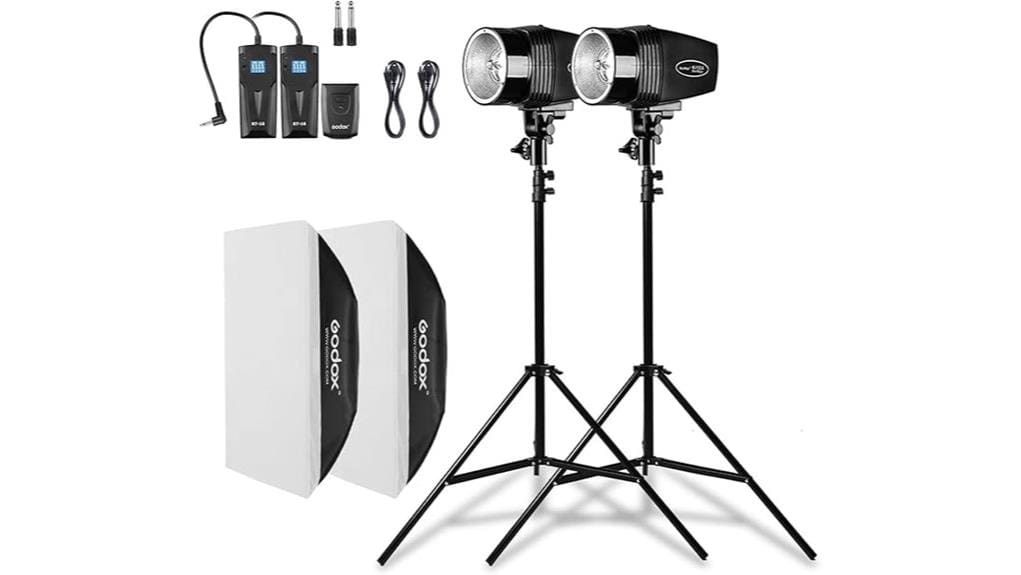
You can use Small softboxes, Bowens adapters and a wide range of light modifiers beyond AD200 heads. You’ll attach Bowens adapters for standard softboxes, reflectors, beauty dishes and speedrings. Compact grids, snoots and gels also work with appropriate mounts. Check adapter compatibility for secure fit and heat tolerance. You’ll get flexible shaping and control, though output and spread differ from larger studio heads — plan modifier size to match 200Ws power.
Does It Support Firmware Updates via the Godox X3 Trigger or USB?
Yes — you can get firmware delivery via USB; the unit accepts firmware updates through a direct USB connection for reliable update methods. You can’t push firmware from the Godox X3 trigger; the X3 handles wireless settings and sync but not firmware flashing. Use Godox’s firmware tool and a USB link to update the monolight. This method is faster, more stable, and recommended for preserving configurations.
Are Spare Batteries and Replacement Parts Readily Available Internationally?
Yes—you’ll find battery availability and parts sourcing broadly good worldwide. Authorized Godox dealers and major photo retailers stock replacement batteries and common parts, and third-party batteries exist though quality varies. Warranty service centers in many regions handle repairs; shipping for small parts is usually quick. For critical shoots, you’ll want spare batteries on hand and to confirm local parts sourcing or international shipping times before relying solely on backorder options.