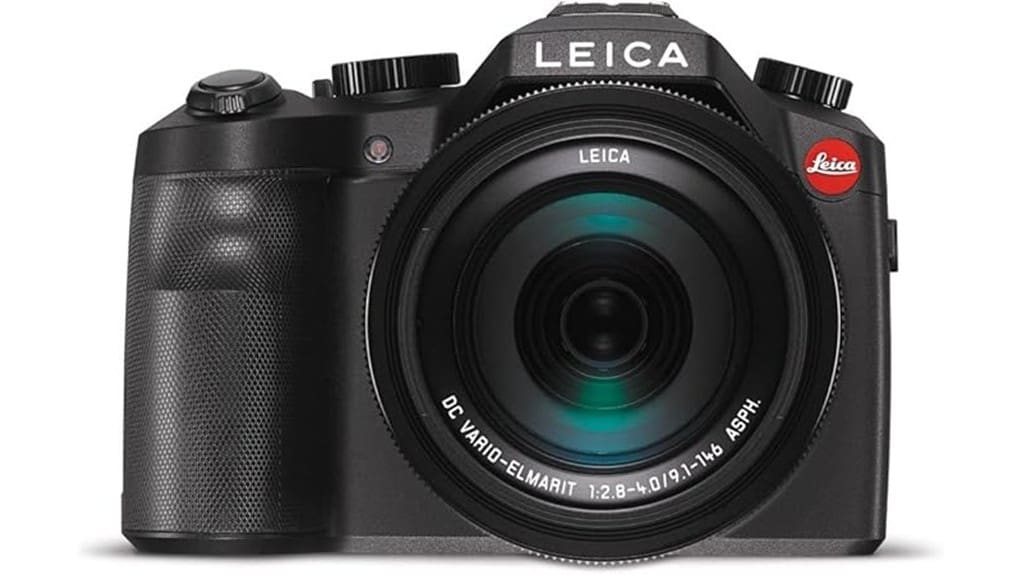

The Leica V‑LUX (Typ 114) gives you a travel-ready, 25–400mm Leica zoom paired with a 1‑inch 20MP sensor and 4K video, so you’ll get versatile reach and solid image quality without swapping lenses. You’ll appreciate the clear OLED viewfinder, hefty stabilization and responsive touchscreen, but contrast AF and battery life limit action and long outings. It’s a sensible compromise for enthusiasts who want convenience over pro-level control—keep going to see how it handles real-world shooting.
Some Key Takeaways
- Travel-focused bridge camera with 25–400mm (35mm equiv.) Leica-branded 16x zoom and robust DSLR-style body.
- 1-inch 20MP sensor delivers clean base-ISO images but softens and shows artifacts at high ISO and long focal lengths.
- UHD 4K video up to 50 fps, manual controls, and built-in stabilization suit travel clips, though external mic recommended.
- Contrast-detection AF is accurate in good light but hunts in dim scenes, with a single AF point limiting tracking.
- Strong OLED viewfinder, high-res tilting touchscreen, and balanced ergonomics, but battery life and size are compromises.
Quick Verdict : Who Should Buy the Leica V‑LUX (Typ 114)
If you want a travel-ready bridge camera that packs a 16x Leica zoom, 1‑inch 20MP sensor and 4K video into a compact, DSLR‑style body, the V‑LUX (Typ 114) is worth serious consideration. You’ll appreciate its versatile 25–400mm equivalent range, robust build and clear OLED viewfinder for travel and everyday shooting. Enthusiast travelers who value reach and convenience will find it compelling; pros wanting ultimate image control may not. Budget photographers seeking Leica branding should weigh cost versus features—this isn’t the cheapest option, but it delivers a well-rounded, travel-focused package with sensible compromises. It also pairs well with a range of mirrorless accessories that enhance portability and performance.
Real‑World Performance: Image Quality, Autofocus, and Stabilization
When you shoot with the V‑LUX (Typ 114), its 1‑inch 20MP sensor delivers clean, detailed images at base ISO with pleasing color rendition and restrained noise, though fine detail softens noticeably as you push toward the upper native range. You’ll appreciate high contrast rendering for punchy landscapes, but resolution loss and mild processing artifacts appear at long focal lengths. Contrast-detection AF is accurate in good light, though it hunts more in dim scenes and complex subjects; single AF point limits tracking. Optical stabilization combined with digital correction keeps handheld shots steady, yet low light noise becomes evident without raising shutter speed. As a compact system aimed at enthusiasts, the V‑LUX complements other digital camera gear with its all‑in‑one zoom convenience and accessible controls for enthusiast photographers.
Video, Burst Shooting, and Audio: What to Expect for Travel and Vlogging
Though the V‑LUX (Typ 114) isn’t a cinema camera, it gives you a capable travel and vlogging toolkit: UHD 4K at up to 50 fps with electronic shutter captures smooth, detailed clips in good light, while built‑in stabilization and the lens’ long reach make framing and travel coverage easy. You’ll appreciate reliable 4K recording, efficient MP4 files, and manual exposure options for controlled results. Burst shooting reaches up to 50 fps for decisive moments, though buffer and AF limitations curb sustained action. Audio is stereo via a modest built‑in mic with basic Wind reduction; consider an external mic for cleaner dialogue. The site also offers a range of diving camera accessories including housings and mounts for underwater shooting with compatible compact cameras like the V‑LUX (Typ 114) diving camera accessories.
Handling, Controls, Viewfinder and Display for On‑the‑Go Shooting
Get a feel for the V‑LUX’s controls quickly: the compact, DSLR‑style body puts essential dials and buttons within thumb and forefinger reach so you can adjust exposure and drive modes without fumbling. You’ll appreciate compact ergonomics on long walks; the grip is secure and weight distribution keeps the 1‑inch sensor package steady. The 3.0‑inch rotatable 3,920K‑dot LCD and 0.39‑inch OLED viewfinder offer clear framing, though the single AF point requires deliberate composition. Touchscreen responsiveness is good for menu navigation and touch‑AF, but menus are dense. Overall handling is confident, with minor quibbles in focus agility and menu logic. Consider pairing the V‑LUX with an external monitor for improved framing and review on longer shoots external camera monitors.
Pros, Cons, and Final Buying Recommendation (Alternatives and Value)
If you’re weighing the V‑LUX (Typ 114) as a travel-ready all‑rounder, its strengths are clear: a versatile 25–400mm (35mm equiv.) Leica-branded zoom, a 1‑inch 20MP sensor that balances detail and low‑light performance, and a sharp, high-resolution rear LCD plus a crisp OLED viewfinder that make framing on the move straightforward. Pros: excellent reach, solid stabilization, 4K video, intuitive ergonomics. Cons: modest battery life for extended trips, contrast AF limits fast-action reliability, bulkier than compacts. Recommendation: buy if zoom versatility and image quality matter; otherwise consider Sony RX100-series or Canon G5 X Mark II for better portability and accessory compatibility. This camera pairs particularly well with backpacks designed for photographers, especially those featuring dedicated camera compartments for safe transport and quick access.
Some Questions Answered
Does It Support External Microphones or Headphones?
No — it doesn’t provide dedicated external audio ports for microphones or headphones. You’ll rely on the built‑in stereo mic unless you use third‑party mic adapters that convert HDMI or hot‑shoe signals to a recorder, or wireless systems that bypass the camera. That means audio flexibility’s limited: you can’t monitor via headphones on camera, and external audio requires workarounds with mic adapters, recorders, or off‑camera solutions for professional results.
What Battery Life Can I Expect per Charge?
You’ll get roughly 300–350 shots per charge under mixed use; video drains faster (around 85 minutes continuous recording reported). Battery longevity depends on power management choices: using EVF, Wi‑Fi, or 4K reduces runtime noticeably. Turn off wireless, lower screen brightness, and use eco modes to stretch charges. Be critical: carry a spare battery for travel or long shoots, since heavy zooming and continuous video will quickly deplete power.
Is There Weather Sealing or Splash Resistance?
No, it doesn’t offer weather sealing or dedicated splash resistance, so you shouldn’t expect rugged protection. You’ll need to avoid heavy rain, sand, and prolonged moisture exposure or use an external rain cover or protective housing. If you shoot outdoors often, plan for extra protection and careful handling; otherwise, occasional light drizzle may be manageable but risks corrosion and damage over time without proper shielding.
Can It Tether to a Computer via USB for Shooting?
Yes — you can use USB tethering for Remote control, but it’s limited. You’ll connect via USB and rely primarily on the Image Shuttle app or wired connection for basic image transfer and shutter release. Don’t expect full DSLR-style tethered workflows or advanced live-view control; the camera’s tethering supports straightforward capture and file download rather than deep camera parameter management. It’s fine for simple studio or desk setups, not pro tethering rigs.
Are Firmware Updates User-Installable and Frequent?
Yes — firmware updates are user-installable via Leica’s support site and USB/SD transfer; you’ll download firmware availability notices, follow Leica’s instructions, and apply updates yourself. Update frequency isn’t high: Leica issues occasional fixes and feature tweaks rather than frequent releases. You should check firmware availability periodically, back up settings and batteries before updating, and be prepared for modest, targeted updates rather than regular, rapid firmware frequency.