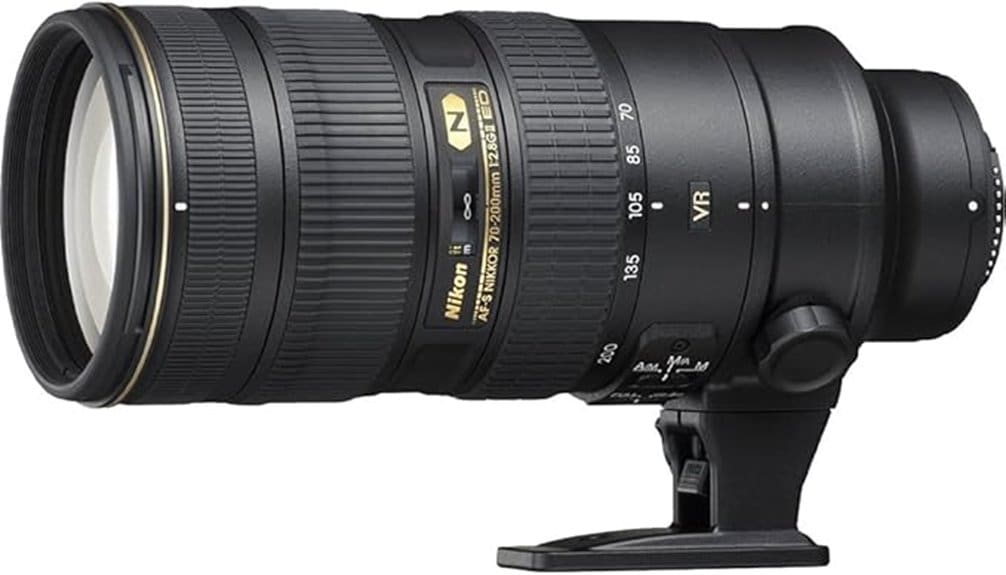

If you need a pro-grade 70–200mm f/2.8 for Nikon F, this VR II delivers constant f/2.8 depth control, seven ED elements, Nano/SIC coatings, and SWM autofocus for fast, quiet focus and roughly four stops of stabilization. You’ll get excellent center sharpness, mild corner falloff at 200mm wide open, well-controlled chromatic aberration, and rugged build for studio or field use. Keep going and you’ll find detailed notes on performance, genres, and buying tips.
Some Key Takeaways
- Pro-grade constant f/2.8 telephoto zoom delivering sharp center resolution and creamy subject separation for portraits and events.
- Seven ED elements plus Nano Crystal/SIC coatings minimize chromatic aberration, flare, and improve contrast in backlit scenes.
- SWM autofocus is fast, quiet, and repeatable, suitable for continuous tracking in sports and action shooting.
- VR II stabilization provides about four stops of handheld compensation, improving low-light and telephoto usability.
- Heavy, not weather-sealed; consider renewed units for value and compare to VR III, f/4, or third-party alternatives.
What the Nikon 70-200mm F/2.8G ED VR II Actually Is and Who It’s For
As a professional-grade telephoto zoom, the Nikon 70-200mm f/2.8G ED VR II is a constant-aperture, 2.9x zoom designed for Nikon F-mount DSLRs and photographers who need reliable reach, speed, and image quality in demanding situations. You’ll find a pro build that balances durability and serviceability, weighing and handling like studio and field workhorses. It’s aimed at pros and advanced enthusiasts shooting sports, events, portraiture, and documentary work where low-light performance and subject isolation matter. Prospective buyers should value consistent f/2.8 performance, robust autofocus, and VR stabilization when prioritizing image quality and operational reliability. It also pairs well with a range of essential mirrorless accessories for adapting and optimizing use on modern bodies, including adapters and support gear.
Key Specs and Optical Features That Affect Real-World Shooting
When you put the Nikon 70–200mm f/2.8G ED VR II on the camera, several measurable specs immediately shape how you’ll shoot: a constant f/2.8 aperture dictates exposure and depth-of-field control across the zoom range, the seven ED elements and Nano Crystal/SIC coatings determine how well the lens suppresses chromatic aberration and flare, and the VR II system plus a Silent Wave Motor affect usable shutter speeds and focus reliability in the field. You’ll rely on aperture performance for subject isolation and low-light speed, trust coating benefits to preserve contrast under backlight, and depend on VR II and SWM for stable, repeatable framing. This makes it a go-to choice for photographers focused on portrait optics and versatile telephoto performance.
Image Quality, AF, and VR Performance: Lab Notes and Sample Use Cases
Though lighting and subject distance vary, the 70–200mm f/2.8G ED VR II delivers consistently sharp center resolution and well-controlled longitudinal chromatic aberration across the zoom range, with only mild corner softening at 200mm stopped to f/2.8. Your lab charts confirm high MTF centrally and gradual peripheral falloff; ED elements and Nano Crystal Coat suppress color fringing and flare. AF is fast, repeatable, and quiet—Silent Wave Motor gives reliable tracking in continuous modes. VR II stabilizes effectively, enabling handheld scenarios up to four stops slower with minimal image shift. In practice you’ll get predictable sharpness and steady focus under varied shooting conditions. This makes it a versatile choice for wildlife and sports photography where reach and reliability are essential.
Strengths and Limitations by Genre: Portraits, Sports, Wildlife, and Travel
Because it pairs a fast constant f/2.8 aperture with robust VR and accurate AF, the 70–200mm f/2.8G ED VR II serves a wide range of genres with predictable results: you’ll get creamy subject separation and reliable low‑light performance for portraits, quick and steady tracking for many sports situations, and sufficient reach and sharpness for close-to-medium wildlife work, while its weight and non-weather‑sealed construction limit extended travel use and extreme-field reliability. You’ll exploit portrait compression and 9-blade bokeh for flattering headshots, enjoy Sports responsiveness with SWM and VR II, leverage Wildlife reach at 200mm, but accept reduced Travel versatility due to bulk. Many photographers pair this lens with sturdy tripods and monopods for improved stability during longer shoots, especially when using telephoto focal lengths.
Should You Buy It Now? Pricing, Alternatives, and Buying Tips
If you’re weighing this renewed Nikon 70–200mm f/2.8G ED VR II against current needs and budgets, consider value, condition, and alternatives together: the renewed unit offers the core pro-grade optics, VR II stabilization, and SWM AF at a substantially lower price with a 90‑day warranty, making it a strong buy if the body you pair it with justifies the weight and you don’t require weather sealing; however, compare final price to newer or used alternatives (including the newer VR III, third‑party 70–200mm f/2.8 options, and lighter f/4 versions) and confirm accessory completeness and AF/VR functionality before purchasing.
If you shoot professionally or demand f/2.8 speed, this renewed lens delivers resolution, contrast, and VR performance at a value most budget alternatives can’t match. Use timing strategies—watch seasonal sales, trade‑in windows, and refurb restocks—to snag the best price. Prioritize testing AF accuracy and VR operation on your camera, inspect the mount and glass for wear, and factor in extra weight and lack of weather sealing when comparing to f/4 and newer VR III offerings. The site also highlights essential l-bracket options for photographers seeking stability and quick tripod transitions.
Some Questions Answered
Does This Renewed Lens Include the Original Warranty Documentation?
Yes — the renewed lens includes the original warranty documentation and a 90-day warranty. You’ll want to check warranty transferability with the seller or Nikon, since renewed-item policies vary. Keep documentation copies safe to validate coverage and serial numbers. You’ll also verify whether the warranty covers mechanical faults versus cosmetic issues, and confirm how to initiate claims, expected repair turnaround, and any authorized service center requirements before relying on coverage.
Is the Tripod Collar Included With This Renewed Unit?
No, the renewed unit doesn’t include a tripod collar by default. You’ll need to verify tripod compatibility if you require one; the lens accepts standard 77 mm tripod collars designed for 70–200mm Nikon bodies. Avoid mount modifications unless necessary — modifying the lens or tripod mount can void warranty and impair balance. If you need the collar, request it from the seller or purchase a compatible third-party collar that matches Nikon F-mount dimensions and weight distribution.
Can I Use 77MM Screw-On Filters With the Hood Attached?
Yes — you can use 77mm screw-on filters with the hood attached in normal position; the lens accepts 77mm filters, giving full filter compatibility while using hood. If you reverse the hood for storage you’ll still be able to mount filters, but check clearance and avoid vignetting with wide-angle adapters. For storage tips, reverse the hood onto the lens, secure any caps, and keep filters in padded cases to prevent scratches and dust.
Are There Any Signs of Cosmetic Wear on Renewed Models?
Yes — renewed models can show minor cosmetic blemishes and finish inconsistencies, but they’re typically superficial. You’ll get a fully tested, functional lens with original accessories and a 90-day warranty; optical elements, AF, and VR are verified. Inspect photos and seller notes for scuffs, edge wear, or paint rub. If finish inconsistencies concern you, request close-up images or return options before buying to guarantee acceptable appearance.
Is the Lens Compatible With Full-Frame Nikon Z Mirrorless via Adapter?
Yes — you can use this Nikon F-mount lens on full-frame Z mirrorless bodies with a mount adapter. You’ll retain autofocus and the VR II image stabilization, though adapter firmware and camera body influence performance. Use Nikon’s FTZ adapter for best compatibility; third-party adapters may work but can limit functionality. You’ll still get optical characteristics and ED/Nano coatings, but check camera settings for stabilization docking and adapter firmware updates to guarantee peak operation.