
If you need pro-grade 45.7MP stills and robust hybrid video, the Nikon Z 7II delivers precise detail, strong midrange ISO performance, reliable hybrid AF and up to 10 fps bursts with good IBIS, but expect large 50–70MB RAW files and shorter RAW burst buffers. Dual processors, CFexpress + UHS-II slots, USB-C PD charging and solid build make it work-ready for demanding shoots, though high-speed sports or compact travel users might prefer alternatives—keep going to see the trade-offs.
Some Key Takeaways
- 45.7MP BSI full-frame sensor without an optical low-pass filter delivers exceptional resolution and fine-detail rendering for landscapes and studio work.
- Dual EXPEED processors and improved AF provide reliable eye/animal tracking and up to 10 fps continuous shooting for demanding workflows.
- 5-axis IBIS offers about five stops of stabilization, helping recover borderline handheld shots in low light.
- 4K up to 60p (with slight crop), 10-bit external output, and robust connectivity suit hybrid photo/video professionals.
- Dual card slots (CFexpress/XQD + UHS-II SD), USB-C PD charging, and weather-sealed build support pro-level reliability and workflow needs.
Is the Nikon Z 7II Worth Buying for Pros and Enthusiasts?
While it won’t be the right tool for everyone, the Z 7II is a compelling option for pros and serious enthusiasts who need high-resolution stills, reliable autofocus, and robust video features. You’ll weigh upfront cost against long term value: dual processors, improved AF, and IBIS suggest durability for demanding workflows. Considerations include the Nikon Z lens ecosystem maturity and adapter options for legacy glass, which affect flexibility and future investments. Ergonomics, dual card slots, and battery improvements support pro use, yet you should compare alternatives for specific needs like high-speed sports or compact travel before committing. For those building a kit, consider essential accessories tailored to mirrorless systems, including high-quality lenses and spare batteries.
Image Quality and Processing: 45.7MP Sensor, RAW Size, and ISO Performance
Having established where the Z 7II fits for pros and enthusiasts, let’s look at what really defines its output: a 45.7MP BSI full-frame sensor partnered with dual EXPEED 6 processors. You’ll get exceptional sensor detail thanks to the rear‑illuminated design and lack of an optical low‑pass filter, rendering fine textures and landscapes crisply. Expect 50–70MB 14‑bit RAW files that demand storage and a disciplined processing workflow to extract dynamic range. Native ISO handles clean midrange shots; usable expanded ISOs push versatility but introduce noise you’ll need to manage in post. Overall, image fidelity rewards careful capture and calibrated workflow. Many photographers pair these strengths with versatile photo reflectors to control light and maximize detail in-camera and during shoots.
Autofocus, Burst Shooting, and In‑Body Stabilization in Action
Push the Z 7II into action and its AF system, burst rates, and 5‑axis in‑body stabilization (IBIS) work together to keep subjects sharp and frames usable across fast-paced scenarios. You’ll find hybrid AF with dense phase detection points tracks eyes and animals reliably, shifting between contrast cues when needed. Continuous 10 fps feels responsive; increased buffer management reduces interruptions during extended bursts, though RAW file sizes still fill the buffer sooner than JPEGs. IBIS up to five stops complements faster shutter speeds, letting you recover borderline frames. Overall, the system balances accuracy, throughput, and stabilization without overstating capabilities. Learn more about light meters to better manage exposure when using the Z 7II.
Video, Media Options, and Power/Connectivity for Hybrid Shooters
Because the Z 7II blends high-resolution stills with robust video features, hybrid shooters get flexible media and power options that suit long days on location and multi-hour shoots. You can record 4K up to 60p (with a slight crop) and output 10-bit N-Log or HLG via HDMI to external recorders for richer grading. Dual card slots let you set overflow or backup across CFexpress/XQD and UHS-II SD, optimizing throughput and safety. USB-C Power Delivery charges the EN-EL15c in-camera from power banks, and wireless tethering plus HDMI/USB outputs support live monitoring and file transfer workflows. Consider pairing your setup with dual battery chargers to keep multiple EN-EL15c batteries ready during extended shoots.
Build, Handling, Battery Life, and Who Should Buy This Camera
The Z 7II’s robust weather-sealed magnesium-alloy chassis and comfortable grip feel like they were engineered for long days on location, and that physical design directly affects handling and battery expectations after long video or still shoots. You’ll notice ergonomic improvements over its predecessor: slightly reshaped grip, improved button placement, and a more stable tripod interface that reduce fatigue and speed operation. Battery longevity meets practical needs—EN-EL15c support, USB-C PD charging, and an extra battery in the kit keep you shooting, though heavy 4K60 or extended bursts will still demand spares. Buy this if you need high-resolution versatility and solid durability. This site also offers a range of essential gear for DSLR enthusiasts and photographers.
Some Questions Answered
Does It Include a Memory Card and Cleaning Kit in the Box?
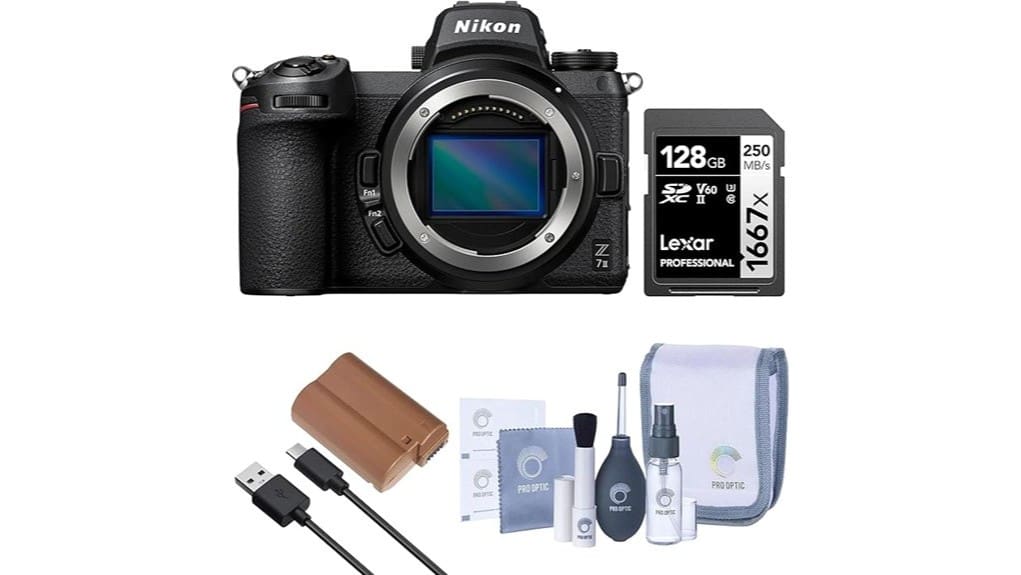
Yes — you get a 128GB SDXC memory card and a cleaning kit included. The Included accessories list specifies a 128 GB, 250 MB/s SDXC card plus an air blower, sensor-safe brush and microfiber cloths. You’ll find this convenient out of the box, though you might consider Aftermarket options for faster CFexpress media or specialized cleaning tools if you need higher write speeds, capacity, or professional-grade maintenance.
Can the Z 7II Charge via USB-C While Shooting?
Yes — you can charge the Z 7II via USB-C while shooting: the camera supports USB-C power delivery for live powering and battery passthrough when using the EN-EL15c. That lets you keep the camera powered from a power bank or adapter during extended shoots or video recording, reducing battery swaps. It’s practical for tethered shoots and long takes, though rely on quality PD sources and cables to guarantee stable voltage and uninterrupted operation.
What Battery Model Does the Camera Use and Is an Extra Included?
The camera uses the EN-EL15 battery family (specifically EN-EL15c included) and yes, a spare battery is provided. You’ll get an EN-EL15c primary cell plus an extra EN-EL15 spare battery in the box, so you can shoot longer without interruption. That spare supports in-camera USB-C charging via the EN-EL15c standard, and having a second cell increases workflow flexibility for extended shoots or when you rely on power banks.
Does the Camera Support 10-Bit HDMI Output for External Recorders?
Yes — you’ll get 10 bit HDMI output to External Recorders. You can send 10-bit N-Log or HDR (HLG) via HDMI to a compatible external recorder for higher dynamic range and grading flexibility. This requires an external device that accepts 10 bit HDMI input and records codecs that preserve that depth; otherwise you’ll be limited by the recorder’s capabilities. Use proper HDMI cables and recorder settings for full 10‑bit capture.
Are Both Cfexpress and UHS-II SD Card Slots Available?
Yes — you get dual slot compatibility: one CFexpress (Type B)/XQD slot plus one UHS-II SD slot. You can configure them for overflow, backup, or separate photo/video recording, which helps workflow. In analytical terms, CFexpress delivers much higher write speeds for heavy 4K/60p video and burst RAW, while the UHS-II SD slot offers solid Speed benchmarks for stills and secondary storage. You’ll balance performance and capacity accordingly.