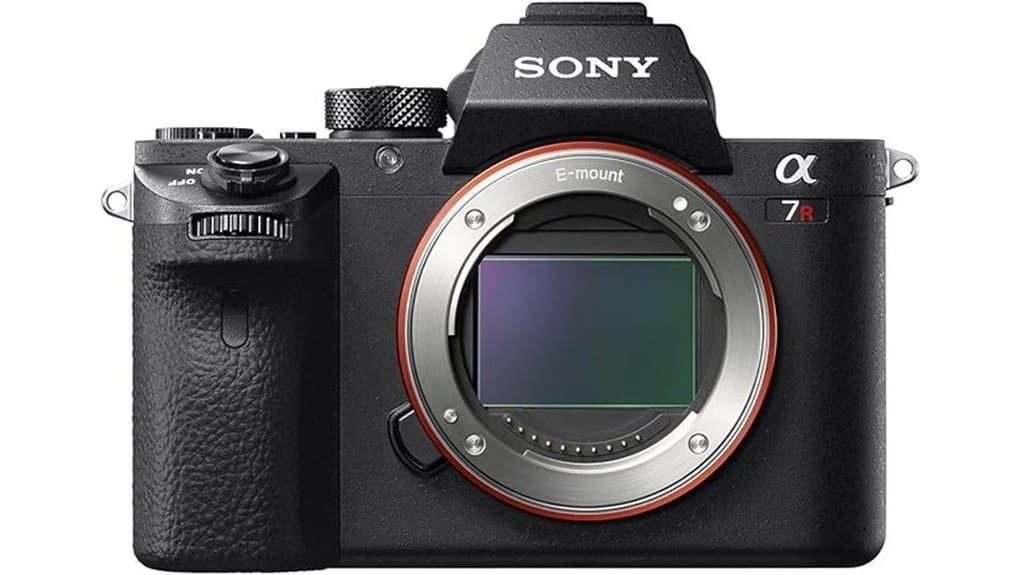
You get a 42.4MP back‑illuminated full‑frame sensor, 5‑axis IBIS, and 399 phase‑detect AF points in a compact 625 g body that’s built for high‑resolution stills and 4K full‑pixel video. ISO handling and 14‑bit RAW preserve tonal detail while IBIS gives several stops of handheld flexibility. Autofocus is fast and tunable with reliable Eye AF; burst rates and single SD slot are practical tradeoffs. Keep going and you’ll uncover detailed shooting, video, and workflow guidance.
Some Key Takeaways
- 42.4MP full-frame sensor delivers exceptional detail and 14-bit RAW tonal fidelity for studio and landscape work.
- 5-axis in-body stabilization enables handheld sharpness and several-stop slower shutter speeds.
- Fast Hybrid AF with 399 phase-detection points and Eye AF provides precise subject and portrait focusing.
- 4K UHD video uses full-pixel readout for high detail; external HDMI supports uncompressed recording.
- Trade-offs include modest 5 fps continuous shooting, single SD card slot, and NP-FW50 battery life considerations.
Sony a7R II at a Glance: Who It’s For and Key Specs
While aimed squarely at pro and enthusiast photographers who demand ultra-high resolution, the Sony a7R II pairs a 42.4MP full-frame back-illuminated Exmor R CMOS sensor with in-body 5-axis stabilization to deliver pixel-rich stills and stable handheld images. You’ll find a technically focused tool: 399 phase-detection AF points, 4K full-pixel readout, 14-bit RAW, and a robust shutter system in a 625 g body. Menu customization lets you tailor controls and streamline workflows; accessory compatibility covers E-mount lenses, adapters for A-mount, hotshoe flashes, and fast SDXC cards. Expect precise ergonomics, durable construction, and pro-grade connectivity. This site also offers essential accessories for mirrorless photographers, including E-mount lenses and other gear.
Image Quality and Low-Light Performance: 42.4MP Sensor, ISO Range, and Stabilization
Because Sony married a 42.4MP back-illuminated Exmor R CMOS sensor with 14-bit RAW and in-body 5-axis stabilization, you get exceptionally detailed stills and viable handheld low-light performance that many other high-megapixel bodies can’t match. You’ll resolve extraordinary high resolution detail across the frame, with tonal fidelity preserved by 14-bit raws and full-pixel readout for video. ISO ranges extend to native levels and expand to 102,400, delivering usable Low light sensitivity when combined with stabilization and careful exposure. Noise control is excellent at base ISO, and stabilization recovers multiple stops, enabling slower shutter speeds for sharper handheld imagery. Perfect Tripods offers a range of tripod solutions that complement this performance by helping maximize sharpness and stability with the a7R II’s in-body stabilization.
Autofocus, Speed, and Shooting Experience: AF System, Burst Rates, and Handling
If you need fast, reliable focusing for high-resolution stills and video, the a7R II delivers with its Fast Hybrid AF that combines 399 focal-plane phase-detection points and contrast detection to cover a large portion of the frame and lock quickly on subjects. You’ll appreciate Dual Stage AF responsiveness in single and continuous modes, with Eye AF improving portrait precision. Continuous shooting tops out at 5 fps, enabling effective Handheld Burst sequences when paired with 5-axis IBIS and shutter vibration suppression. Controls are rigid and logical, AF-C behavior is tunable, and buffer performance is solid with fast UHS-II/SDXC cards. The camera benefits from being paired with a properly calibrated monitor to evaluate images for true-to-life color and detail on post-processing screens, especially when assessing dynamic range and sharpness on high-resolution files, making accurate monitor calibration an important step in your workflow.
Video Capabilities and Recording Workflow: 4K Full‑Pixel Readout, Codecs, and Connectivity
How does the a7R II handle 4K capture in practice? You get full‑pixel readout from the full-frame sensor into UHD 2160p, eliminating pixel binning and maximizing detail for demanding 4K workflow needs. Internally it records XAVC S (Long GOP, 100 Mbps) and AVCHD/MP4 options; external HDMI output allows uncompressed feeds to recorders. Codec choices influence bitrate, color fidelity, and editing overhead—XAVC S is the practical pro choice, AVCHD suits delivery with lower storage. Dual stabilization, ISO ceiling for video, and USB/HDMI connectivity let you integrate the camera into multi‑camera rigs and external recorders. Consider pairing the camera with an external monitor for improved framing and focus external camera monitors.
Buying Verdict and Practical Recommendations: Strengths, Trade-Offs, and Who Should Buy
While the a7R II won’t be the best fit for every shooter, it delivers a compelling blend of ultra‑high resolution, advanced autofocus, and professional video features that make it a serious tool for demanding work. You’ll appreciate 42.4MP detail, 5‑axis IBIS, and 4K full‑pixel readout for studio, landscape, and hybrid video assignments. Trade‑offs include modest continuous frame rates and a single SD slot that influence workflow and redundancy. Plan for NP‑FW50 spares to address battery longevity; factor robust resale value into total cost of ownership. Buy it if you need top resolution with pro‑grade versatility. As a DSLR-focused retailer, we also recommend considering dedicated camera accessories to get the most from your a7R II.
Some Questions Answered
Does the Battery Life Support Full-Day Shooting Without Spares?
No — the battery endurance won’t reliably handle a full day of heavy shooting without spares. You’ll need runtime estimates: the NP-FW50 typically yields modest shot counts (roughly 300–400 shots per charge with moderate LCD/EVF use, less with extensive 4K recording or stabilization). For all-day events, continuous shooting, or lots of video, plan multiple batteries or an external power solution to maintain uninterrupted operation.
Can the Camera Use Third-Party Batteries Safely?
Yes—you can use third party batteries, but you should be cautious. Aftermarket cells often offer compatibility, yet compatibility risks exist: voltage, communication chips, and firmware mismatches can trigger errors or shutdowns. You’ll see performance variability in capacity, cycle life, and temperature tolerance compared with OEM NP-FW50 cells. Use reputable brands with protection circuits, test before critical shoots, and keep an OEM spare to avoid unexpected failures or warranty complications.
Is In-Body Stabilization Effective With Non-Sony Lenses?
Yes — in-body stabilization works with non-Sony lenses because the a7R II stabilizes the sensor, not the lens. You’ll get significant shake reduction across focal lengths, though performance varies by lens optical design and mount adapter quality. For reliable results, perform stabilization testing with representative lenses and apertures, track corner-to-corner steadiness, and compare handheld shutter speeds. Expect best results with well-balanced, rigid lens mounts and lenses without internal stabilization conflicts.
How Reliable Is Weather Sealing for Shooting in Light Rain?
You can rely on the sealing for light rain if you take precautions. The body uses rubber gaskets and tight port covers at joints and doors, providing effective splash resistance rather than full waterproofing. Don’t expose it to prolonged downpours or submersion; avoid changing lenses in wet conditions and keep ports closed. For extended exposure use a rain cover or shelter—these cameras tolerate moisture but aren’t fully weatherproof.
Are There Firmware Updates That Improve Autofocus Performance?
Yes — Sony released firmware tweaks that noticeably improved AF speed, tracking and compatibility. You’ll install updates that refine autofocus mapping, increase reliability with certain lenses and enhance phase-detect performance in continuous modes. Follow Sony’s release notes and use the official updater via USB; back up settings first. After updating, recalibrate custom AF microadjustments if needed, and test Eye AF, AF-C tracking and focus responsiveness across focal lengths.