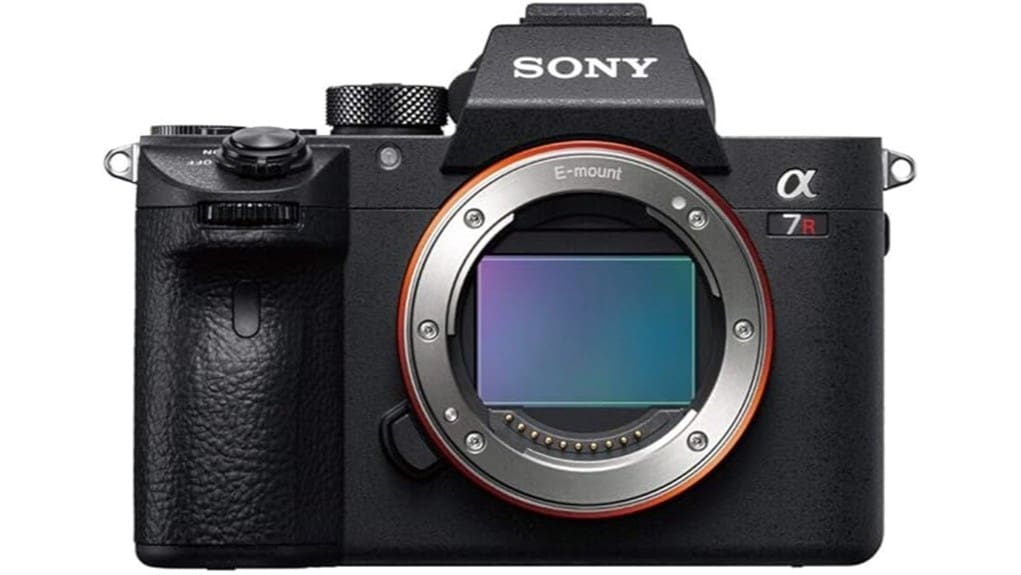
You’ll get a 42.4MP back‑illuminated Exmor R sensor that delivers razor detail, strong color fidelity, and expanded dynamic range, though high‑ISO shots show noticeable noise and large files demand storage and processing power. The 10 fps burst and upgraded AF (including eye detection) handle most action, but continuous tracking can wander in complex scenes. 4K HDR and log profiles suit serious workflows, and ergonomics plus battery life are improved—keep going to see how it compares and what to pair it with.
Some Key Takeaways
- 42.4MP back-illuminated Exmor R sensor delivers exceptional detail and expanded dynamic range for large prints and commercial work.
- Strong color fidelity and skin tones, though profiles may need tweaking across mixed lighting.
- 10 fps continuous shooting with upgraded AF and eye-detection, but tracking can wander in complex scenes.
- 4K HDR from full-frame readout and log recording enable grading, with noticeable rolling shutter and increased noise at high ISOs.
- Improved grip, customizable controls, bright EVF, and longer battery life suit studio, travel, and landscape shooters.
Image Quality and Sensor Performance: What the 42.4MP Exmor R Delivers
The 42.4MP back-illuminated Exmor R sensor gives you exceptionally detailed stills while improving low-light performance—its gapless on-chip lens design captures more light per pixel than a conventional layout, which translates to cleaner shadows and finer texture rendering at base ISO. You’ll appreciate expanded dynamic range that preserves highlight and midtone detail, though shadow recovery can introduce subtle grain. Color fidelity is strong, with nuanced skin tones and accurate primaries, but expect to tweak profiles for specific lighting. In practical low light you’ll see impressive detail retention; noise performance is commendable but not miraculous at higher ISOs. For stable composition and sharper results when using this high-resolution sensor, consider pairing the camera with a compatible tripod head.
Autofocus, Speed, and Real-World Shooting: 10 Fps, AF Tracking, and Handling
While you’ll appreciate the a7R III’s 10 fps burst and refined AF system for action work, getting consistently sharp results depends on lens choice, AF mode selection, and technique. You’ll rely on the upgraded AF algorithms and eye autofocus to lock faces quickly, but continuous tracking can wander with small-aperture lenses or complex backgrounds. Tailor menu customization to assign AF-ON and focus-area swaps for faster shifts. Practice grip handling to reduce shake during long bursts; the deeper grip helps, but good stance matters. In short, the camera’s speed and tracking are powerful—yet they demand appropriate glass, settings, and steady handling. For enthusiasts, investing in essential gear like quality lenses and accessories for mirrorless cameras will maximize the a7R III’s potential.
Video Features and Workflow: 4K HDR, FHD Capture, and Editing Compatibility
Because you’ll likely shoot both run-and-gun clips and carefully composed pieces, the a7R III’s video feature set balances high-resolution capture with practical workflow choices. You get 4K HDR from full-frame readout and FHD for slower-motion, with EOS-level detail but noticeable rolling shutter in some pans. If you use the camera’s log based recording (S-Log2/3 equivalents) you’ll preserve latitude for rigorous color grading, though expect noise at high ISOs without aggressive denoising. Files are compatible with Final Cut Pro X and iMovie, but heavy grading demands a capable workstation and color-managed pipeline to avoid artifacts. Boost your images further using Lightroom presets tailored for mirrorless camera workflows.
Ergonomics, Battery Life, and Usability: Controls, EVF/LCD, and Operating Temps
If you’ll be shooting all day, the a7R III’s ergonomics pay dividends: its deeper, reshaped grip and textured surface let you hold longer with less fatigue, and the placement of the front and rear dials plus an assignable C1–C3 cluster keeps key exposure controls under your right thumb and index finger. You’ll appreciate the logical button layout—Fn, AF-ON, and customizable buttons are reachable without shifting grip. The EVF is bright with minimal lag; the 3″ LCD tilts for low and high framing. Battery life is markedly improved over predecessors, and heat management is competent within the 0–40°C operating range. Perfect Tripods carries a range of compatible tripod heads and plates designed to work well with the a7R III’s balance and ergonomics, including models optimized for tripod compatibility.
Who Should Buy the a7R III and How It Compares for the Money
Having covered ergonomics, controls, and battery performance, let’s look at who actually benefits from the a7R III and whether it represents good value. You’ll appreciate its 42.4MP sensor and reliable AF if you serve portrait clients who need resolution and skin-tone fidelity for large prints. Travel photographers will like the compact body, robust battery, and versatile lens ecosystem, though high-res files demand storage and processing power. For landscape, studio, and commercial work its detail and dynamic range justify the cost. If you prioritize speed, budget, or lighter workflows, consider alternatives with lower resolution and cheaper lenses. Consider pairing the camera with a heavy-duty tripod when shooting landscapes or studio work to fully utilize its high resolution.
Some Questions Answered
Does It Have In-Body Image Stabilization (IBIS)?
Yes — you get in body stabilization: the a7R III uses sensor shift mechanics to stabilize the 42.4MP sensor. You’ll notice steadier handheld shots and improved low-light performance, though stabilization can’t fully replace fast lenses or tripods for extreme long exposures. It’s effective for stills and video, but expect some limitations with heavy telephoto lenses and fine-pixel demands; critical shooters should test specific lens pairings for microdetail preservation.
What Weather Sealing Level Does the Body Provide?
The body provides robust weather sealing but not a formal dustproof rating like IP codes. You’ll get a magnesium alloy chassis with gasket sealing around doors and buttons, making it weather resistant for light rain and dusty conditions, though Sony avoids promising full submersion or extreme environments. Be critical: it’s durable for pro use, but you shouldn’t treat it as fully waterproof—use extra protection in severe weather.
Which Batteries and Chargers Are Compatible Internationally?
You’ll use NP-FZ100 batteries; Battery compatibility includes Sony’s NP-FZ100 and compatible third-party cells rated to match voltage/capacity. For Charger options, you can use the supplied BC-QZ1 USB charger or in-camera USB-C charging with a PD-compliant power bank/adapter for international use. Be critical: avoid cheap knockoffs lacking proper protection, check regional plug types and PD output (9–12V preferred), and always verify firmware/device compatibility before travel.
Can It Use Legacy Manual Lenses With Adapters?
Yes — you can use legacy manual lenses with adapters, and you’ll get manual focus and aperture control, though with limitations. You’ll need a compatible adapter for the lens mount, and focusing is done by hand with focus peaking and magnification helping. Aperture control depends on the adapter: some transmit electronic aperture data, many require manual stop-down. Expect no AF and slower workflow, but excellent image quality if you stop down carefully.
What Are Common Third-Party Accessories Recommended?
You’ll want third party grips and external microphones first — grips improve handling and battery life, microphones boost audio for video. Also consider reliable batteries/chargers, dual SD card readers, weatherproof camera bags, and lens adapters for legacy glass. Don’t forget quality tripods/ball heads, UV/ND/PL filters, and a dedicated cleaning kit. Choose brands with solid reviews and warranties, since build quality and electrical compatibility vary widely.