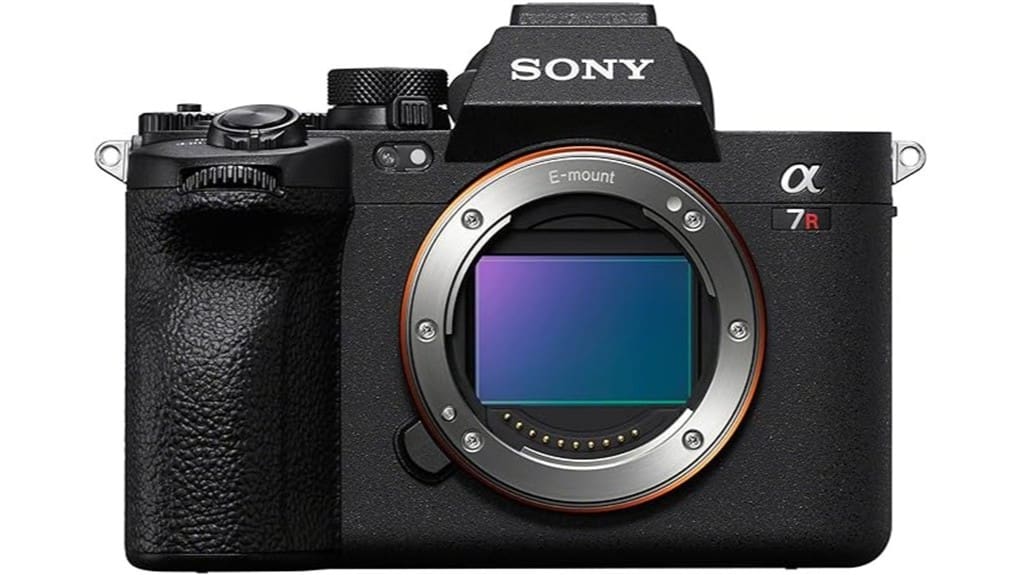
You’ll get a studio-grade 61MP full-frame sensor, 8K video, and advanced Real-time Recognition AI that locks and tracks subjects reliably, so you can crop heavily, print large, and salvage tricky exposures more often. Expect massive files, CFexpress cards, and a powerful edit rig to handle 14-bit RAW and 8K workflows. Autofocus and color fidelity are top-tier for portraits, landscapes, and wildlife. Keep going to see how it compares, handles workflow, and where it shines.
Some Key Takeaways
- 61MP back-illuminated sensor delivers studio-grade resolution for large prints, heavy cropping, and fine-detail commercial work.
- Advanced Real-time Recognition AI and denser phase-detect AF provide fast, reliable eye and animal tracking with fewer missed frames.
- 8K video and 14-bit RAW enable archival-quality footage and stills but demand CFexpress cards, huge storage, and powerful editing rigs.
- BIONZ XR processor improves noise handling, dynamic range, and responsiveness for high-ISO performance and real-time tasks.
- Robust build, in-body stabilization, dual card slots, and customizable controls suit professional workflows and demanding shoots.
Who Should Buy the Sony Alpha 7R V and What Problems Does It Solve?
If you shoot professionally or demand studio-grade files for large prints, the Sony Alpha 7R V is for you: its 61 MP back-illuminated sensor and BIONZ XR processor deliver exceptional resolution and detail. You’ll benefit when you need pristine files for portrait retouching, commercial stills, or large-format landscapes. It solves limitations in cropping and tonal latitude that lower-resolution bodies impose, and its AI AF and high dynamic range reduce failed frames under challenging lighting. Compared to rivals, it speeds selective edits and pairs neatly with workflow automation tools, letting you focus on creativity instead of repetitive tasks. Our store carries a curated selection of essential mirrorless accessories and gear to help you get the most from cameras like the Alpha 7R V.
Key Specs at a Glance : What 61MP, 8K, and BIONZ XR Actually Mean
You’ve just seen why pros pick the 7R V; now let’s look at what its headline specs actually deliver in practice. The 61MP sensor implications are clear: huge resolution for large prints or heavy crops, but larger files, slower buffer, and stricter lens demands. 8K video gives unmatched detail and reframing flexibility versus 4K, yet demands massive storage, heat management, and powerful editing rigs. BIONZ XR accelerates processing—faster write, better noise handling, and real-time tasks—yet you’ll still plan workflow considerations: dual high-speed cards, calibrated monitors, and a robust backup/edit system to handle 14-bit RAW and 8K footage. For serious photographers investing in this camera, choosing reliable CFexpress cards is essential to unlock its full potential.
Autofocus and AI Tracking Performance in Real-World Shooting
Often the autofocus is the make-or-break feature in real shoots, and the 7R V’s next-generation Real-time Recognition AI delivers measurable gains: it locks quickly on subjects, maintains tracking through erratic motion, and outperforms previous Sony bodies in both accuracy and persistence. You’ll notice improved eye detection accuracy for humans and birds, reducing missed frames in portraits and action. Animal tracking reliability climbs thanks to denser phase-detect coverage and smarter predictive algorithms, so you can shoot running dogs or prowling wildlife with confidence. Compared to earlier models, the 7R V offers faster reacquisition and steadier continuous-Servo AF performance. This level of performance makes the 7R V particularly well-suited for telephoto lens work in wildlife and sports photography.
Image Quality and Dynamic Range: Stills, Low Light, and High-Contrast Scenes
When you push the Alpha 7R V to its limits, its 61 MP back-illuminated sensor and BIONZ XR processor deliver exceptional tonal fidelity and noise control across stills, low-light, and high-contrast scenes. You’ll resolve fine detail with minimal chroma noise up to high ISOs, retaining highlight nuance in challenging exposures. Dynamic range handling surpasses many rivals, letting you recover shadows without ugly artifacts. In landscape stitching workflow the high resolution and consistent color depth improve mosaic seams and allow tighter crops. Color fidelity stays accurate across profiles, so skin tones and foliage render naturally while you prioritize exposure latitude. For photographers seeking accurate on-screen preview and editing, calibrating your monitor with a dedicated tool ensures the camera’s tonal and color performance is represented correctly and consistently, improving final prints and web presentation with monitor calibration.
Video Workflow: 8K/4K Capture, Stabilization, Ports, and File Handling
Because the Alpha 7R V pairs its 61 MP sensor with 8K/4K capture and robust I/O, you’ll plan shoots and post more deliberately to maximize quality and manage file sizes. Record 8K for archival masters or 4K 60p for deliverables; choose codecs and bitrates that suit your storage and timeline. Use a disciplined RAW workflow for still-extracted frames, and generate proxies for editing to keep timelines responsive. Rely on in-camera stabilization plus lens OSS, then stabilize further in post. Implement strict color management and consistent LUT application across proxies and masters to preserve grading fidelity. For controlled lighting on video shoots, consider dedicated video light panels to maintain consistent illumination and color across takes.
Usability, Ergonomics, Battery, and Connectivity for Professional Shoots
While the Alpha 7R V packs professional-grade features into a compact body, you’ll immediately notice Sony prioritized usable controls and thoughtful placement for long shoots. You get a logical button layout and customizable dials that cut menu dives, and the deep, textured grip comfort reduces fatigue with heavy lenses. Battery life is competitive for mirrorless, and dual card slots plus USB 3.0 and HDMI keep capture reliable. Wi‑Fi and Bluetooth speed tethering, while physical ports support fast offloads. Overall, the camera blends ergonomic refinements and workflow integration to keep you shooting efficiently on professional jobs. Perfect Tripods offers a range of compatible tripod accessories designed to complement these ergonomic refinements.
Who It Competes With and When to Choose the 7R V vs Alternatives
Although the 7R V targets professionals who demand extreme resolution and advanced AF, you should weigh it against peers that excel in speed, video, or value; its 61 MP sensor and AI-driven tracking make it ideal for landscape, studio, and commercial stills, but rivals like the Sony A1, Canon R5/R5 C, and Nikon Z7 IV compete on different strengths—higher burst rates, superior video codecs, or better price-to-performance—so choose the 7R V when you prioritize ultimate image detail, high-resolution workflows, and sophisticated stills autofocus over raw frame rates or cinema-oriented features.
In competitor comparison, consider lens ecosystem depth, accessory compatibility, and resale value; pick the A1 for hybrid speed, Canon R5/R5 C for video pipelines, Z7 IV for balanced cost, and 7R V when resolution and AI AF drive your workflow.
The site also sells a range of lenses and accessories ideal for pairing with full-frame mirrorless bodies, helping photographers build a complete kit around their camera of choice with focus on digital cameras.
Some Questions Answered
Does the Camera Include Batteries and a Memory Card in the Box?
No — it doesn’t include batteries? or a memory card?. You’ll need to buy batteries separately and provide your own memory card. Compared to many kits, this body-only package omits power and storage essentials, so plan for compatible NP-FZ100-type batteries and high-speed CFexpress/SD cards for 61MP and 8K workflows. That gives you flexibility to choose capacity and speed suited to professional stills or video rather than being stuck with bundled, lower-performance accessories.
What Weather-Sealing Level Does the 7R V Offer for Harsh Conditions?
It offers robust weather sealing but Sony doesn’t publish formal environmental ratings, so you shouldn’t expect IP-class certification. You’ll get thorough dust and moisture resistance with sealed body joints and ports, making it comparable to pro-grade mirrorless models for field use. That said, don’t assume submersion protection; you’ll need caution in heavy storms, salt spray, or prolonged exposure, and you should dry and service the camera after extreme conditions.
Can the Camera Sync With External Flashes or Studio Lighting Setups?
Yes — you can sync external flashes and studio lighting; the camera supports Flash sync up to 1/250 sec and handles Wireless high speed for compatible transmitters. You’ll get reliable TTL and manual flash control, plus PC sync and multi-flash setups via hot shoe or triggers. Compared to pro studio DSLRs, it matches connectivity and timing, so you’ll confidently integrate strobes, off-camera speedlights, or radio systems into demanding shoots.
Are Lens Stabilization and In-Body IS Compatible Simultaneously?
Yes — you can use lens stabilization and in-body IS together. You’ll get improved shake reduction when you enable both, but lens compatibility matters: some lenses communicate fully with the camera’s stabilization controller for optimized stabilization workflow, while others may only offer basic correction. Compare results per lens; the camera typically coordinates lens and IBIS for best performance, yet you should test each lens for micro‑adjustments and potential mode conflicts.
What Are the Exact Dimensions and Weight With Battery and Card Inserted?
The exact dimensions are 146 x 104 x 77 mm, and the weight with battery and card inserted is 723 g (body only). You’ll notice that at 146 x 104 x 77 mm it’s compact for a 61 MP full‑frame, and 723 g body onlybody onlyplaces it heavier than many mirrorless rivals but lighter than some pro DSLRs. You’ll appreciate the balance between size, build, and stabilization performance.