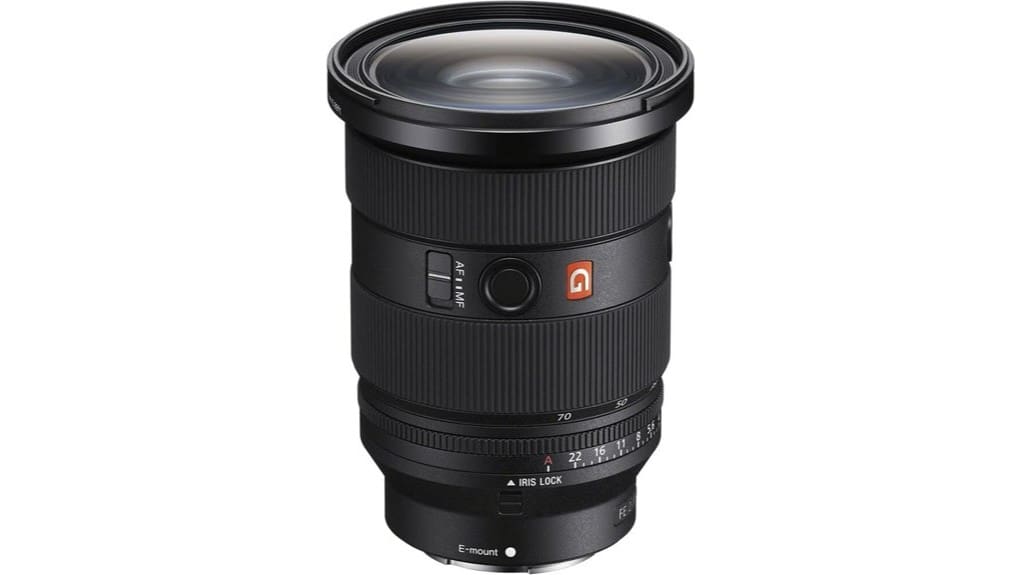

You’ll find the Sony FE 24–70mm f/2.8 GM II is a class-leading pro zoom that gives you remarkable center and mid-frame sharpness, creamy bokeh and strong micro-contrast while trimming size and weight versus the original. AF is near-instant and quiet, stabilization works for handheld work, and video benefits from low breathing and reliable tracking with compatible α bodies. It’s costly but justified for pros; keep going and you’ll get detailed performance, handling and buying guidance.
Some Key Takeaways
- Premium pro-grade 24–70mm f/2.8 zoom with constant aperture, compact GM II design, and improved ergonomics over previous model.
- Outstanding center and mid-frame sharpness at f/2.8, strong contrast, with modest corner falloff only at the widest angle.
- Two XA and multiple ED elements deliver excellent micro-contrast and creamy bokeh, with occasional onion-ring highlights.
- Fast, quiet AF with four XD linear motors, reliable tracking, low latency on compatible α bodies, and useful breathing compensation for video.
- Lighter, shorter build with retained OSS, improved weather sealing, and premium price justified for pros and serious enthusiasts.
Sony SEL2470GM2 at a Glance: Who This Lens Is For and Core Specs
Think of the SEL2470GM2 as Sony’s compact, high-performance workhorse for professionals and serious enthusiasts who need a versatile 24–70mm f/2.8 zoom without sacrificing image quality or speed. You get a reduced-size, lighter G Master with constant f/2.8, 11-blade diaphragm, two XA and multiple ED elements, four XD linear motors, OSS, and breathing compensation on compatible α bodies. It’s aimed at portrait enthusiasts and travel photographers who demand fast AF, quiet operation, and broad focal flexibility. Expect robust build, improved ergonomics, and minimized focus/angle shifts; note the premium price and real-world gains versus prior gen are measured, not miraculous. This lens is ideal for photographers who prioritize prime lens discipline and optical excellence in varied shooting situations.
Real-World Image Quality: Sharpness, Bokeh, Contrast, and Aberration Control
Although the SEL2470GM2 won’t magically erase every shortcoming of a zoom, you’ll immediately notice how its optical design delivers consistently high sharpness across the frame even at f/2.8—center resolution is superb and mid-frame detail remains excellent through the zoom range, with only modest corner falloff at the widest focal lengths; contrast is strong, rendering punchy, high-frequency detail that stands up in both JPEGs and raw conversions. You’ll appreciate fine micro contrast that separates textures without harshness. Creamy bokeh is achievable at longer focal lengths and close distances, though highlights can show mild onion-ring rendering and occasional edge coronas. For photographers tracking distant subjects, the lens’ telephoto performance and handling make it a strong choice for wildlife and sports applications.
Autofocus, Video Performance, and Shooting Speed With Sony Bodies
Put the SEL2470GM2 to work and its autofocus proves both fast and dependable—four XD linear motors deliver near-instantaneous subject acquisition, quiet operation, and excellent tracking even during rapid focal changes. You’ll notice low autofocus latency on compatible α bodies; subject locks feel immediate and continuous tracking holds subjects through erratic motion. Video use is strong—4K120p looks clean, though rolling shutter appears under extreme pans and high-speed strobes can confuse AF. Menu integration with Sony bodies is seamless, but some settings require deep menus to optimize continuous tracking or breathing compensation. Overall performance is excellent, with minor video caveats. Consider pairing the lens with an external monitor for improved framing and focus accuracy during video shoots, especially when using external camera monitors.
Handling, Size, Stabilization, and Durability Compared to the Previous Model
After seeing how reliably the AF and video systems perform, you’ll notice the SEL2470GM2 keeps that same emphasis on practical handling and portability. You get noticeably lighter handling versus the previous model — about 16 mm shorter and roughly 18% less volume — which reduces fatigue on long shoots. Optical stabilization (OSS) is retained and feels as effective; quieter operation from the redesigned aperture and XD motors complements steady handheld work. Build quality is refined with improved weather sealing, so durability in adverse conditions is better. Overall ergonomics are tuned for pros who demand compact, robust day-to-day use. The site also offers guidance on choosing the right tripod head for maximizing stability and usability with lenses like this one, especially when prioritizing tripod head compatibility.
Value Verdict and Buying Guidance: Who Should Buy, Alternatives, and Final Recommendation
When you weigh performance against cost, the SEL2470GM2 delivers class-leading optics, fast AF, and compact handling that justify its premium for professionals and serious enthusiasts who shoot events, commercial work, or high-frame-rate video. You’ll pay top dollar, but recent price trends suggest modest decreases as supply stabilizes; factor strong resale value if you upgrade later. Buy if you need ultimate edge in sharpness, tracking, and reduced breathing. Consider alternatives—older GM, Zeiss, or third-party zooms—if budget limits you; remember third party filters and lens caps may vary. Check compatibility notes for breathing compensation and OSS with your body. This shop focuses on essential gear for mirrorless camera enthusiasts, making it easy to find accessories and lenses that match your system.
Some Questions Answered
Is This Lens Weather-Sealed for Professional Outdoor Use?
Yes — you’ll get robust weather sealing and professional durability suitable for demanding outdoor work. The lens features extensive sealing at mounts and controls, plus fluorine-coated front element to repel moisture and dust. That said, it’s not fully submersible; you shouldn’t expose it to heavy saltwater or prolonged immersion. You should still exercise sensible care and use camera housing for extreme conditions to maintain long-term reliability and warranty coverage.
Does It Accept 82MM Filters or Require Step-Up Rings?
Yes — it accepts 82mm filters directly via its filter thread. You’ll mount filters on the front element without needing step-up rings, preserving accessory compatibility and avoiding vignetting at 24mm. Be aware the lens hood can block tall filters, so you’ll fit low-profile or slim filters for wide-angle work. Critically, always confirm filter thickness and hood fit to maintain full-angle coverage and avoid mechanical interference.
How Compatible Is It With Third-Party Teleconverters?
You can use third-party teleconverters, but expect degraded teleconverter performance and notable optical compromises. You’ll retain autofocus on many bodies, yet contrast, resolution and AF speed will drop—especially at longer focal lengths and wide apertures. Chromatic aberration and vignetting increase; corner sharpness suffers. If you need extra reach occasionally, it’s acceptable, but don’t expect native sharpness or full-speed AF for demanding stills or high-frame-rate video.
Can It Be Used on APS-C Sony Bodies Without Crop Issues?
Yes — you can use it on APS C bodies, but be mindful of APS C compatibility and focal equivalence crop. You’ll get a narrower field of view equivalent to roughly 36–105mm on full frame, so composition and reach change. Autofocus, OSS and breathing compensation still work; handling improves due to smaller coverage. Critically, you’ll sacrifice the wide 24mm perspective and should evaluate whether the effective focal range suits your needs.
What Battery Level AFfects Stabilization or AF Performance?
You won’t see a manufacturer‑stated battery threshold for stabilization or AF; performance drop usually appears when the camera battery is low (often below ~20–10%). You should monitor your body’s battery indicator because lens OSS and XD motor drive rely on camera power. If you hit that low range, expect slower AF acquisition, reduced tracking reliability and possible OSS instability. Replace or recharge to avoid a performance drop and inconsistent results.