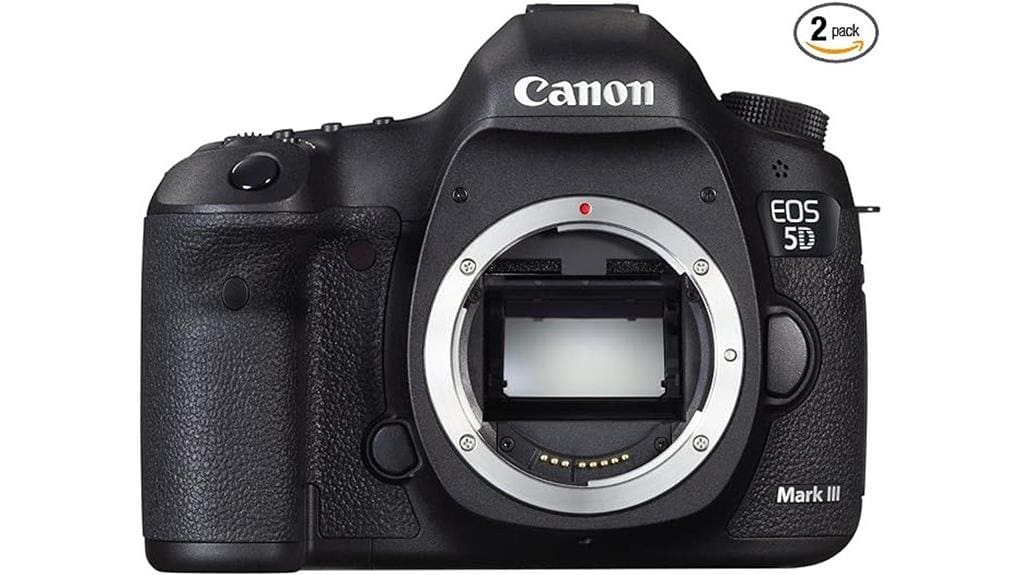

You get a 21.1MP full‑frame DSLR that favors rich tonality and practical image quality over speed. Its 14‑bit A/D and DIGIC 4 deliver smooth gradations and usable ISO up to 6400, while 1080p video with clean HDMI suits pro workflows. Autofocus and 3.9 fps burst are steady but not sports‑ready, and RAW files demand storage and processing. Ergonomics and heritage‑glass pairing shine for controlled shoots—keep going to see detailed tradeoffs and alternatives.
Some Key Takeaways
- 21.1MP full‑frame sensor with 14‑bit A/D delivers excellent tonal gradation, detail, and cropping latitude for prints.
- DIGIC 4 processing yields usable high‑ISO performance up to ISO 6400 with controlled noise at moderate settings.
- 3.9 fps continuous shooting and a 9‑point AF system favor accuracy over high‑speed action or complex tracking.
- Full HD 1080p video with clean HDMI output, but clips split at 4GB and audio/recording need external solutions.
- Strong ergonomics, straightforward menus, and robust build suit budget-minded photographers and heritage‑glass users.
Core Specs and What Matters: Sensor, ISO, Processor, and Video Capabilities
How much of a difference do the 5D Mark II’s core specs make in real use? You’ll find the 21.1MP full-frame sensor, DIGIC 4 processor, and 14-bit A/D conversion give predictable tonal gradation and usable high ISO up to 6400, while Full HD video adds versatility. You’ll judge performance against battery life and ergonomics design tradeoffs: extended shooting favors conservative settings, but larger body helps weight balance and handling. The menu system stays straightforward, so you’ll adapt quickly. Overall, these specs deliver professional capabilities without surprises, provided you manage power and accept the camera’s physical compromises. The camera is especially well suited for photographers who prioritize full-frame photography and a robust handling experience.
Image Quality in Real Use: Resolution, Dynamic Range, Noise, and File Handling
Although resolution numbers only tell part of the story, the 21.1MP full‑frame sensor combined with 14‑bit A/D conversion and DIGIC 4 processing delivers images with fine detail, smooth tonal gradations, and strong editing latitude. You’ll appreciate resolution that holds up for prints and cropping, and tonal shifts that stay clean through recovery. Dynamic range gives you headroom in highlights and shadow detail, especially at base ISOs, while noise remains controlled up to moderate ISOs with usable grain above. RAW file handling preserves color rendering and latitude; expect larger files but far greater post‑processing flexibility than JPEGs provide. The site also offers a wide selection of camera accessories and lenses to help you get the most from your gear, including options for digital cameras.
Autofocus, Speed, and Shooting Performance: Continuous Shooting, Live View, and AF Reliability
Expect the 5D Mark II to feel deliberate rather than frantic: its 3.9 fps continuous rate and responsive AF system are geared toward measured shooting where accuracy matters more than sheer burst speed. You’ll find autofocus consistency strong for stills, with the 9-point AF array delivering reliable hits in good light; low light slows acquisition and you must nudge ISO or aperture. Continuous tracking works adequately on predictable subjects but won’t match modern multisensor systems. Buffer management limits long bursts—RAW fills quickly—so plan sequences and use shorter JPEG runs. Live view responsiveness is serviceable for composition, though AF in Live View is slower. External camera monitors can improve composition and focus accuracy with larger, brighter displays and focus-assist tools external camera monitors.
Video Performance and Workflow: Full HD Capture, Clip Limits, HDMI Output, and Editing Tips
When you switch the 5D Mark II into Movie mode, you get true full‑frame 1920×1080 capture with a clean HDMI feed. You’ll appreciate cinematic depth and low‑light latitude, but plan around audio limitations: onboard mic is basic, so use external recorders or adaptors. Clips are limited by FAT32 4GB segments, so manage your storage workflow and batch offload frequently. Expect notable battery drain during extended takes; bring spares or external power. For post, prioritize careful color grading to tame highlight rolloff and native color; transcode to an edit‑friendly codec, sync audio, and apply subtle noise reduction for best results. For mirrorless camera enthusiasts, consider complementary accessories like lens adapters and compact gimbals to expand creative possibilities and portability with essential gear.
Who Should Buy the 5D Mark II Today and Alternatives to Consider
After you’ve weighed the 5D Mark II’s movie strengths and workflow limits, decide whether its core strengths match what you shoot today. If you’re a budget shooters photographer who values full-frame tonality, classic ergonomics and robust build, the 5D Mark II still delivers rich files and reliable autofocus for controlled shoots. Choose it if you own heritage glass and want optical character over cutting-edge speed. If you need high ISO performance, fast burst rates, modern video codecs, or active mirrorless features, consider newer full-frame bodies from Canon, Sony, or Nikon with current firmware and clearer legacy support. Many photographers also prefer pairing the 5D Mark II with prime lenses to maximize image quality and the camera’s tonal strengths.
Some Questions Answered
Does the 5D Mark II Have Built-In Wi‑Fi or GPS?
No — the 5D Mark II doesn’t include built‑in Wi‑Fi or GPS. You’ll rely on optional wireless adapters for remote control or image transfer, and external GPS units or compatible cameras/phones for location tagging. If you need on-camera wireless connectivity or integrated geotagging, you’ll have to add accessories or choose a later model that offers those features natively. This approach keeps the body simpler but needs extra gear for those functions.
What Type of Battery Does the Camera Use and How Long Does It Last?
The camera uses a LP‑E6 battery pack (Battery type) and you’ll get about 850 shots per CIPA rating (Battery life) with viewfinder shooting; Live View and video reduce that markedly. Expect roughly 2–3 hours of moderate stills use, or around 1.5–2 hours of intermittent Full HD recording before you’ll need a spare. Carrying an extra LP‑E6 is recommended for longer shoots or continuous video work.
Is the Body Weather-Sealed for Shooting in Rain or Harsh Conditions?
No, it isn’t fully weather-sealed; you shouldn’t rely on the body for heavy rain or harsh conditions. You’ll find some basic sealing at seams, but Canon didn’t rate the camera for extensive weather sealing or rain testing. If you need reliable protection, you should use a weather-sealed lens plus protective covers or a rain sleeve, and perform your own rain testing before trusting the setup in prolonged adverse environments.
Which Memory Card Types and Capacities Are Supported?
The camera accepts CompactFlash (CF) cards and Secure Digital cards, including SDHC compatibility and UHS I support for improved transfer speeds. You’ll use CF Type I/II or Microdrive for primary storage and SD/SDHC (UHS I) via the dedicated slot, but it won’t handle SDXC. Max practical capacities depend on card firmware and OS, so use reputable high-speed CF or SDHC (UHS I) cards to guarantee reliable full‑frame photo and Full HD video capture.
Can the Camera Record External Audio via a Microphone Input?
Yes — you can record external audio via a microphone input. You’ll plug a shotgun mic directly into the camera’s 3.5mm mic jack for on-camera capture, but you’ll risk lower-quality preamps and limited control. For better sound, use an external recorder and sync audio in post; that gives superior levels, formats, and redundancy. Balance convenience against audio quality and workflow when choosing between direct mic input and an external recorder.