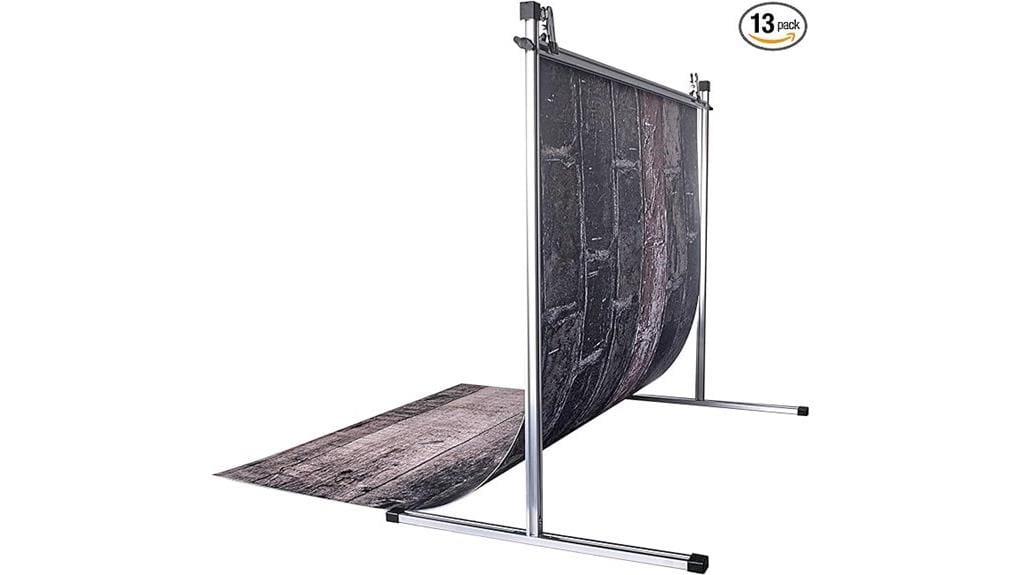

You’ll get 13 double-sided 27×39” low-gloss panels (26 textured patterns), an aluminum T-stand and clamps, weighing 5.9 lb total with 0.66 lb panels, optimized for tabletop product work like jewelry and cosmetics. The coated paper feels sturdy, reproduces color accurately with minimal hotspots, and 3D-printed textures add micro-detail; edges can crease and panels aren’t waterproof. Setup is fast and predictable under controlled light, and if you want deeper performance notes and comparisons, keep going.
Some Key Takeaways
- Compact kit includes 13 double-sided 27×39-inch coated paper backdrops with 26 textured patterns ideal for tabletop product shots.
- Sturdy coated paper and aluminum T-stand provide flat, low-gloss surfaces that minimize hotspots and reproduce colors accurately.
- 3D-printed textures (wood, marble, cement) add micro-detail useful for jewelry, cosmetics, and small food without distracting from subjects.
- Setup is fast and portable: clamp top edge, place 1–2 ft behind table, use softbox at 45° plus reflector for clean results.
- Limitations: paper edges can crease, not waterproof, and size restricts larger layouts; 12-month warranty and 30-day return included.
What the 39x27in Backdrop Kit Includes and Who It’s Best For
Although it’s compact, the 39 x 27-inch backdrop kit gives you a complete tabletop setup: 13 double-sided, 0.66-lb coated photographic paper backdrops (26 textured patterns) sized 27 x 39 inches, a T-shaped aluminum alloy stand, and two clamps. You get precise color options—wood, marble, cement, red, yellow—printed with consistent, low-gloss finish for accurate renditions. The unit folds for compact storage and the lightweight 5.9-lb kit supports a travel friendly setup. It’s optimized for beginner photographers shooting micro product subjects—jewelry, cosmetics, small food—delivering repeatable framing and quick swaps between textures without complex rigging. This kit is ideal for photographers seeking a portable tabletop system for consistent product shots and collapsible backdrops that are easy to store.
How the Materials, Textures, and Build Hold Up in Real Shoots
When you put the kit into a real shoot, the 0.66-lb coated photographic paper feels sturdy under handling and the double-sided, low-gloss surfaces reproduce color with minimal hot spots; the 3D-printed textures (wood grain, marble veining, cement pores) hold enough micro-detail to give depth without distracting from small subjects like jewelry or cosmetics. You’ll notice consistent color fidelity across panels and reliable paper durability after gentle cleaning. The aluminum T-stand resists flexing and keeps backdrops flat; clamps prevent curling. Textures photograph predictably under controlled light, rendering accurate saturation and subtle shadowing for product-focused images. Perfect Backdrops offers a range of backdrop options with accessories to elevate your photography and streamline studio setups.
Setup, Lighting Tips, and Quick Styling Ideas for Small Products
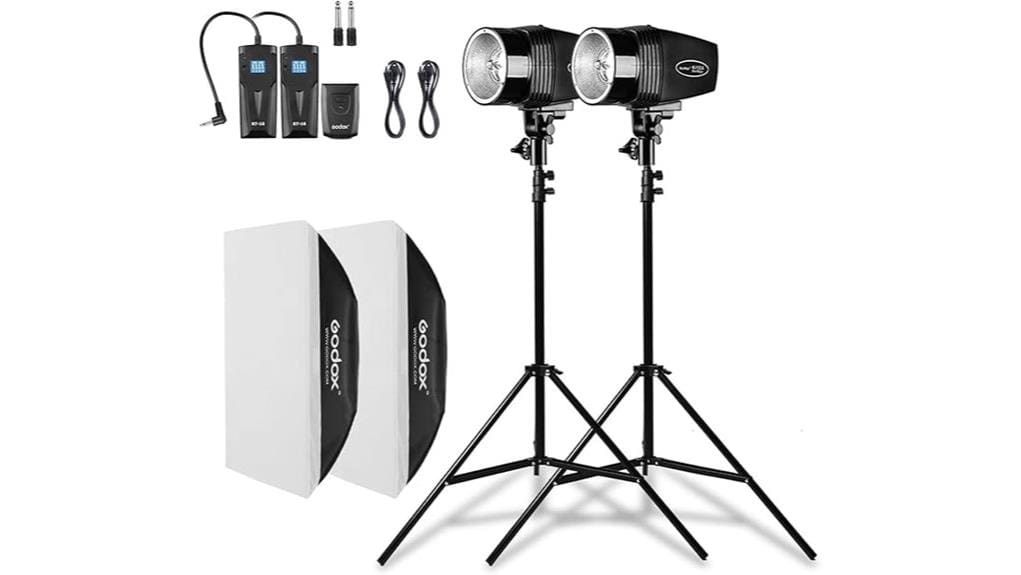
Set up the 39 x 27-inch backdrop on the T-shaped aluminum stand so the textured side faces the camera, clamp the paper at the top edge to eliminate curl, and position the kit about 1–2 feet behind the table surface to create a shallow depth cue without visible seams. Use a single softbox at 45° for key light and a reflector or fill LED opposite to tame highlights; adjust power for precise shadow control. Meter white balance from the backdrop midtone to guarantee accurate color balance. For styling, use low-angle props, consistent color accents, and micro-stands to separate subjects from the textured background. These kits are ideal for hobbyist photographers and small studios looking to create polished images with green screen backdrops.
Pros, Cons, and Real-World Performance vs. Alternatives
While this kit gives you a compact, textured backdrop solution that’s easy to rig and clean, you should weigh its limitations for professional work. You get excellent color accuracy from coated photographic paper and predictable reflections from 3D textures, useful for jewelry and cosmetics. Portability options are strong: lightweight aluminum stand and 13 compact boards fit into small bags. Cons: paper edges crease, not water-resistant, and size limits full-frame product layouts. Compared with seamless rolls or fabric, you sacrifice large-scale framing and infinite-repeat backgrounds but gain consistent pattern control and quicker setup for tabletop shoots. Perfect Photography Tents offers complementary lighting and tent accessories that pair well with these compact backdrops for controlled studio setups, especially for tabletop and small-product work with photography tents.
Is It Worth Buying? Pricing, Warranty, and Final Recommendation
If you’re shooting small products on a budget, this tabletop backdrop kit delivers predictable, color-accurate results and strong portability for its price point, but you’ll trade off scale and full water resistance. You’ll find the price comparison favors this LDMJNL kit against larger vinyl or fabric systems; cost-per-pattern and included stand are competitive. Warranty details: manufacturer offers 12 months plus a voluntary 30-day return window—inspect on arrival and test prints immediately. Buy if you need compact, repeatable backgrounds for jewelry, cosmetics, or food; skip it if you require larger scenes, waterproof materials, or pro studio durability. Seamless paper backdrops are popular among photographers for creating clean, distraction-free images with consistent backgrounds.
Some Questions Answered
Can the Backdrops Be Cut to Custom Sizes Without Damaging Patterns?
Yes — you can trim the backdrops to custom sizes, but you should account for fabric durability and edge sealing to avoid pattern damage. Cut slowly with a sharp blade along a measured line, then apply a narrow edge seal (clear fabric glue or heat-bond tape) to prevent fraying and pattern lift. Test on a scrap corner first; textured 0.66-pound coated paper tolerates trimming but needs careful edge treatment for color-accurate results.
Do the Clamps Fit Thicker Tabletop Edges or Just Thin Tables?
They fit primarily thinner tabletop edges; the clamps aren’t designed for very thick surfaces. Clamp compatibility is best for standard table lips up to about 1 inch thick—you’ll get secure grip on thin wood, plastic, or metal edges. If your table is thicker, add edge padding or a thin sacrificial board to increase clamping surface and protect finishes. Test tension gently to avoid bending the T-shaped aluminum stand or crushing delicate tabletops.
Are Replacement Paper Backdrops Available Separately?
Yes — replacement availability exists but not always from the same kit brand. You can source compatible paper backdrops through third-party suppliers or specialty photo paper retailers; check for 27 x 39 inch sheets and 0.66-pound coated photographic paper to match thickness and texture. For color-accurate matches, request swatches or RGB/HEX samples and confirm double-sided printing capability. Keep in mind paper sourcing may affect pattern alignment and durability.
Can the Stand Support a Small LED Light or Reflector Attachment?
Yes — you can mount lightweight attachments, but check mounting compatibility and accessory weight rating. The T‑shaped aluminum stand is stable for small LED panels or reflectors up to roughly 1–2 lb (0.5–0.9 kg) when clamped near the center. Heavier accessories or off‑center loads may tip the stand; use a counterweight or floor stand instead. Verify clamp thread size and secure connections before shooting to make certain color‑accurate, consistent lighting.
How Do These Backdrops Fare Under Studio Flash Versus Continuous Lighting?
They perform reliably under both studio flash and continuous lighting: you’ll get accurate color rendering with flash’s brief, high-CRI bursts and with steady continuous sources if you use high-CRI bulbs. Shadow falloff is smooth thanks to textured, non-reflective coated paper; flash gives crisper shadows, continuous lighting yields gentler gradients. Maintain consistent white balance, avoid hot spots by diffusing lights, and position lights to minimize specular highlights on 3D patterns.